







Prepare Your Vehicle Before You Drive
Before venturing out, ensure your car is monsoon-ready. Check that your tyres have adequate tread depth; worn-out tyres significantly increase the risk of skidding on wet roads. Inspect your wiper blades and replace them if they leave streaks, as clear
visibility is non-negotiable. Test all your lights—headlights, taillights, and indicators—to ensure you can see and be seen. Also, have your brakes checked, as their efficiency can be compromised on wet surfaces. Finally, a functioning air conditioner is crucial for quickly demisting the windshield and maintaining a clear view.
Slow Down and Maintain Safe Distance
The single most important adjustment to make when driving in rain is to reduce your speed. Wet roads drastically increase your vehicle's stopping distance. Experts recommend cutting your speed by at least 30-40% in moderate rain and by half in heavy downpours. This reduces the risk of hydroplaning, a dangerous situation where your tyres lose contact with the road and skim over a layer of water, causing a loss of steering and braking control. It's also vital to increase the distance between your vehicle and the one in front. A gap of at least three to four car lengths gives you more time to react to sudden stops.
Navigate Waterlogged Roads with Extreme Caution
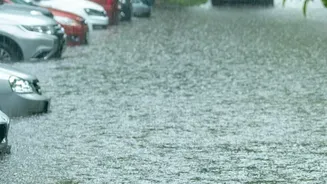
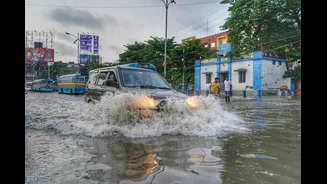
Encountering a flooded street is common during Indian monsoons, but it’s a situation fraught with danger. It is incredibly difficult to judge the depth of standing water, which can conceal deep potholes or even open manholes. As a rule, avoid driving through water if you can. If you must proceed, do so only if the water is no higher than the bottom of your car's doors. Drive slowly and steadily in a low gear, keeping the engine revs high to prevent water from entering the exhaust pipe. Sticking to the centre of the road is often safest, as roads are typically designed to drain towards the edges, making the sides deeper. If your car stalls in water, do not attempt to restart it, as this can cause catastrophic engine damage known as a hydrostatic lock. It's safer to abandon the vehicle and get to higher ground.
Maximise Visibility for Yourself and Others
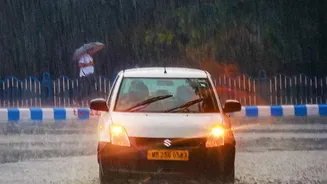
In heavy rain, visibility drops significantly due to the downpour itself and the spray from other vehicles. Always drive with your low-beam headlights on, even during the day, to make your vehicle more visible to others. Avoid using high beams, as they reflect off the raindrops and can worsen your own visibility and blind oncoming drivers. If the rain becomes so intense that you cannot see the edges of the road or vehicles ahead, it is safest to pull over to a secure location, turn on your hazard lights, and wait for the weather to improve.
Handle Skids and Hydroplaning Calmly
If you feel your car begin to hydroplane—often indicated by a light or loose steering feel—it is crucial not to panic. Do not slam on the brakes or make sharp turns, as these actions can destabilise the vehicle and lead to a spin. Instead, ease your foot off the accelerator gently and keep the steering wheel straight. Allow the car to slow down on its own until you feel the tyres regain their grip on the road surface. Similarly, if you start to skid, steer gently in the direction you want the car to go. Gentle, measured inputs are key to regaining control.
Be Prepared for Emergencies
If your car becomes trapped in rising floodwater, you must act quickly. A car can float for a few moments, which is your best window to escape. Do not wait. Immediately unbuckle your seatbelt and try to roll down a window to get out. Electric windows should work if the car's electrical system hasn't been submerged yet. If the windows won't open and the water pressure prevents you from opening the door, you will need to break a side window. The rear side windows are often the best escape route. An emergency tool like a rescue hammer, designed to break car windows and cut seatbelts, is an invaluable item to keep within easy reach inside your vehicle.