



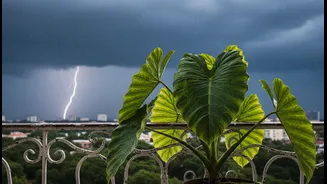


1. Prioritise Perfect Drainage
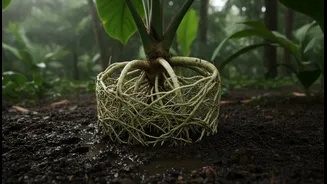
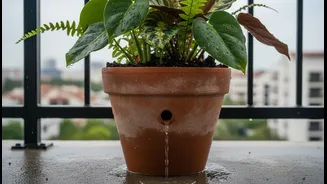
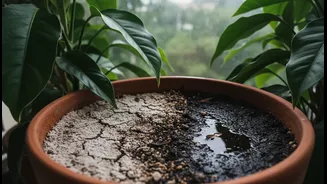
The single biggest threat to potted plants during the monsoon is waterlogged soil. When roots sit in stagnant water, they can't get the oxygen they need, leading to suffocation and decay. Before the heavy rains set in, check that every pot has clear,
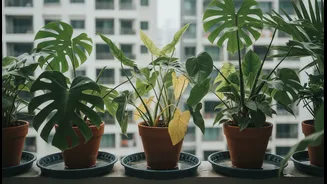
unobstructed drainage holes. If a hole is clogged, use a small tool to clear it. For extra protection, elevate your pots using bricks or pot stands. This small gap between the pot base and the ground allows excess water to escape freely and promotes better air circulation, which is crucial for root health.
2. Lighten Your Soil Mix
Heavy, dense soil retains too much moisture, creating the perfect environment for root rot. If you're repotting before the monsoon, or even if you just want to improve your existing setup, consider your soil composition. A well-draining potting mix is non-negotiable. You can create your own by adding materials like perlite, coarse sand, or cocopeat to your regular potting soil. These amendments increase aeration and allow water to pass through more quickly, preventing the soil from becoming a soggy mess that suffocates roots.
3. Adjust Your Watering Schedule
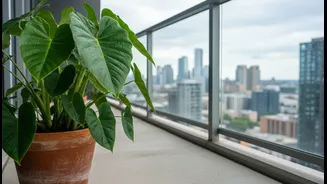
It’s a common mistake to keep watering plants on a fixed schedule during the monsoon. With high humidity and frequent rain, your plants will need significantly less water from you. The golden rule is to always check the soil before you water. Stick your finger about an inch or two into the soil; if it feels moist, hold off. Only water when the top layer feels dry to the touch. For plants kept in covered areas of the balcony that don't receive direct rain, this check is especially important to avoid overwatering out of habit.
4. Shelter from Torrential Downpours
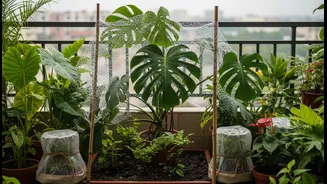
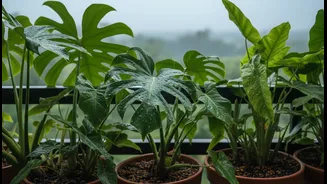
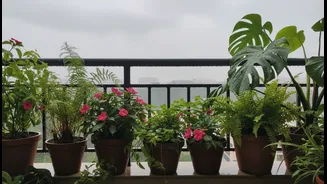
While gentle rain is beneficial, a relentless downpour can be too much for potted tropicals, physically damaging delicate leaves and waterlogging the soil in minutes. If possible, move your more sensitive plants to a spot with overhead cover, like against a wall or under an eave, during periods of very heavy rain. This gives you more control over how much water they receive and protects them from the intense force of the monsoon showers and strong winds.
5. Boost Air Circulation with Pruning
High humidity makes plants susceptible to fungal diseases. Improving air circulation around your plants is one of the best preventative measures. Trim any overcrowded or dense foliage to allow air to move freely through the branches and leaves. Regularly remove any dead or yellowing leaves and fallen flowers from the plant and the soil surface. This simple housekeeping denies pests and fungal spores a damp place to thrive and helps the plant’s leaves dry faster after a shower.
6. Watch for Pests and Fungi
The damp, warm conditions of the monsoon are an open invitation for pests like mealybugs and fungal infections such as powdery mildew. Be vigilant and inspect your plants regularly, paying close attention to the undersides of leaves and the joints of stems. As a preventive measure, you can spray a diluted neem oil solution every 15 days. This organic solution acts as a deterrent for many common pests and helps prevent fungal issues from taking hold.
7. Know the Warning Signs of Root Rot
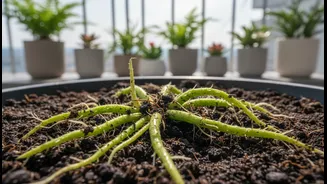
Early detection is key to saving a plant from root rot. Be on the lookout for yellowing lower leaves, general wilting even when the soil is wet, and stunted growth. Another tell-tale sign is a musty or foul smell coming from the soil. If you suspect rot, you may need to act fast. This involves gently removing the plant, trimming away any brown, mushy roots with clean shears, and repotting it in fresh, well-draining soil.