





The 'All-Natural' Illusion
The word 'natural' evokes images of farms and fresh produce, but on a snack package, it means very little. Regulatory bodies have a loose definition, generally stating that a 'natural' product cannot contain anything artificial or synthetic that wouldn't
normally be expected in that food. This definition doesn't account for processing methods, nutritional value, or the presence of things like high-fructose corn syrup, which can be derived from natural corn. Even products loaded with sugar can be labelled 'natural' because sugar comes from a plant. The key takeaway is to ignore this term and read the actual ingredients list.
'Multigrain' vs. 'Whole Grain'
Many people believe 'multigrain' is the healthiest option, but the term simply means that a product contains more than one type of grain. Those grains can be heavily refined, which strips them of their most nutritious parts, like the bran and germ, where the fibre and vitamins are. The term you should look for is '100% whole grain' or 'whole wheat'. This ensures the entire grain kernel is used, preserving its fibre and nutrient content. When you see 'multigrain,' flip the package over and check if the first ingredient listed is a 'whole' grain. If not, you're likely buying a product made mostly from refined flours.
'Made With Real Fruit' Myth
This claim is common on fruit snacks, juices, and cereal bars, making them seem like a healthy way to get your five-a-day. However, regulations do not specify how much fruit must be in a product for this claim to be used. A snack could contain a tiny drop of fruit juice concentrate and still legally use the label. Often, the main ingredients are corn syrup and sugar, with fruit puree appearing far down the list. The processing to create these purees and concentrates also removes much of the fibre and vitamins found in fresh fruit. For a truly fruity snack, your best bet is always the real thing.
The 'Low-Fat' or 'Fat-Free' Trap
In the past, fat was seen as the enemy, and many people still reach for 'low-fat' products. While there are strict definitions—'low-fat' means 3 grams of fat or less per serving—the problem is what replaces the fat. When manufacturers remove fat, they often add significant amounts of sugar, sodium, and artificial ingredients to make the product taste good. A 'fat-free' snack can have more calories than its full-fat counterpart because of the added sugar. Always compare the nutrition labels of the low-fat version with the original to see if you're just trading fat for a lot more sugar.
Is 'Gluten-Free' Always Healthier?
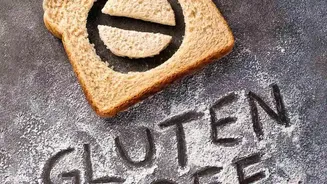
For individuals with celiac disease or a genuine gluten sensitivity, gluten-free products are essential. For everyone else, however, 'gluten-free' is not a synonym for 'healthy'. Many people mistakenly believe these products are lower in calories or better for weight loss. In reality, gluten-free snacks can be loaded with refined starches, sugar, and fat to compensate for the texture and flavour that gluten provides. Studies have shown that many gluten-free snack foods are high in fat and sugar, with calorie counts similar to regular treats. Unless you have a medical reason to avoid gluten, there's no inherent health benefit in choosing a gluten-free snack.
'Fortified With' or 'Good Source Of'
Seeing that a snack is 'fortified with vitamins' or a 'good source of calcium' can make it seem like a responsible choice. This is a classic health halo tactic. While the claim itself may be true, it distracts from the rest of the product's nutritional profile. A sugary cereal might be fortified with vitamins, but that doesn't cancel out the high sugar content. Research shows that when a product highlights a fortified nutrient, consumers are less likely to check the full nutrition label and more likely to perceive the product as healthy overall. This can lead to parents choosing snacks for their children that are high in sugar or sodium, despite the added vitamins.