



A New Window on the Cosmos
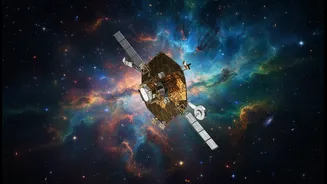
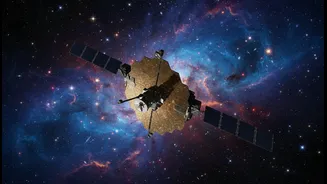
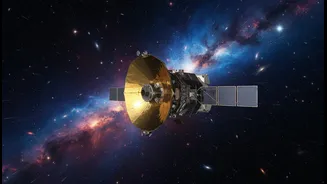
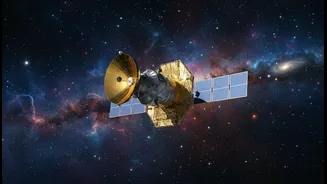
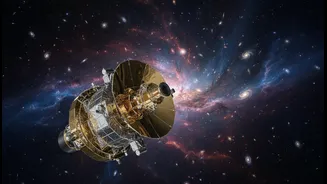
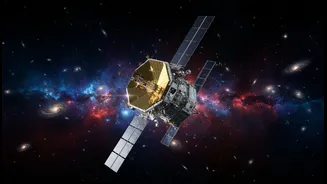
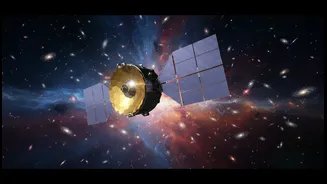
Set to launch as early as August 30, 2026, aboard a SpaceX Falcon Heavy rocket, the Nancy Grace Roman Space Telescope is not just another eye on the sky; it's a cosmic powerhouse. Named after NASA's first chief of astronomy, Nancy Grace Roman, the mission
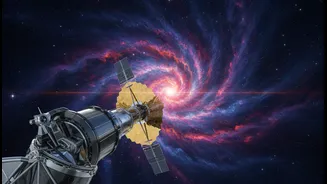
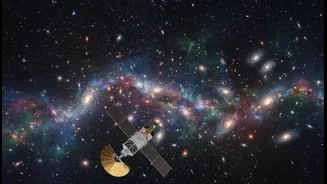
aims to answer fundamental questions about our universe. While its primary mirror is the same size as the Hubble Space Telescope's at 2.4 meters, Roman’s capabilities are vastly different. Its key advantage lies in its incredible field of view. The telescope's Wide Field Instrument (WFI) can capture a patch of the sky more than 100 times larger than Hubble can in a single snapshot. This means that while Hubble is like studying a forest tree by tree, Roman can photograph the entire forest at once, all with similar sharpness. This survey speed will allow it to map the universe in ways that were previously impossible, creating panoramic views of the cosmos in stunning infrared detail.
Unmasking the Invisible Universe
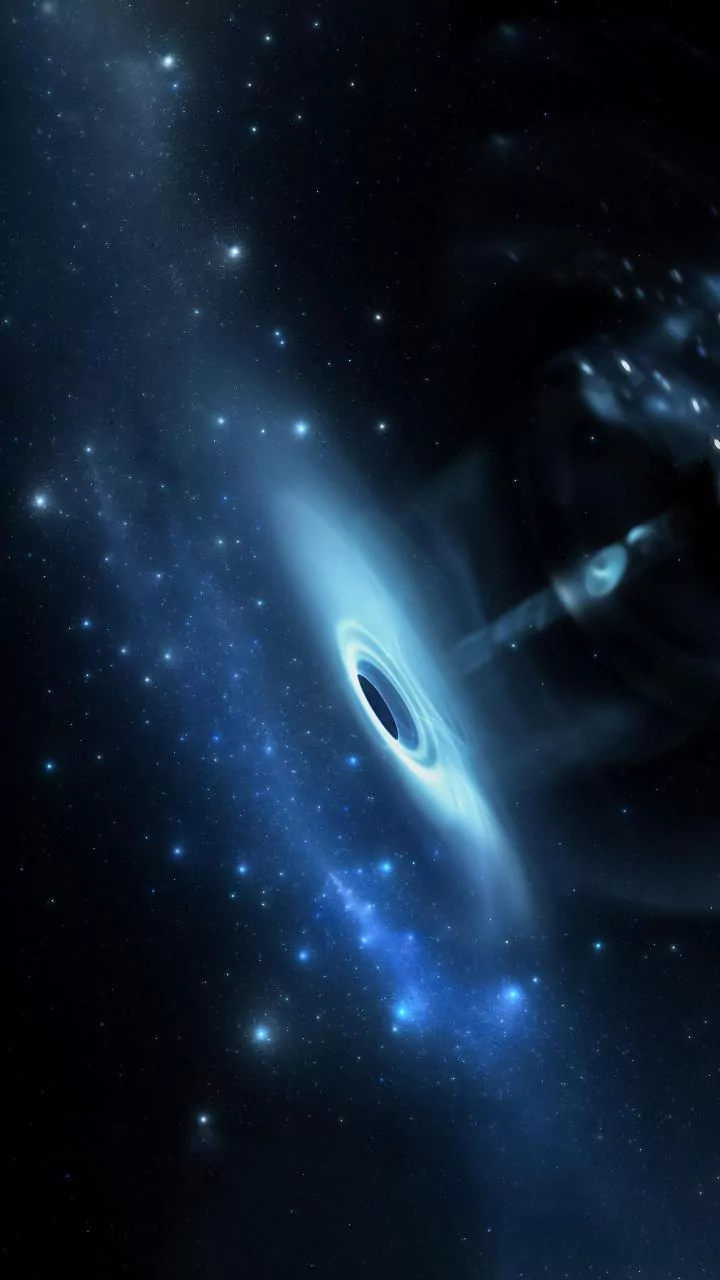
One of Roman’s primary targets is something we can't see at all: dark energy and dark matter. Together, these mysterious components make up about 95% of the universe, yet their nature remains one of the greatest puzzles in science. Roman will probe the effects of this dark sector by observing how the universe has expanded over billions of years. It will use a technique called weak gravitational lensing, studying how the light from distant galaxies is subtly bent and distorted by the gravity of massive objects, including clumps of dark matter. By mapping these distortions across millions of galaxies, scientists can create a large-scale map of the universe's matter distribution, both visible and dark. These observations will help astronomers understand whether the accelerating expansion of the universe is caused by a strange new energy component or if it points to a breakdown in Einstein's theory of gravity on cosmic scales.
A Census of Alien Worlds
Beyond cosmology, the Roman Observatory is poised to revolutionize the hunt for planets outside our solar system, known as exoplanets. It is expected to discover tens of thousands, perhaps even 100,000, new worlds. To do this, it will primarily use a powerful technique called gravitational microlensing. This method relies on the warping of spacetime caused by massive objects. When a star with a planet passes in front of a more distant star from our perspective, its gravity acts like a lens, magnifying the background starlight. The planet adds its own tiny gravitational signature, causing a brief, sharp spike in the light. This technique is sensitive enough to find planets down to the mass of Mars and even rogue planets that drift through space without a host star. In addition, Roman will carry a Coronagraph Instrument, a technology demonstrator designed to block the overwhelming glare of stars, allowing for the direct imaging of giant exoplanets orbiting them.
Peering Back Through Cosmic Time
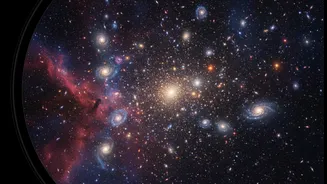
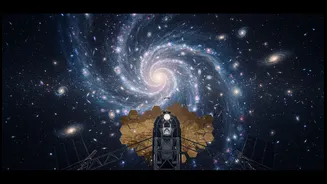
With its vast field of view, Roman will conduct enormous surveys of the sky, capturing images of hundreds of millions of galaxies. Some of these galaxies will be so distant that their light has taken billions of years to reach us, providing a snapshot of the universe in its infancy. These deep and wide surveys will be like creating a time-lapse video of cosmic evolution. Astronomers will be able to study how galaxies formed, grew, and clustered together under the influence of gravity and dark matter over cosmic history. By surveying the sky up to 1,000 times faster than Hubble, Roman will generate unprecedented amounts of data, creating a rich archive for astronomers to mine for decades to come. The sheer volume of information will not only help test existing theories but will also likely lead to unexpected discoveries that open entirely new avenues of research.