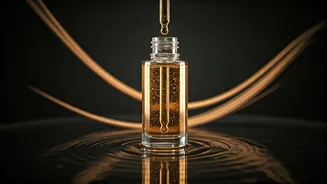









The Monsoon Hair Challenge
The romance of the Indian monsoon—the petrichor, the cooler temperatures, the chai and pakora—is often ruined by what it does to our hair. The dramatic spike in humidity is the main culprit. When the air is saturated with moisture, the keratin proteins
in our hair strands form weaker hydrogen bonds, causing the hair cuticle to swell and lift. The result? Frizz. But it’s not just an external problem. The damp, humid weather also creates the perfect environment for an overactive scalp, leading to excess oiliness, product buildup, dandruff, and sometimes even fungal infections. This combination of a greasy scalp and frizzy, limp strands is the signature challenge of the season.
Our Trusty Friend: The Hair Oil
For generations, the ritual of ‘champi’ or oiling our hair has been the cornerstone of Indian hair care. Coconut, almond, amla, and mustard oils are celebrated for their ability to nourish the hair shaft, lock in moisture, and add a protective layer that imparts shine and strength. They are fantastic conditioners, especially for dry and damaged hair. However, during the high-humidity monsoon months, these heavy, occlusive oils can sometimes work against us. By forming a thick layer on the scalp, they can trap sweat, dirt, and existing moisture, potentially exacerbating scalp greasiness and blocking hair follicles. While they condition the lengths, they can leave roots feeling heavy and weighed down, making hair look even flatter.
The New Contender: Pre-Shampoo Tonics
Enter the pre-shampoo tonic, a product designed with a completely different philosophy. Unlike oils that primarily target the hair strand, tonics are scalp-first treatments. They are typically lightweight, water-based or alcohol-free liquid formulations that are applied directly to the scalp before washing. Their job isn't to heavily moisturise, but to treat, clarify, and balance the scalp's ecosystem. Think of it as a facial for your scalp. These tonics are packed with active ingredients chosen for specific scalp concerns. You'll often find clarifying agents like salicylic acid to exfoliate dead skin cells, antimicrobial ingredients like tea tree oil to fight dandruff, and soothing components like aloe vera or witch hazel to calm irritation.
The Science of Scalp Health
The reason pre-shampoo tonics can 'outperform' oils in the monsoon lies in their mechanism. Because they are lightweight and fast-absorbing, they deliver their active ingredients directly to the scalp without creating a heavy, greasy film. By exfoliating and cleansing the follicles *before* you shampoo, they ensure your shampoo can work more effectively. A clean, balanced scalp is the foundation for healthy hair growth and, crucially, for controlling frizz at the root. When your scalp isn't overproducing oil to compensate for being stripped or clogged, your roots have more volume and your strands are less likely to become limp and greasy through the day. The tonic essentially preps the canvas for a better hair day.
Tonic vs. Oil: The Monsoon Verdict
So, is it time to throw out your hair oil? Not at all. The key is understanding their different roles. For monsoon scalp care—tackling greasiness, dandruff, and buildup—a pre-shampoo tonic is the superior choice. It addresses the root cause of many monsoon hair issues without adding weight. However, if the lengths and ends of your hair are dry and craving deep nourishment, a traditional oil is still your best bet. The modern approach is to use them strategically. Use a pre-shampoo tonic on your scalp to clarify and balance, and then, if needed, apply a small amount of a lightweight oil to the mid-lengths and ends to combat dryness and protect from breakage.
How to Incorporate a Tonic
Using a pre-shampoo tonic is simple. Before you step into the shower, part your dry hair into sections. Apply the tonic directly to your scalp using the dropper or nozzle provided. Gently massage it in with your fingertips for a few minutes to stimulate blood flow and ensure even distribution. Leave it on for about 15-30 minutes—check the product's instructions for the recommended time. Do not let it dry completely. Afterward, proceed with your regular shampoo and conditioning routine. You’ll likely notice that your scalp feels cleaner, fresher, and your hair has more lift at the roots.