






The Urban Astronomer's Advantage
It’s a common belief that city life and stargazing are incompatible. The constant glow from streetlights, buildings, and traffic creates a veil of light pollution that washes out most stars. While this makes spotting faint nebulae and distant galaxies
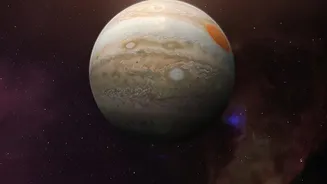
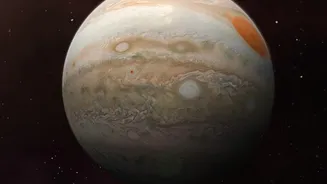
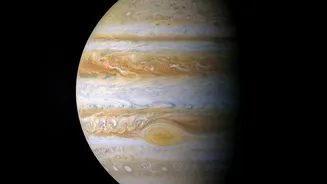
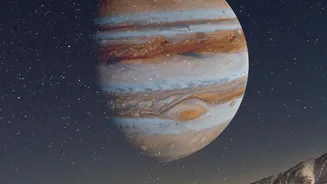
nearly impossible without specialized equipment, it doesn't mean the sky is empty. Planets are a different story. Jupiter and Saturn are incredibly bright, shining with reflected sunlight. They are so luminous they can often punch through the urban haze. In September 2026, both planets are well-positioned for viewing. Saturn rises in the east shortly after sunset, while brilliant Jupiter dominates the pre-dawn sky. Unlike the twinkling stars, planets tend to shine with a steadier, more focused light, making them distinct once you know where to look.
Your Pocket Planetarium
This is where your smartphone transforms from a communication device into a powerful astronomical tool. A category of apps known as sky-mapping or planetarium apps use your phone's built-in GPS and compass to know exactly where you are and which direction you're pointing. When you aim your phone at the sky, the app displays a real-time, augmented-reality map of the celestial objects in that location. Stars, constellations, and most importantly, planets are labeled for you. It removes the biggest barrier for beginners: the daunting task of learning complex star charts. You no longer need to know which star is which; the app does the heavy lifting, essentially turning the entire night sky into a clickable, identifiable map.
Top Apps for Planet Hunters
While many excellent apps exist, a few stand out for their ease of use and powerful features, especially for beginners in urban environments. Star Walk 2: Praised for its beautiful interface and user-friendliness, it’s a great starting point for beginners. The augmented reality overlay is intuitive, and it provides detailed information with a simple tap. Stellarium Mobile: Available in both free and paid versions, Stellarium is beloved for its realistic depiction of the night sky and massive database of objects. The free version is more than enough to locate Jupiter and Saturn with precision. SkyView Lite: Another excellent free option, SkyView Lite is incredibly simple: just point your phone at the sky to identify celestial bodies. It also has a feature that lets you track the path of planets, so you know where to look throughout the night.
Your First Observation: A Step-by-Step Guide
Ready to try it? It's simpler than you think. First, find the best possible viewing spot you have. This could be a balcony, a park, or even an open window with the lights turned off inside to reduce reflections. Give your eyes about 15-20 minutes to adjust to the darkness; this will significantly improve what you can see. Next, open your chosen app and point it towards the sky. The app will calibrate itself and show you the constellations. Use the app’s search function to look for “Jupiter” or “Saturn.” An arrow will likely appear on your screen, guiding you to pan your phone across the sky. Follow it until the planet is centered on your screen. Now, put your phone down and look at that same spot with your own eyes. You should see a bright, non-twinkling point of light. That's it. You're looking at another world.
What to Expect and What's Next
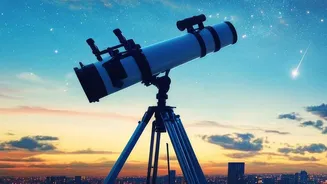
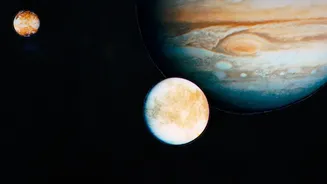
To the naked eye, Jupiter will appear as a brilliant, white star-like object. It's often the brightest thing in its patch of sky. Saturn will be noticeably dimmer and have a slightly yellowish hue. You won't see Saturn's rings with just your eyes, but knowing you're looking at the famed ringed planet is a thrill in itself. If you happen to have a pair of binoculars, point them at Jupiter. You might be rewarded with the sight of up to four tiny dots of light in a line on either side of the planet. These are the Galilean moons, the same ones Galileo Galilei discovered in 1610. Some advanced users even use smartphone adapters to connect their devices to telescopes, capturing impressive photos and videos of the planets. But that's a hobby for another day. For now, the simple act of identification is a powerful first step.