






Redefine Your Idea of Progress
The relentless pursuit of personal records can be motivating, but it's also a fast track to burnout and injury for many. True progress in strength training is about creating a stimulus that forces your body to adapt. That stimulus doesn't always have
to be more weight. In fact, your muscles don't know the number on the dumbbell; they only respond to tension, effort, and challenge. A successful session can be one where you improve your movement quality, feel the target muscles working more effectively, or simply finish feeling strong and energized, not defeated. Shifting your focus from external numbers to internal feedback allows for more sustainable and enjoyable training over the long term. Progress can mean adding reps, improving your range of motion, or decreasing rest time—all powerful ways to challenge your body without constantly chasing a new one-rep max.
Prioritise Flawless Form
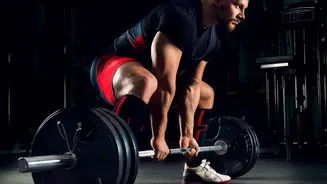
One of the most valuable things you can do in any strength session is to perfect your form. Lifting a lighter weight with impeccable technique is far more beneficial than struggling through a heavy, sloppy set. Proper form ensures you're targeting the intended muscles efficiently and safely. When you use incorrect form, you often recruit other muscles to compensate, putting unnecessary strain on your joints and ligaments, which can lead to injury. Focusing on form enhances the mind-muscle connection, which research shows can increase muscle activation. This means you get more out of every single repetition. Think of it as building a strong foundation; mastering the movement pattern correctly allows you to build true, lasting strength and paves the way for safely lifting heavier loads in the future.
Master Time Under Tension
Instead of focusing on how much weight you're lifting, concentrate on how long your muscles are working during a set. This is known as Time Under Tension (TUT). By slowing down each phase of an exercise—the lifting (concentric), pausing, and lowering (eccentric) phases—you increase the total time the muscle is under strain. This forces the muscle fibers to work harder, which can be a powerful stimulus for both strength and muscle growth, even with lighter weights. For example, instead of quickly performing 10 bicep curls in 20 seconds, you could perform 8 reps where you take three seconds to lift the weight and three seconds to lower it. This turns a short set into a 48-second period of significant muscular work. Experts often suggest that a TUT between 30 to 60 seconds per set is effective for muscle growth.
Increase Your Workout Density
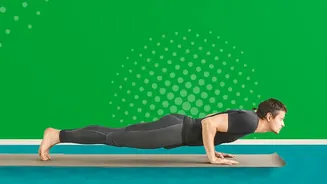
Another way to progress without adding weight is to increase your workout density. Density refers to the amount of work you do within a specific period. The goal is to complete more repetitions or sets in the same amount of time, or the same amount of work in less time. For instance, you could set a 15-minute timer and see how many rounds of a circuit (e.g., push-ups, squats, and rows) you can complete. The next time you do the workout, your goal is to beat that number. This method, often called AMRAP (As Many Reps/Rounds As Possible), is an excellent way to improve your work capacity and metabolic conditioning while still building strength. By gradually reducing your rest periods or moving more efficiently between exercises, you make the session progressively more challenging.
Train with Perceived Exertion
The Rate of Perceived Exertion (RPE) scale is a tool that helps you measure your effort based on how you feel. It's typically a scale from 1 to 10, where 1 is resting and 10 is an all-out maximal effort. Using RPE allows you to auto-regulate your training. On days you feel tired or stressed, a weight that's usually an RPE 7 might feel like an RPE 9. Listening to your body and adjusting the weight to match the desired RPE for that day ensures you're still getting a quality workout without pushing yourself toward injury or overtraining. This subjective measure is powerful because it accounts for daily fluctuations in energy, sleep, and stress. A workout programmed for three sets at an RPE 8 means you should choose a weight that allows you to finish the set feeling like you had about two reps left in the tank, regardless of what that specific weight is.