


The Universe’s Ultimate Speed Limit
Everything in the universe is bound by a fundamental rule: nothing can travel faster than light. While its speed is mind-bogglingly fast—about 300,000 kilometres per second—it is not infinite. This means it takes time for light to travel from a distant
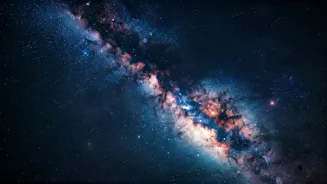
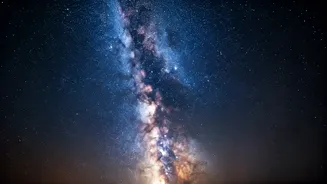
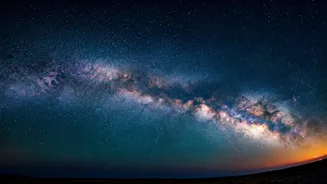
object to your eye. The farther away an object is, the longer its light takes to reach us. What you see in the sky is not the star as it is *right now*, but as it was when the light began its long journey. In essence, the night sky is a time machine, and looking up is an act of looking back into deep history.
Our Sun, Eight Minutes Ago
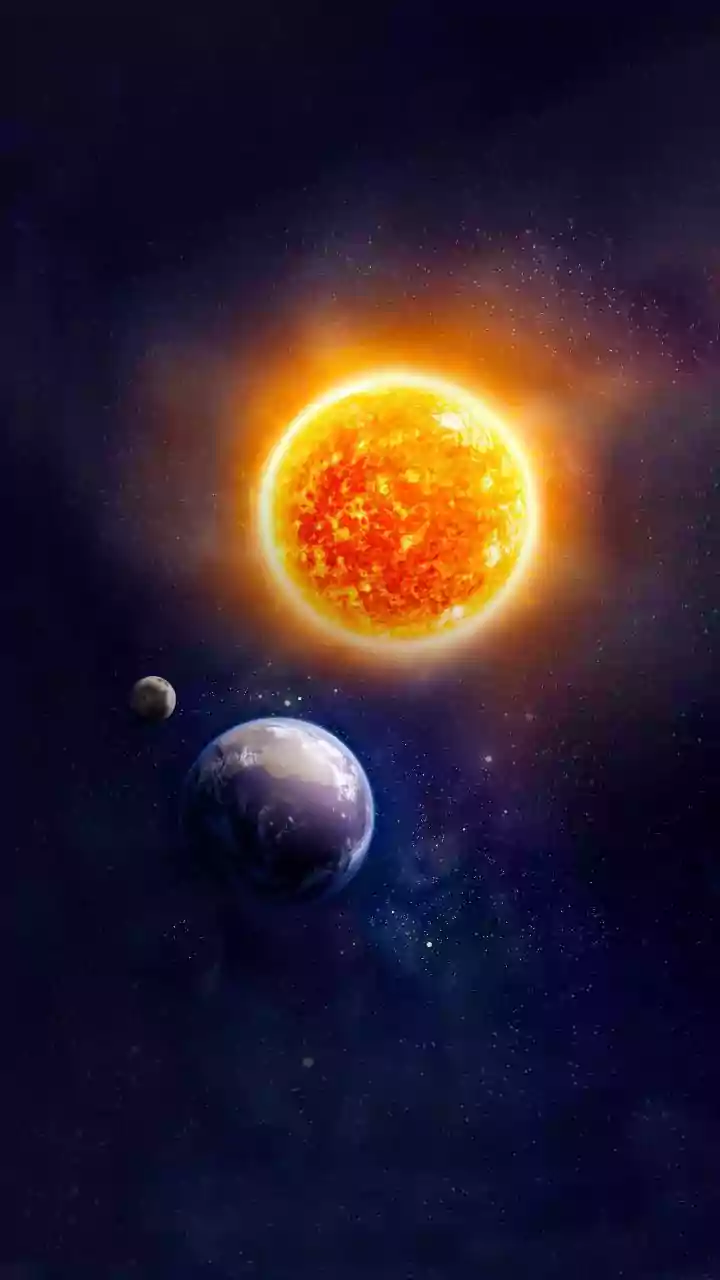
Let’s start close to home. The Sun is our nearest star, about 150 million kilometres away. Even at the blistering speed of light, its rays take approximately 8 minutes and 20 seconds to cross that distance. This has a fascinating implication: if the Sun were to suddenly vanish, we wouldn't know for over eight minutes. We would continue to feel its warmth and see its light as if nothing had happened. Every time you step outside and feel the sunlight on your skin, you are basking in energy that left the Sun while your morning tea was still brewing.
Neighbouring Stars, Years in the Past
When we move beyond our solar system, the time delays become much more significant. The nearest star system to ours is Alpha Centauri, which includes Proxima Centauri, about 4.24 light-years away. A light-year is the distance light travels in one year, which is a staggering 9.5 trillion kilometres. So, when you spot this star in the sky, you are seeing it as it was over four years ago. The light hitting your retina tonight left its source around the time India was preparing for the last Lok Sabha elections. Every star you can see with the naked eye is years, decades, or even centuries in the past.
Galaxies from a Pre-Human Era
Now, let’s take a truly giant leap. One of the most distant objects visible to the naked eye under very dark, clear skies is the Andromeda Galaxy. It’s a faint, fuzzy patch, but what you’re looking at is an entire galaxy of hundreds of billions of stars, located 2.5 million light-years away. Think about that for a moment. The light you are seeing from Andromeda began its journey 2.5 million years ago. At that time, modern humans (Homo sapiens) did not exist. Our early ancestors, like Homo habilis, were just beginning to use stone tools in Africa. The light from Andromeda has been travelling through space for longer than our entire species has walked the Earth. You are literally looking at pre-history.
A Sky Full of Ghosts
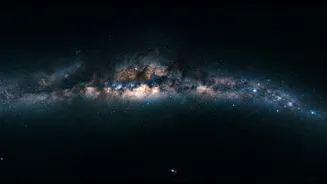
This cosmic time lag means that the sky is a beautiful mosaic of different eras. We see the Sun as it was eight minutes ago, Alpha Centauri as it was four years ago, the star Polaris as it was 433 years ago, and the Andromeda Galaxy as it was 2.5 million years ago—all at the same time. This also leads to a poignant thought: some of the stars we see in the night sky may have already died. If a star 1,000 light-years away went supernova tonight, we wouldn't see the explosion for another millennium. We are, in a very real sense, looking at a sky filled with the ghosts of light from long-dead suns, mingled with the light of those still shining brightly.