
India's Next Interplanetary Frontier
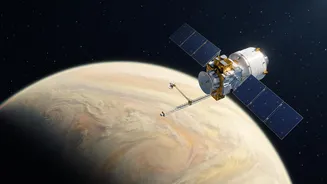
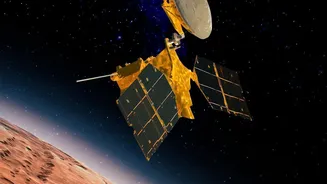
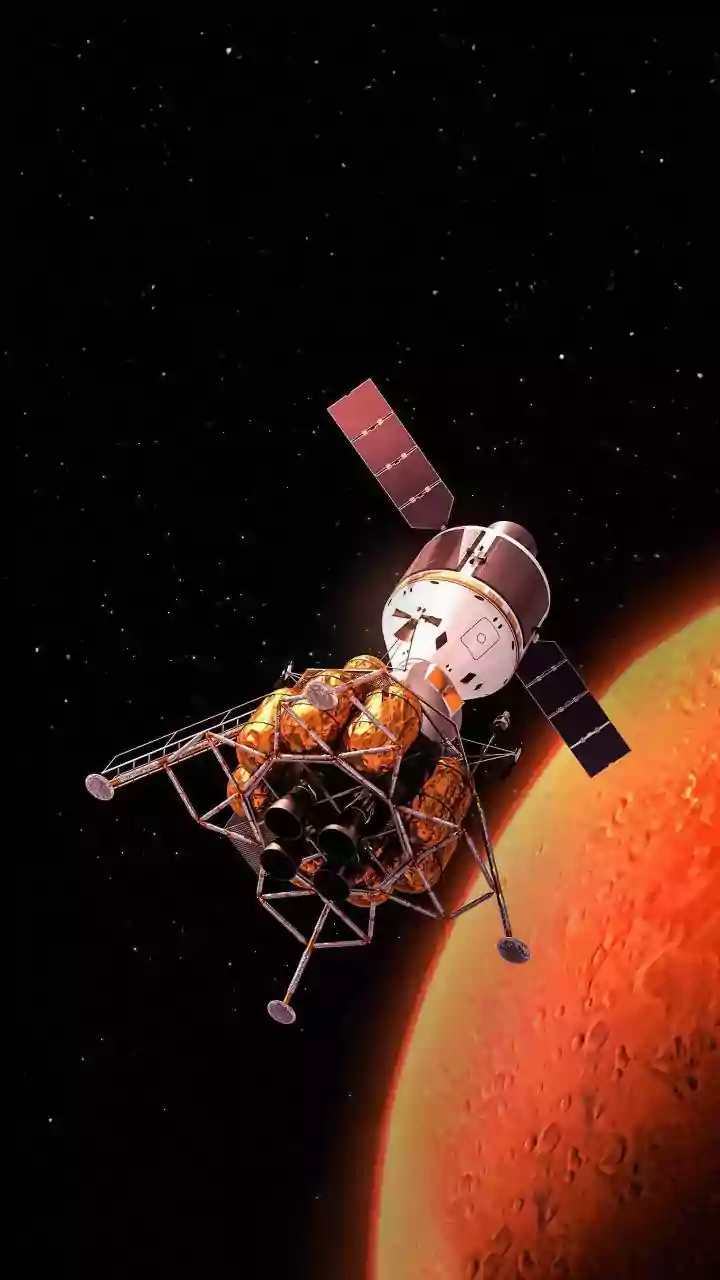
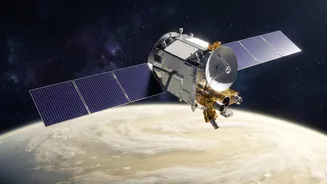
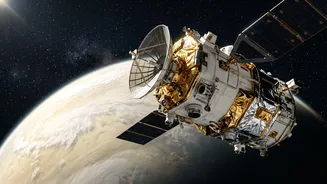
Following the historic successes of the Chandrayaan missions to the Moon and the Mangalyaan mission to Mars, ISRO has set its sights on Venus. The upcoming Shukrayaan orbiter, formally the Venus Orbiter Mission (VOM), represents India's next great leap
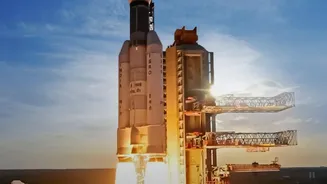
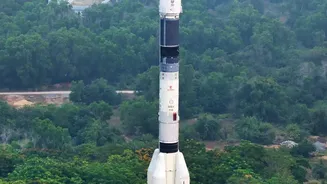
in planetary exploration. Formally approved with a launch planned for 2028, the mission aims to place a spacecraft in orbit around Venus for over four years. This ambitious project will build on ISRO's proven capabilities in executing complex, cost-effective interplanetary journeys, further cementing India's position as a major player in space science.
The Challenge of the 'Evil Twin'
Exploring Venus is an immense engineering challenge. The planet's surface is a hellscape, with temperatures soaring to 475°C and an atmospheric pressure over 90 times that of Earth's. Its atmosphere is a suffocating blanket of carbon dioxide with thick clouds of corrosive sulphuric acid, which obscure the surface from view. This hostile environment means that landers have only ever survived for a couple of hours at most. To overcome this, Shukrayaan will be an orbiter, studying the planet from a safe distance. The mission will also be a test for new technologies, as ISRO plans to use aerobraking—skimming the upper atmosphere to adjust its orbit—for the first time, a technique that saves precious fuel.
High-Tech Eyes on a Toxic Sky
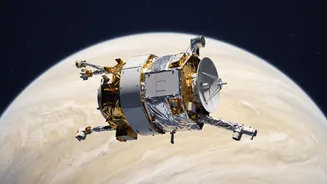
The centerpiece of the mission is its suite of advanced scientific instruments, or payloads, designed to peer through Venus's thick atmospheric veil. The headline instrument is a high-resolution Synthetic Aperture Radar (SAR), which can penetrate the dense cloud cover to map the planet's surface in detail, searching for geological features like volcanoes and lava flows with a resolution potentially four times greater than NASA's Magellan mission in the 1990s. But it's the atmospheric sensors that are drawing major attention. Shukrayaan will carry several instruments dedicated to studying the planet's cloud chemistry and dynamics. These include a Venus Thermal Camera (VTC) to map heat emissions from the clouds and a Venus Cloud Monitoring Camera (VCMC) to track their movements. These sensors will work together to build a comprehensive picture of the planet's extreme weather.
What ISRO Hopes to Discover
The primary scientific goals of Shukrayaan are to investigate Venus's surface and subsurface, study the composition and dynamics of its atmosphere, and examine the interaction between the planet and the solar wind. Scientists want to understand why Venus, a planet so similar to Earth in its early history, evolved into such an inhospitable world. Studying its runaway greenhouse effect could provide crucial lessons for understanding climate change on our own planet. Furthermore, the mission will carry instruments, some developed in collaboration with international partners like Russia, France, and Germany, to search for specific atmospheric gases. One such instrument, VIRAL, will investigate atmospheric chemistry, which could provide clues about the mysterious dark patches in the clouds that absorb ultraviolet radiation.
A Global Effort to Understand Venus
ISRO's mission joins a renewed global interest in Venus, with NASA and the European Space Agency also planning missions to the planet. By studying Venus, scientists hope to learn more about how Earth-like planets evolve and what conditions might exist on exoplanets orbiting other stars. Shukrayaan is set to make unique contributions, including being the first mission to use a ground-penetrating radar to study the planet's subsurface geology. The data gathered by its sophisticated array of sensors will provide a new, global dataset that will complement other missions and help answer some of the biggest questions about our planetary neighbour.