



In our fast-paced lives, finding a moment of calm can feel like a challenge. Apanasana, a gentle and restorative yoga pose, offers a simple way to release tension, soothe the lower back, and connect with your breath in just a few minutes.
What Exactly Is Apanasana?
Apanasana, commonly
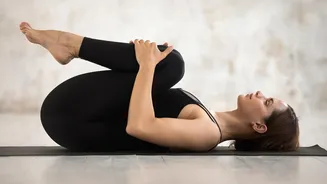
known as the Knees-to-Chest Pose, is a foundational supine posture in yoga. The name comes from Sanskrit, where 'Apana' refers to the body's downward-moving energy, which governs elimination and grounding, and 'Asana' means pose. Therefore, Apanasana is the 'Pose of Downward-Moving Energy'. It involves lying on your back and gently hugging your knees toward your chest. This simple action provides a gentle massage to the abdominal organs, releases tension in the lower back and hips, and has a profoundly calming effect on the nervous system. It's often used at the beginning of a practice to warm up the body or at the end to cool down and restore balance.
A Step-by-Step Guide to the Pose
Performing Apanasana is straightforward, making it accessible for nearly everyone. Focus on gentle movements and listen to your body. 1. Begin on Your Back: Start by lying comfortably on your back on a yoga mat or a soft surface. Extend your legs out long and let your arms rest by your sides. Take a few deep breaths to settle in. 2. Draw the Knees In: As you exhale, slowly bend your knees and draw them in towards your chest. You can bring them in one at a time or together. 3. Hold the Pose: Wrap your hands around your shins, just below the knees. If this is uncomfortable, you can hold the backs of your thighs instead. Try to keep your shoulders and the back of your head relaxed on the floor. 4. Find Stillness: Hold the pose for 30 seconds to a minute, or about 5-8 deep breaths. Avoid lifting your head or straining your neck. Your lower back should feel a gentle lengthening as it presses softly into the mat. A gentle side-to-side rock can also provide a nice massage for the lower back.
The Importance of Slow, Controlled Breathing
The true magic of Apanasana is unlocked when you synchronize it with your breath. This mindful connection turns a simple stretch into a meditative experience. The key is to link an exhale with compression and an inhale with release. As you exhale, gently draw your knees closer to your chest, emptying your lungs completely. This action enhances the massage on your digestive organs. As you inhale, allow your arms to straighten slightly, letting your knees move away from your chest. This creates space in the abdomen. This rhythmic, controlled movement helps to activate the parasympathetic nervous system, also known as the 'rest and digest' system, which slows the heart rate and promotes a state of deep relaxation. This mindful breathing helps calm anxiety and prepares the body for rest.
Key Benefits of Regular Practice
Incorporating Apanasana into your routine offers a wealth of physical and mental benefits. Physically, it is renowned for alleviating lower back pain by gently stretching and decompressing the lumbar spine. The gentle compression on the abdomen massages the internal organs, which can aid digestion, relieve bloating, and help with constipation. It also provides a mild stretch for the hips and glutes, counteracting the effects of prolonged sitting. Mentally, the pose is incredibly grounding. The fetal - like shape can create a sense of safety and comfort, helping to reduce stress and anxiety. Practicing it before bed can also improve sleep quality.
Common Mistakes and Simple Modifications
To get the most out of Apanasana, be mindful of a few common pitfalls. Avoid pulling your knees in too forcefully or lifting your head and shoulders off the floor, which can strain the neck. Also, remember to keep breathing deeply and smoothly; don't hold your breath. There are several modifications to make the pose work for your body. If you have sensitive knees or limited flexibility, hold the backs of your thighs instead of your shins. For those with larger chests or stomachs, you can separate your knees slightly, drawing them toward your armpits rather than straight to your chest. A great variation for beginners or those with acute back pain is Ardha Apanasana (Half Knees -to -Chest Pose), where you draw only one knee in at a time while keeping the other leg extended or bent with the foot on the floor.