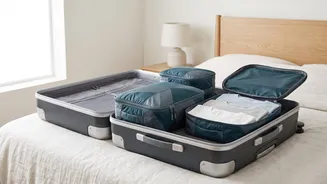







The Challenge: India's Strict Cabin Bag Rules
Navigating air travel in India means contending with some of the world's most rigorously enforced cabin baggage rules. Most domestic carriers like IndiGo, SpiceJet, and Akasa Air limit economy passengers to a single cabin bag weighing no more than 7 kg,
with dimensions typically capped at 55x35x25 cm. Full-service carriers like Air India may offer a slightly different dimension (55x40x20 cm) and an 8 kg allowance, but the core principle remains: space and weight are at a premium. Gate agents are increasingly vigilant, using sizers and scales to catch non-compliant bags, leading to last-minute repacking or costly fees. This reality has turned packing into a strategic puzzle.
Enter Compression Cubes
At first glance, compression cubes look like standard packing cubes—fabric pouches used to organise clothes. The key difference is a second, outer zipper. You pack your clothes in the cube, close the main zipper, and then zip the second, circumferential zipper. This action squeezes the cube, forcing out excess air and compacting the contents. Unlike vacuum bags, they don't require a pump and offer a more structured, rectangular shape that fits neatly into luggage. This simple mechanism is what makes them a powerful tool for any traveller looking to maximise their limited baggage allowance.
Space vs. Weight: A Crucial Distinction
It is critical to understand what compression cubes do and do not do. They do not magically reduce the weight of your belongings. A 3 kg jacket inside a compression cube still weighs 3 kg. So, how do they help with weight rules? By solving the volume problem. By compressing bulky but lightweight items—like puffer jackets, sweaters, or towels—you free up a significant amount of physical space in your carry-on. This allows you to pack more efficiently, giving you the flexibility to include essentials without having your bag bulge at the seams. You are no longer forced to choose between that extra sweater and a compliant bag.
A Smarter Way to Manage Weight
The space-saving benefit of compression cubes directly translates into better weight management. Because your clothes take up less room, you gain more control over how weight is distributed in your bag. You can now fit that bulky, lightweight fleece that previously took up half your suitcase. This space efficiency means you might be able to use a smaller, lighter carry-on bag to begin with, saving precious grams before you’ve even packed a single item. Furthermore, they can tempt you to overpack, so it's essential to remain mindful of the 7 kg limit. The goal isn't to cram more in, but to pack the same amount more intelligently.
The Organisational Advantage
Beyond compression, these cubes bring order to the chaos of a suitcase. You can categorise your packing: one cube for tops, one for bottoms, and another for undergarments. This system makes finding a specific item effortless, eliminating the need to rummage through your entire bag and mess up neatly folded clothes. Upon arrival, you can transfer the cubes directly into hotel drawers, making unpacking and repacking a matter of seconds. Many travellers also designate one cube for dirty laundry, keeping soiled items separate from clean ones throughout the trip. This level of organisation reduces travel stress and keeps your belongings tidy from departure to return.