






More Than Just the Longest Day
At its core, the June solstice is a simple astronomical event. On or around June 21, the Earth’s North Pole reaches its maximum tilt toward the sun. This marks the official start of summer in the Northern Hemisphere, giving us the longest period of daylight
and the shortest night of the year. For us in India, this means the sun takes its longest and highest path across the sky. While this might seem counterintuitive for stargazers—more light Mears less dark—the event’s significance goes far beyond simple observation hours. It’s a celestial turning point, a peak moment in our planet's annual journey around the sun. This astronomical precision, the predictable and powerful rhythm of the cosmos, is what fascinates enthusiasts. It’s a tangible connection to the mechanics of our solar system, an event you can feel in the extended warmth and light of the day.
A Reason for a Celestial Celebration
The real hype for space clubs lies in the community aspect. The solstice serves as a perfect anchor for organising “star parties,” all-night observation events, and public outreach programs. It’s a natural deadline and a celebratory moment that brings people together. Clubs from the Bangalore Astronomical Society to the Amateur Astronomers Association in Delhi often use the solstice as a kick-off for a season of viewing. The shortest night of the year becomes a challenge: can you stay up from dusk until dawn, watching the sky shift? These gatherings are part science, part festival. Members share telescopes, point out constellations to newcomers, and share their passion under the stars. The solstice provides a powerful narrative—celebrating a peak moment in our planet’s orbit—that is far more engaging than a random Saturday night. It’s the perfect excuse to gather, share knowledge, and simply marvel at the universe together.
What's on the Celestial Menu?
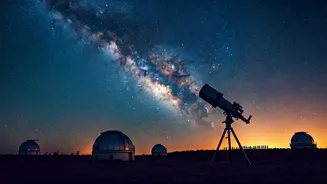
While the night is short, it is packed with astronomical treasures. As summer begins, the glorious core of our own Milky Way galaxy rises earlier in the evening. For observers in locations with low light pollution, the solstice period offers a stunning view of this dense, shimmering band of stars arching across the sky. Prominent constellations like Scorpius, with its bright red star Antares, and Sagittarius, which points toward the galactic centre, take centre stage. This is the best time of year to hunt for deep-sky objects like nebulae and star clusters hidden within the Milky Way's haze. For those with telescopes, targets like the Lagoon Nebula and the Trifid Nebula become accessible. Planetary alignments can also add to the excitement, depending on the year. The short window of darkness focuses the mind, making every object spotted feel like a special achievement.
The View From India
In India, the solstice hype is amplified by the transition out of the intense pre-monsoon heat in many regions. As skies hopefully begin to clear before the full onset of the rains, amateur astronomers are eager to get out. Stargazing spots in the hills, away from the smog and light of major cities, become coveted destinations. Groups organise trips to places like the mountains of Ladakh, the Western Ghats, or remote areas in Rajasthan. These trips are not just about astronomy; they are adventures. They combine the thrill of exploration with the intellectual pursuit of stargazing. Furthermore, Indian space clubs play a crucial role in education. They use the public interest around the solstice to host workshops, debunk astrological myths, and promote scientific temper. They set up telescopes in public parks and on university campuses, inviting everyone to look up and appreciate the cosmos firsthand.