





The Afterlife of a Star
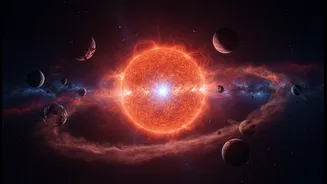
Most stars in the universe, including our own Sun, will end their lives not with a bang, but with a whimper. After exhausting their fuel, they will swell up into a 'red giant', likely consuming their inner planets, before shedding their outer layers and
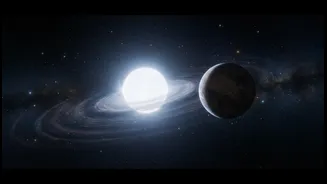
leaving behind a dense, hot core called a white dwarf. These stellar remnants are incredibly small, often about the size of Earth, but pack a huge amount of mass. They no longer produce heat through fusion, glowing only with leftover energy and slowly cooling over billions of years. For a long time, these were thought to be lonely, desolate graveyards. The process of becoming a white dwarf is violent, and it was assumed that any planetary system would be completely destroyed. But recent discoveries are rewriting that story.
A Planet Seven Times Bigger Than Its Star
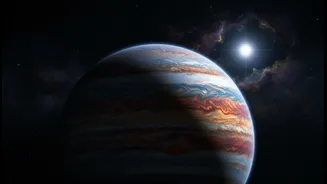
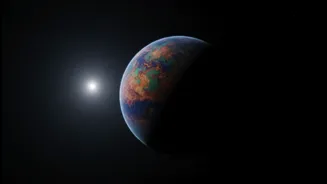
The latest buzz in the astronomical community revolves around a Jupiter-sized planet named WD 1856 b. It orbits a white dwarf located about 80 light-years away. What’s truly strange is the scale: the planet is about seven times wider than the tiny dead star it circles. Finding any planet around a white dwarf is a victory, but this one is particularly puzzling because of its incredibly tight orbit. It whips around its star once every 34 hours, a journey that puts it 50 times closer to its star than Earth is to the Sun. If the planet had always been that close, it would have been vaporised when its star became a red giant. So how did it get there, and how did it survive?
The Latest Cosmic Clues from Webb
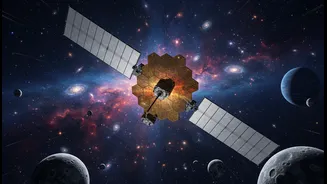
The James Webb Space Telescope (JWST) has provided the answers. By analysing the light passing through the planet's atmosphere, scientists have made the first-ever detection of an atmosphere on a planet orbiting a white dwarf. The telescope found signatures of hydrocarbons, likely methane, and a hazy layer of aerosols. But the real clue was the planet's temperature. It's much warmer than it should be, heated only by the faint light of its dead star. This suggests the planet didn't start in its current orbit. Instead, it likely survived the star's death in a distant, safe orbit before migrating inwards over billions of years. The immense gravity of the white dwarf would have squeezed and stretched the planet during this journey, generating immense internal heat—a process that explains its current warmth.
A Glimpse into Our Own Future
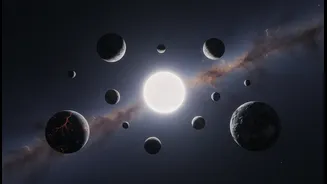
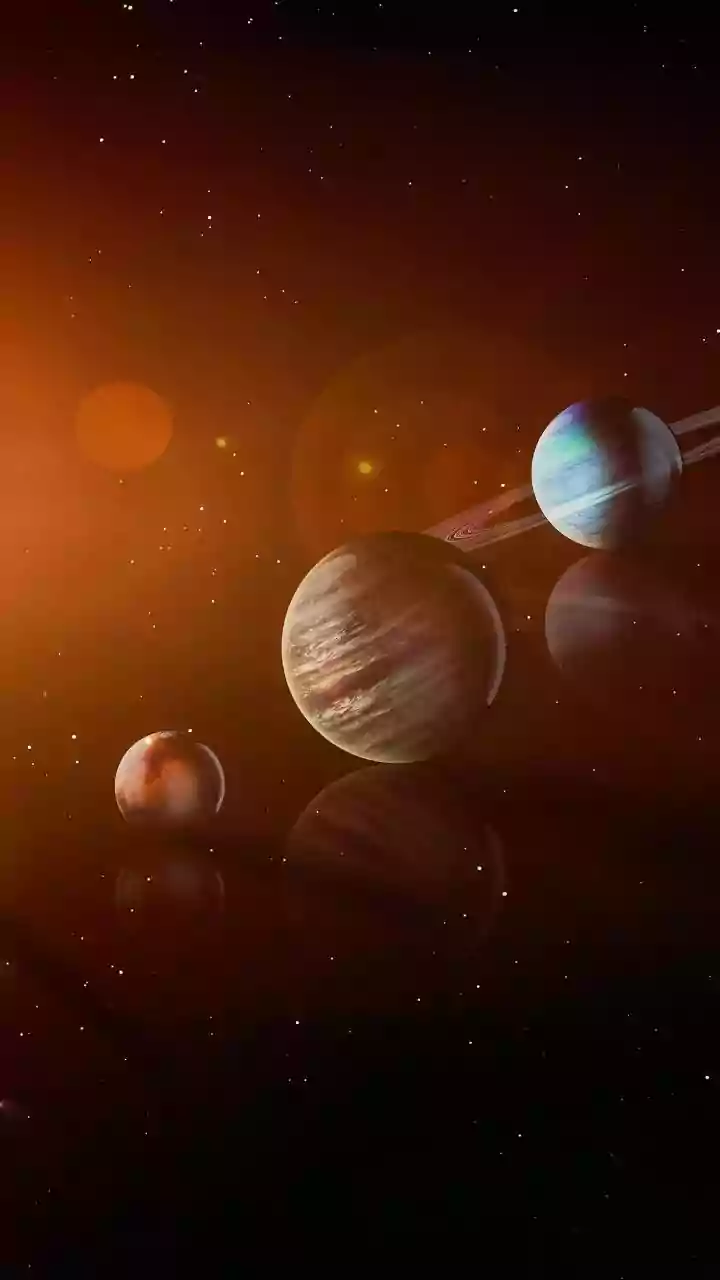
This discovery isn't just about a strange, faraway system; it's like a time machine showing us a possible future for our own solar system. In about five to six billion years, our Sun will also become a white dwarf. While Mercury, Venus, and possibly Earth are expected to be destroyed in the process, the outer planets like Jupiter and Saturn will likely survive. The story of WD 1856 b suggests that these surviving giants won't just float away. Over billions of years, they could change their orbits, moving into new positions in a reshuffled solar system. This research shows that stellar death is not the definitive end. For some planets, it can be the start of a second, vibrant life in a completely new configuration.
The New Frontier of Habitability
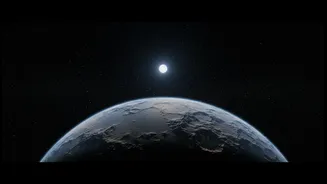
The existence of these survivor planets opens up another tantalizing question: could they be habitable? While a gas giant like WD 1856 b is not a candidate for life, the fact that planets can exist in stable orbits around white dwarfs is significant. A white dwarf's 'habitable zone'—the region where liquid water could exist on a planet's surface—is extremely close to the star. Any planet there would be tidally locked, with one side in permanent daylight and the other in perpetual night. While this presents challenges, studies suggest that a thick atmosphere could distribute heat, potentially creating a sliver of habitable land in the 'terminator' zone between night and day. It's a long shot, but studying these systems is no longer just about stellar death; it's about the surprising resilience of planets and the endless possibilities for life in the universe.