





Pressure Creates Diamonds
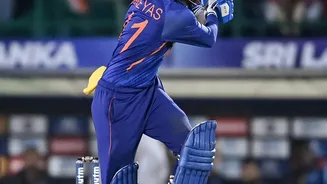
Every great innings is defined by its context, and Iyer’s arrived under significant pressure. Chasing a competitive 172 in the first T20I of the series, India stumbled. Openers Abhishek Sharma and Sanju Samson were back in the dugout with the score at a precarious
35 for 2. The chase could have easily gone sideways. Walking in at this critical juncture, Captain Iyer faced a dual challenge: stabilise the innings and keep the required run rate from spiralling out of control. This wasn't just about scoring runs; it was about absorbing pressure and taking charge when his team needed him most, especially after a period where his own form had been under scrutiny.
The Art of Pacing an Innings
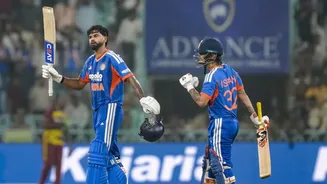
Alongside a steady Ishan Kishan, Iyer began the repair job. Initially, it was about control, not chaos. The pair rotated the strike, ensuring no more wickets fell while keeping the scoreboard moving. Iyer reached his half-century in a brisk, but not reckless, 28 balls. This phase of the innings was crucial. It laid the foundation, tired out the bowlers, and lulled the opposition into a false sense of security. But just as West Indies might have felt they were still in the game, Iyer decided to flip the switch. What followed was not just an acceleration, but a complete demolition of the bowling attack.
A Mind-Bending Acceleration
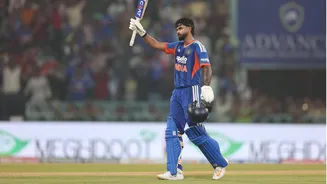
The true magic of this knock lies in what happened after he crossed 50. Iyer went from fifty to his century in a jaw-dropping 14 deliveries. It was a furious, calculated assault that left bowlers and fielders helpless. The 14th over, bowled by Matthew Forde, became the flashpoint of the match. Iyer plundered three sixes and a four, scoring 24 runs and breaking the back of the chase. He hit a total of 10 fours and six sixes, with each boundary looking more confident than the last. This wasn't mindless slogging; it was an exhibition of finding gaps, clearing the ropes with ease, and dismantling a bowling attack with surgical precision.
Rewriting the Record Books
This innings wasn’t just visually spectacular; it was historic. It was Iyer's maiden T20I century, a milestone every player dreams of. In reaching the hundred in just 42 balls, he registered the fastest T20I century by an Indian against the West Indies. But the most significant record was one that cemented its 'Captain's knock' status: Shreyas Iyer became the first Indian captain in history to score a T20I century during a run-chase. While greats like Rohit Sharma and Suryakumar Yadav have scored tons as skipper, their hundreds all came while batting first. Iyer’s century came while chasing a target, adding a layer of historical significance to the performance.
More Than Just an Innings
Ultimately, this knock was special because it was a complete package. It had context, with India in a spot of bother. It had intelligence, with a period of consolidation followed by explosive acceleration. And it had leadership, with the captain not just contributing but single-handedly winning the game for his team with 32 balls to spare. He was rightfully named Player of the Match for an innings that showcased his ability to handle pressure, dictate terms, and finish a game in style. It was a statement of intent, a silencing of critics, and a reminder of the destructive capabilities he possesses.