





As dusk settles over the rustic landscape of Chhattisgarh, a different kind of life awakens. The day’s labour gives way to a timeless ritual: the gathering in the village courtyard, where the air fills with the sound of folk music.
The Courtyard Comes Alive
The heart of the village
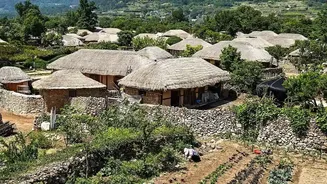
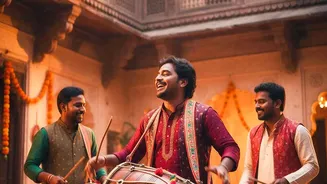
beats strongest in the shared courtyard as night falls. Here, under a canopy of stars, visitors and locals sit side-by-side on woven mats, drawn together by the promise of music. The evening begins with the resonant hum of a 'Mandaar' and the sharp rhythm of a 'Dhol'. These are not performances for a distant audience; they are a communal act of storytelling and celebration. The artists, often elders of the community, carry generations of tradition in their voices and on their instruments. They perform with an infectious energy that invites participation, blurring the line between spectator and performer. The space is simple—a packed-earth floor surrounded by traditional mud-walled homes—but the atmosphere is rich with a sense of connection and shared history.
Echoes of an Ancient Culture
The music itself is a vibrant tapestry of Chhattisgarh's diverse tribal heritage. One evening might feature 'Pandwani', a powerful musical narration of the Mahabharata, famously performed by artists like the legendary Teejan Bai. Another might be dominated by the energetic beats of 'Raut Nacha', a dance traditionally performed by the Yadav community to celebrate the stories of Lord Krishna. These performances are more than just entertainment; they are a living archive of the region's myths, morals, and social customs. The songs, known as 'Dohas', are filled with verses that speak of devotion, policy, and humour, linking the present to a deep mythological past. Each note and every step is a thread in the cultural fabric that has been woven over centuries.
More Than a Hotel Room
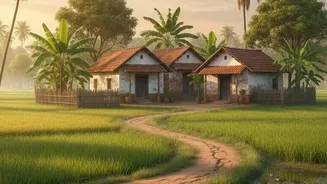
This experience is the cornerstone of Chhattisgarh's burgeoning rural and tribal tourism initiatives. The state government's homestay policy encourages local families to host visitors, offering an authentic alternative to conventional hotels. Instead of the sterile uniformity of a hotel, guests find themselves welcomed into a family home, often a traditional house built around a courtyard with a kitchen garden. A four-day stay becomes an immersion into a different rhythm of life. Days are spent exploring the surrounding natural beauty, from majestic waterfalls like Chitrakote to the dense forests of Kanger Valley National Park. Visitors can join in craft workshops, learning the art of bell metal (Dhokra) or terracotta from local artisans, and share in simple, organic meals cooked from family recipes.
A Sustainable Connection
This model of community-based tourism does more than just offer a unique vacation. It channels revenue directly into village households, empowering local communities and providing sustainable livelihoods. By staying in a homestay, travellers contribute directly to the preservation of both the natural environment and the cultural heritage they have come to experience. It’s a form of travel that fosters mutual respect and genuine human connection. The host families are not merely service providers; they are cultural ambassadors sharing their world. Guests, in turn, are not just consumers but active participants in a meaningful cultural exchange. This approach ensures that tourism remains a force for good, preserving the very authenticity that makes these experiences so sought after.