







A Titan in the Hills
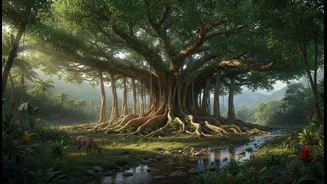
Deep in the Kaimur plateau, within the Rohtas district, lies a banyan tree of monumental scale. What was once a local landmark known primarily to nearby villagers is now capturing national attention. A survey conducted by the Bihar State Biodiversity
Board (BSBB) has put a spotlight on this magnificent specimen, revealing its vast canopy and intricate network of prop roots that cover a significant area. This isn't just any large tree; its sheer size and pristine condition within the Kaimur Wildlife Sanctuary make it a standout natural marvel. The initial assessments suggest it is one of the most significant banyan trees in the region, a living testament to the area's rich, undisturbed biodiversity.
The Path to Protection
Recognizing its unique ecological value, the Bihar government is moving to protect this natural giant. The proposal involves declaring the tree and its surrounding ecosystem a Biodiversity Heritage Site (BHS) under India's Biological Diversity Act, 2002. This special status is granted to areas with unique and fragile ecosystems, ensuring their conservation for future generations. The BHS tag would provide legal protection against any activity that could harm the tree and facilitate central funding for its preservation and management. The process involves consultation with local communities, ensuring that those who have lived alongside the tree for generations are involved in its future.
From Natural Wonder to Ecotourism Hotspot
The government’s vision extends beyond mere preservation. The plan is to develop the site into a premier ecotourism attraction. This involves creating the necessary infrastructure to make the location accessible and welcoming to visitors without disturbing its ecological balance. Plans include constructing approach roads, visitor information centres, and viewing platforms. The goal is to create a model for sustainable tourism, where visitors can appreciate the natural splendour of the banyan while contributing to the local economy. This initiative could provide alternative livelihood opportunities for local communities, from acting as guides to running small-scale hospitality services.
A New Chapter for Bihar Tourism
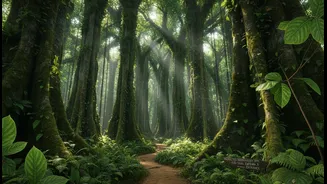
This project is part of a broader strategy by Bihar to diversify its tourism portfolio. While the state has long been a draw for religious and historical tourism with sites like Bodh Gaya and Nalanda, there is a growing focus on showcasing its natural heritage. The Kaimur Wildlife Sanctuary itself is a region with immense, largely untapped ecotourism potential, boasting waterfalls, diverse flora and fauna, and prehistoric rock paintings. By developing the ancient banyan site, Bihar aims to attract a new wave of nature lovers and adventure seekers, putting its wild landscapes firmly on the national travel map. This also aligns with a larger state initiative to identify and protect heritage trees, with dozens already being earmarked for conservation.
The Science of an Icon
While this specific Kaimur banyan's age is under study, recent scientific breakthroughs in Bihar are highlighting the incredible longevity of these trees. In a separate, landmark study, scientists recently used high-precision radiocarbon dating to confirm a banyan tree in Munger is approximately 700 years old, making it the world's oldest scientifically dated specimen. This innovative method, developed because tropical trees lack traditional growth rings, has replaced folklore with fact. It revealed the Munger tree was a remnant of an ancient forest that existed long before nearby colonial buildings were constructed. This new ability to accurately date such trees adds another layer of significance to conservation efforts, turning natural landmarks into verifiable historical records.