





What Was the Test About?
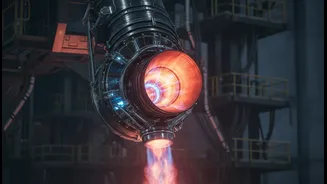
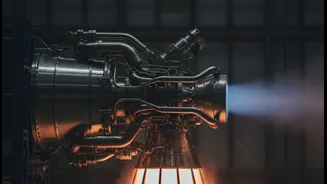
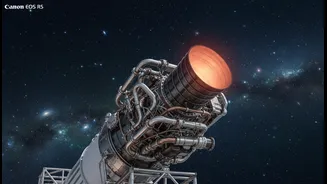
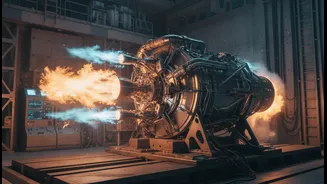
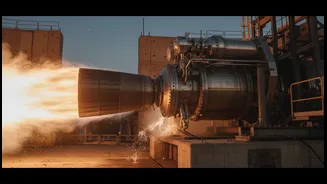
On June 24, 2026, at its Propulsion Complex in Mahendragiri, Tamil Nadu, ISRO successfully conducted a critical test on a key component of its new semicryogenic engine. This component, known as the Power Head Test Article (PHTA), is essentially the heart
of the engine, containing the complex turbopumps and systems that feed propellants into the main combustion chamber. The test fired this power head at a thrust level of 175 tonnes, which is 88% of the engine's full designed power. This was the eighth and most powerful test in the series, giving ISRO the confidence to proceed toward testing the full engine at its maximum 200-tonne thrust level.
Semicryogenic Engines Explained
To understand the significance, it helps to know how this engine differs from others. ISRO’s rockets currently use solid fuel boosters and liquid-fueled core stages, like the Vikas engine, and cryogenic upper stages. A fully cryogenic engine, like the one on the upper stage of the LVM3 rocket, uses both liquid oxygen and liquid hydrogen, which must be kept at extremely low temperatures, making them complex and costly to handle. A semicryogenic engine, however, offers a powerful and elegant compromise. It uses liquid oxygen as the oxidiser but pairs it with a refined form of kerosene (called Isrosene) as fuel. Since kerosene is liquid at normal temperatures, only one of the propellants needs to be cryogenically stored. This makes the engine easier to handle, more cost-effective, and allows for a denser, more powerful fuel combination.
A Leap in Power and Payload
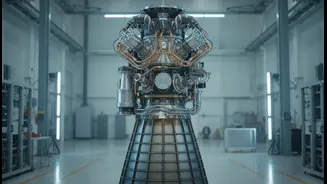
The bigger story is what this new engine, the SE-2000, will do for India's space program. This 2000-kilonewton (or 200-tonne) thrust class engine is being developed to replace the current core stage of India’s heaviest rocket, the Launch Vehicle Mark III (LVM3). The current stage, the L110, is powered by two Vikas engines. The new semicryogenic stage will be powered by a single, far more powerful SE-2000 engine. This upgrade will significantly boost the LVM3's payload capacity, allowing it to lift much heavier satellites into orbit. The rocket's capacity to geostationary transfer orbit is expected to increase from four tonnes to five or even six tonnes. This means launching bigger communication satellites for India and competing for more lucrative contracts on the global launch market.
Fueling Future Ambitions
This isn't just about launching heavier commercial satellites. A more powerful and efficient rocket is the foundational requirement for nearly all of India’s future space ambitions. This includes the Gaganyaan human spaceflight program, which will rely on the LVM3 for its crewed missions. While the initial Gaganyaan flights will use the existing LVM3 configuration, this engine is key to the program's evolution. Furthermore, this technology is vital for future deep-space exploration, such as follow-up missions to the Moon and Mars, and the eventual goal of building an Indian space station. More power means more scientific instruments, more fuel for longer journeys, and the ability to undertake more complex missions.
The 'Make in India' Masterstroke
Developing this advanced propulsion technology indigenously is a massive achievement. Mastery of semicryogenic engines is a capability possessed by only a few spacefaring nations. This success underscores India's growing self-reliance in critical space technologies and reduces its dependence on foreign assistance or hardware. By making its launch vehicles more powerful and cost-effective, ISRO aims to capture a larger share of the multi-billion dollar global launch services market, with a stated goal of increasing India's share from around 2% to 10%. Each successful test, like the recent 175-tonne firing, is a confident step towards that future.