



A Sweet with a Storied Past
Long before it became an Indian icon, the jalebi began its journey in West Asia. Food historians trace its origins to the Persian 'zalabiya' or the Arabic 'zulubiya', a similar sweet mentioned in a 10th-century cookbook. This delicacy travelled to India with
Persian-speaking invaders, traders, and artisans, who brought their culinary traditions with them. By the 15th century, it was firmly rooted in Indian culture. The Jain writer Jinasura described it in his work, 'Priyamkarnrpakatha', as a treat enjoyed by wealthy merchants during festive gatherings. Another text from the 17th century, 'Bhojanakutuhala', provides one of the earliest known recipes for what we now recognise as jalebi. From the courts of sultans to the stalls of street vendors, it adapted, evolved, and became irrevocably Indian.
The Art and Science of the Swirl
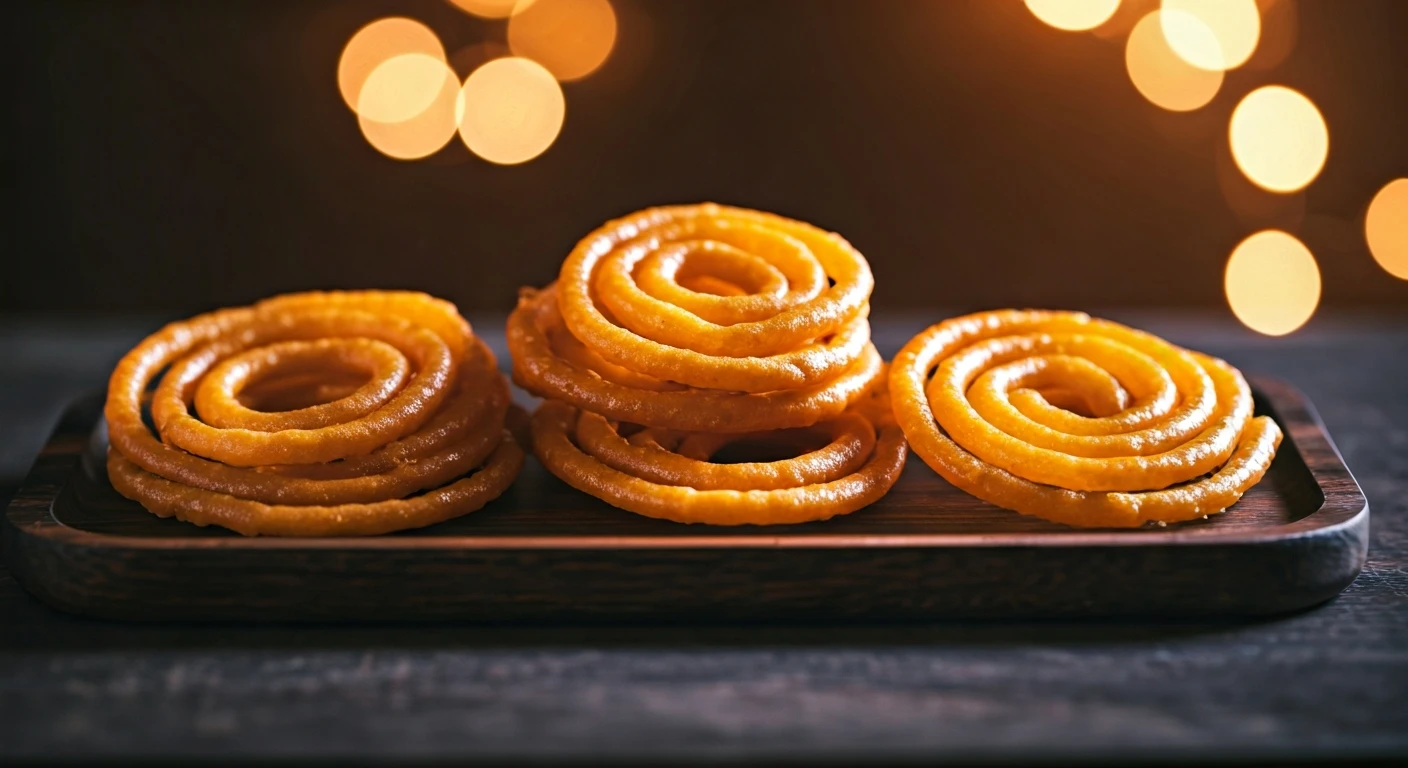
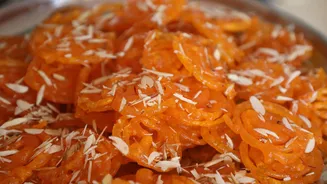
What makes a jalebi a jalebi? It’s a masterful interplay of simple ingredients and precise technique. The process begins with a batter, typically made from all-purpose flour (maida), which is left to ferment for several hours, or even overnight. This fermentation is crucial; it not only gives the jalebi its characteristic slight tang but also creates the air pockets that contribute to its unique texture. The batter is then piped in concentric, chaotic circles into hot ghee or oil. The high heat flash-fries the exterior, creating a crisp shell while the inside remains tender and chewy. The final, magical step is the dunk. The hot, fried swirls are immediately submerged in a warm sugar syrup, often flavoured with saffron, cardamom, or rose water. The porous structure of the jalebi acts like a sponge, soaking up the sweet, fragrant liquid. The result is a dessert that is simultaneously crispy, chewy, syrupy, and utterly irresistible.
More Than Just a Dessert
The reason jalebi reigns supreme during festivals is its deep-seated cultural symbolism. In many parts of North India, it’s a non-negotiable part of Dussehra celebrations. The tradition of eating jalebi with fafda in Gujarat on this day is legendary. For Diwali, plates piled high with these bright orange spirals are exchanged between neighbours and family, signifying goodwill and shared joy. In some regions, it’s not just for festivals. In cities like Indore and Varanasi, a breakfast of hot jalebis paired with creamy rabri or savoury poha is a beloved morning ritual. It’s a celebratory food at weddings, a comfort food on a rainy day, and a treat to mark small and large victories. Its presence signals that the occasion is special. The vibrant colour, reminiscent of sunshine and saffron, is inherently auspicious, making it the perfect offering during pujas and a fitting food for happy gatherings.
A Symbol of Joy and Togetherness
Beyond its taste and history, the jalebi represents a beautiful idea. Its intertwined, circular form, with no clear beginning or end, is sometimes seen as a metaphor for the complexities and sweetness of life. It’s a shared experience, rarely eaten alone. You buy it by the kilo, not by the piece. You share it from a communal box at home or stand shoulder-to-shoulder at a bustling sweet shop, watching it being made fresh. This communal aspect is key to its role as a festival favourite. Festivals are about community, about reinforcing social bonds, and about collective celebration. The jalebi, in its warm, sticky, and generous glory, is the perfect edible embodiment of that spirit. It’s a taste that connects generations, a simple pleasure that triggers a cascade of memories of laughter, light, and love.