






The Sun’s 11-Year Rhythm
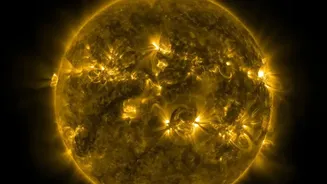
The Sun operates on an approximately 11-year cycle, swinging between periods of quiet and intense activity. During its active phase, or solar maximum, the Sun's surface is mottled with sunspots and it frequently unleashes violent eruptions like solar flares
and Coronal Mass Ejections (CMEs). These events hurl vast amounts of energy and charged particles into space. When directed at Earth, they can trigger geomagnetic storms that disrupt our satellite communications, damage power grids, and pose risks to astronauts. Understanding the rhythm of this cycle isn't just an academic curiosity; it's crucial for protecting our increasingly technology-dependent world. The entire process is driven by the Sun's powerful and ever-changing magnetic field.
A Star-Sized Magnetic Engine
At the heart of the solar cycle is a process called the solar dynamo. The Sun is a massive ball of electrically charged gas, or plasma, that is constantly in motion. This movement generates a powerful magnetic field, much like a dynamo on a bicycle creates a current. However, because the Sun's equator rotates faster than its poles, these magnetic field lines get twisted, tangled, and stretched. This tangling builds up enormous energy, which is then released through flares and CMEs. Roughly every 11 years, this magnetic field becomes so chaotic that it completely flips its polarity—north becomes south and south becomes north—resetting the cycle. This messy, complex process is the 'driver' Aditya-L1 was sent to investigate.
India’s Unblinking Eye on the Sun
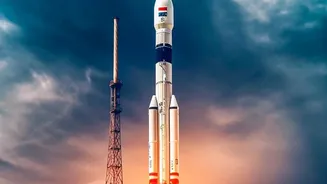
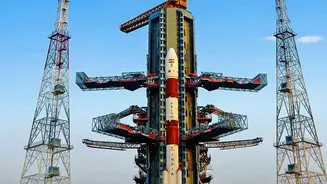
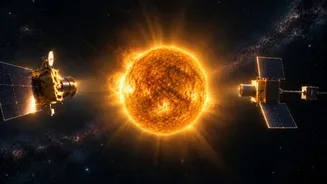
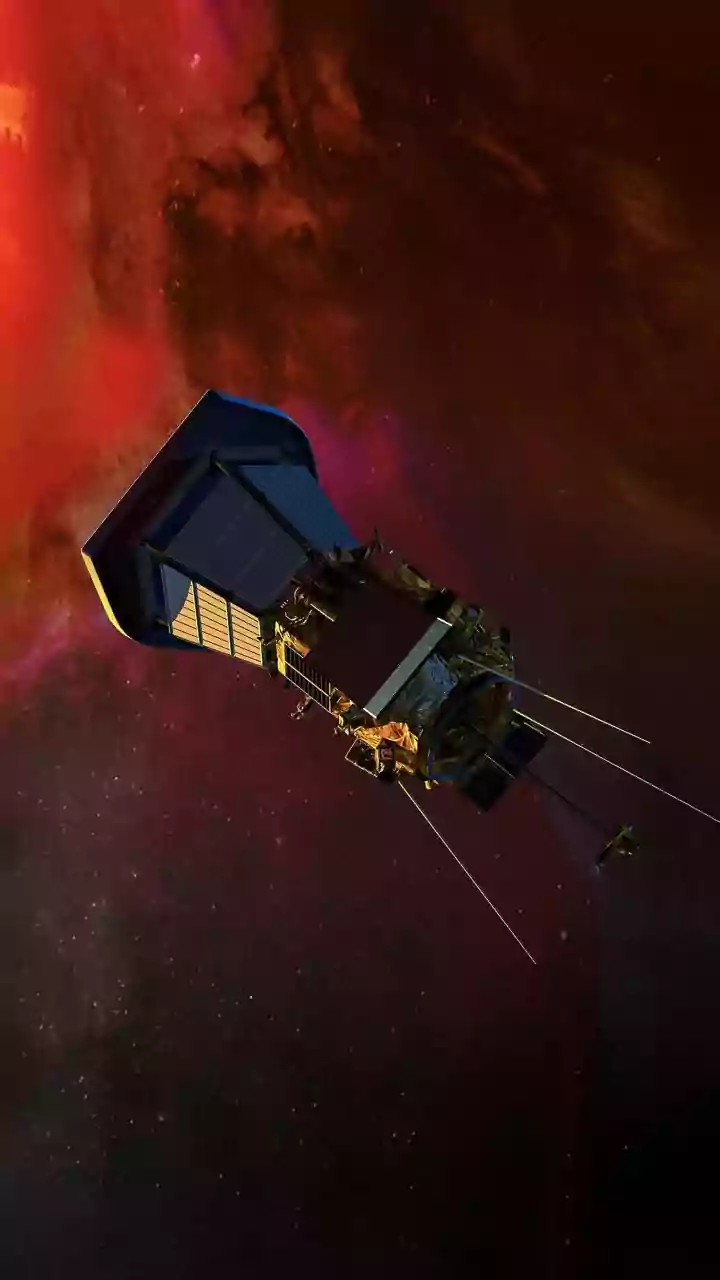
To solve this mystery, you need to watch the Sun constantly. That's where Aditya-L1 comes in. Positioned at Lagrange point 1 (L1), about 1.5 million kilometres from Earth, the spacecraft has a continuous, uninterrupted view of the Sun. This vantage point is outside Earth's magnetic field, allowing its instruments to get a clean read on the particles and fields flowing from the Sun. As India's first dedicated solar observatory, Aditya-L1 is ISRO's ambitious leap into decoding solar phenomena, joining a global effort to understand our star. The mission's primary goals include studying the Sun's atmosphere, its dynamics, and the drivers of space weather.
Decoding the Magnetic Clues
Aditya-L1 is equipped with a suite of seven specialised instruments. Four of these payloads perform remote sensing, observing the Sun's different layers, while three conduct in-situ measurements, studying the local space environment at L1. Key among them is the Magnetometer (MAG), which directly measures the magnetic field flowing past the spacecraft. Other instruments like the Visible Emission Line Coronagraph (VELC) and the Solar Ultraviolet Imaging Telescope (SUIT) observe the super-hot corona and chromosphere, regions where the magnetic field's effects are most dramatic. Together, these instruments can track the magnetic field's journey from the solar surface into space, providing a complete picture of how energy is transferred and released.
From Data to Prediction
The observations from Aditya-L1 are already making an impact. By combining its data with other observatories, scientists have gained new insights into how solar storms interact with Earth's magnetic shield. Studies using Aditya-L1 data have analysed powerful geomagnetic storms and revealed how they can compress Earth's magnetosphere, exposing satellites to harsh conditions. The mission has also provided the first comprehensive analysis of 'iron fluorescence' during dozens of powerful X-class flares, a phenomenon that helps scientists pinpoint where these eruptions originate. By feeding this detailed magnetic field data into solar models, scientists can better understand the physics of the solar dynamo. Ultimately, this deeper understanding will improve our ability to forecast space weather, giving us crucial warnings needed to protect our infrastructure on Earth and in space.