
The Solar System's True Moon King
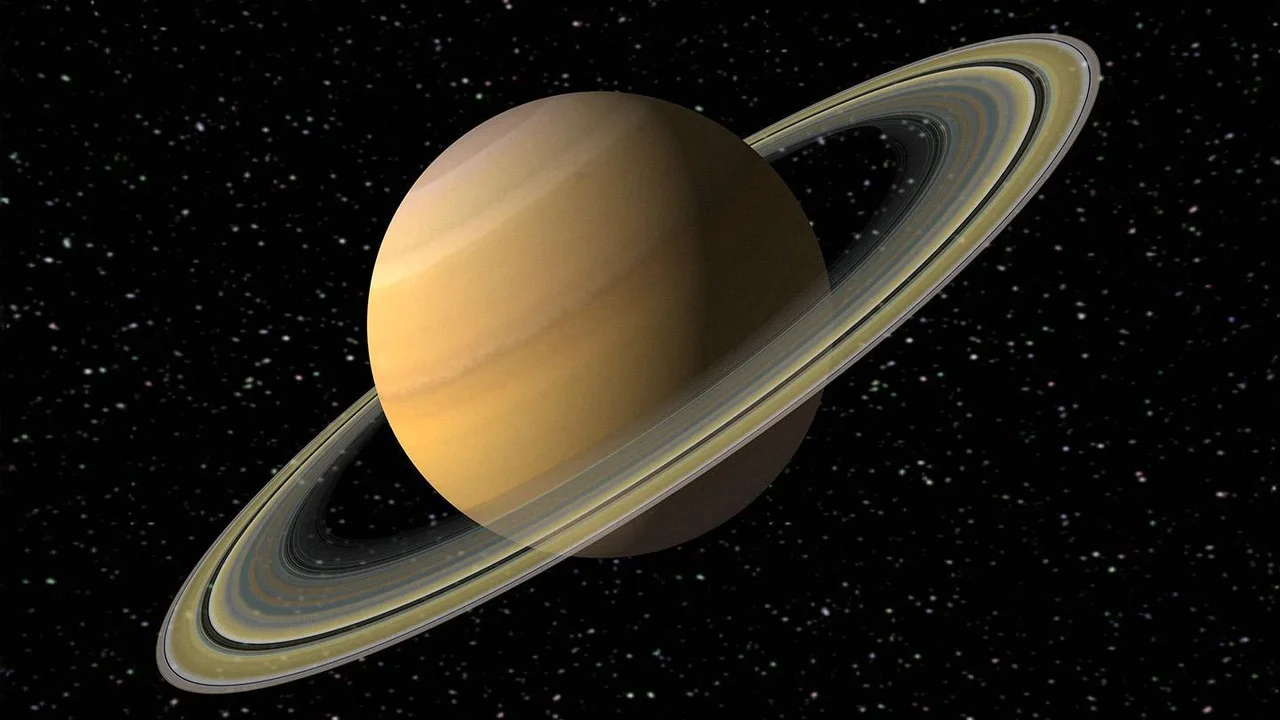
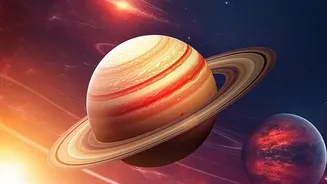
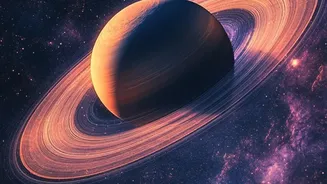
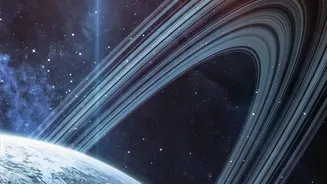
In the cosmic race for the most satellites, Saturn is now the decisive winner. As of June 2026, the official count of confirmed moons orbiting the gas giant reached an astonishing 293, a figure confirmed by both NASA and the International Astronomical
Union (IAU). This number solidifies Saturn's lead over Jupiter, which sits at just over 100 moons. The count has exploded in recent years, jumping from 83 to 145, then 274, and now to its current total, thanks to a series of massive discoveries. These huge leaps happen when new surveys are processed, revealing dozens or even hundreds of previously unseen objects in a single announcement. The headline-making numbers reflect an exciting reality: our view of the solar system is changing faster than ever.
Finding Needles in a Cosmic Haystack
These newly discovered moons aren't like the giant, spherical ones we know and love, such as Titan or Enceladus. Instead, they are tiny, irregular chunks of rock and ice, some just a few kilometers wide—about the size of a small town. They orbit far from Saturn and are incredibly faint. Spotting a 3-kilometer-wide object that is over a billion kilometers from Earth is a monumental challenge. For many years, these tiny worlds were simply too small and dim to be seen with existing telescopes and methods, leaving them hidden in the darkness of the outer solar system.
The 'Shift and Stack' Breakthrough
The secret behind the recent surge in discoveries is an ingenious data processing technique called "shift and stack." Astronomers, like the team led by Edward Ashton, use powerful instruments such as the Canada-France-Hawaii Telescope to take hundreds of sequential images of the area around Saturn. Because a potential moon is moving, it would appear as a faint streak or be lost entirely in a single long exposure. Instead, the team takes many short exposures. Then, computer software digitally shifts each image at the predicted speed of a hypothetical moon. When these shifted images are "stacked" on top of each other, the stars create long streaks, but the faint moon combines into a single, detectable point of light. This method has been revolutionary, allowing scientists to find objects that are 100 million times fainter than anything visible to the naked eye.
Where Do All These Moons Come From?
Saturn didn't form with nearly 300 moons. The larger moons, like Titan and Rhea, are thought to have formed from the same disk of gas and dust that created the planet itself. However, these small, distant, and often backward-orbiting irregular moons are believed to be cosmic newcomers. The leading theory is that they were once free-roaming objects, likely asteroids or bodies from the Kuiper Belt, that were captured by Saturn's immense gravity long ago. Many of them travel in orbital families, suggesting they are fragments of larger parent moons that were shattered by violent collisions with comets or other moons millions of years ago. Each new discovery is like finding another piece of shrapnel from an ancient cosmic crime scene.
From Candidate to Confirmed Moon
Finding a dot of light is just the first step. To become an official moon, a candidate object's orbit must be tracked and confirmed over several years to prove it is truly bound to Saturn and not just a passing asteroid. This painstaking work is handled by the Minor Planet Center, which acts as the official clearinghouse for all such discoveries. Once the orbit is confirmed as stable, the International Astronomical Union (IAU) grants it an official designation. Only then does it join the official list and contribute to the planet's ever-growing moon count. This is why there’s often a delay of years between the initial discovery images being taken and the public announcement of new moons.