




1. Go Green with Foliage
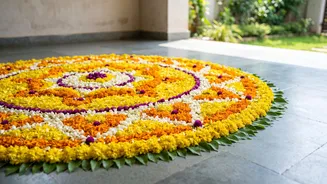
Flowers often get all the attention, but foliage can be a pookalam’s secret weapon. Collect a variety of leaves from your own garden or neighbourhood, focusing on different shapes, sizes, and shades of green. Use broader leaves to form the base or outer
rings and smaller, more delicate leaves for intricate patterns inside. This approach not only cuts costs significantly but also adds a unique, natural texture that makes the colours of the few flowers you do use pop even more.
2. The Single-Flower Gradient
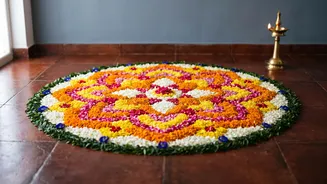
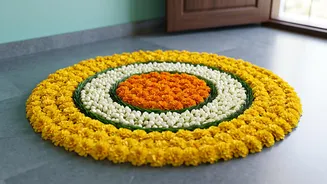
Instead of buying small quantities of many expensive flowers, focus on one affordable and abundant variety, like the cheerful marigold (jemanthi). Buy them in bulk in two complementary shades, such as bright yellow and vibrant orange. You can create a stunning visual effect by designing a simple gradient, with rings of colour that flow from light to dark. This minimalist approach is both elegant and economical, proving that you don't need a rainbow of flowers to make a major impact.
3. Embrace Geometric Simplicity
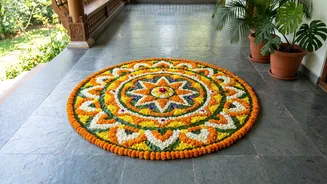
Intricate designs often demand a high volume and variety of petals to look full. A smarter, budget-friendly strategy is to focus on strong geometric patterns. Think squares, triangles, or a simple starburst. These shapes can be outlined clearly with chalk and filled in neatly. A smaller, well-defined geometric pookalam often looks more striking and modern than a larger, sparsely filled one. Use contrasting colours for a clean, bold statement that is both beautiful and easy on the wallet.
4. The Minimalist Ring Design
The classic circular pookalam is a timeless choice for a reason: it’s beautiful and beginner-friendly. To make it cost-effective, reduce the number of rings. A simple three-ring design using readily available flowers like marigolds, hibiscus, and white chrysanthemums or thumba (lucas aspera) can look incredibly elegant. The key is clean separation between the rings and ensuring the petals are packed densely within each one. This approach celebrates the traditional form of the pookalam while keeping flower costs to a minimum.
5. Look to the Kitchen for Colour
For centuries, rangoli artists have used materials from the kitchen, and this principle can be applied to pookalams to reduce the reliance on flowers. While the pookalam tradition centres on petals, you can cleverly supplement your design with natural powders. Use turmeric for a brilliant yellow, or coloured rice flour for shades you can't find in flowers, like blue. Use these materials for inner sections or as a filler base to make your flower petals go further. It’s a creative way to add colour and texture without buying more blooms.
6. Use Sawdust as a Filler
Another traditional, cost-effective filler material is sawdust. You can get sawdust from a local carpenter, often for free. It can be dyed in various colours using fabric dye or food colouring mixed with water. After it dries, the coloured sawdust can be used to fill large sections of your pookalam design, creating a smooth, even bed of colour. You can then use your precious flower petals for the more detailed patterns and borders on top, giving the illusion of a pookalam made entirely of flowers.
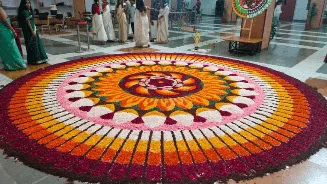
7. Community Pookalam Power
Onam is a festival of togetherness, so why not apply that to your pookalam? Instead of each family buying seven or eight different types of flowers, collaborate with your neighbours or extended family. Assign one type of flower to each household. When you pool your resources together, everyone gets access to a wide variety of colours and textures without the individual expense. This not only makes for more vibrant and varied pookalams for everyone but also beautifully embodies the community spirit of the festival.