



The First Whistle Blows in Gujarat
The much-anticipated project will not launch all at once. Instead, the focus is on getting the most advanced sections operational first. According to Railway Minister Ashwini Vaishnaw, the initial services will begin in Gujarat. Trial runs are scheduled
to start in May 2027 on the 50-kilometre stretch between Surat and Bilimora. This section has seen rapid progress, with crucial milestones like the electrification of overhead lines already completed in November 2026. Following successful trials, the plan is to launch the first commercial passenger services between Surat and Vapi by the last quarter of 2027. This phased approach allows the National High Speed Rail Corporation Limited (NHSRCL), the body executing the project, to test systems and begin operations while construction continues on more complex segments.
A Timeline of Progress and Phases
The project's timeline has been adjusted due to earlier challenges, but a clear path forward has now been outlined. After the initial Surat-Vapi launch in late 2027, the corridor will expand incrementally. The next target is to extend services along the Ahmedabad-Vapi section by the end of 2027. Looking further ahead, the high-speed line is expected to reach Thane, on the outskirts of Mumbai, by 2029. The final, and most challenging, leg connecting the entire 508-kilometre route to Mumbai's Bandra Kurla Complex (BKC) will follow. This phased commissioning strategy is designed to bring the benefits of high-speed travel to the public sooner, even as work continues on difficult terrains, including a 21-km underground tunnel in Maharashtra, part of which runs under the sea.
Overcoming Hurdles on the Track
The journey to building India's first bullet train has not been without its obstacles. Land acquisition, particularly in Maharashtra, caused significant delays in the initial years. Protests from farmers and complex legal disputes, including a notable case involving Godrej & Boyce over land in Mumbai, slowed progress. However, by early 2024, officials reported that 100% of the required land in both Gujarat and Maharashtra had finally been acquired, clearing a major bottleneck. The COVID-19 pandemic also disrupted timelines, but construction has since gathered significant momentum, especially from 2021 onwards. With these major hurdles now in the past, the project is advancing at a rapid pace, with hundreds of kilometres of piers and viaducts already constructed.
The Technology Driving the Dream
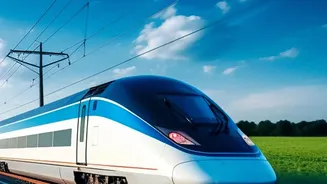
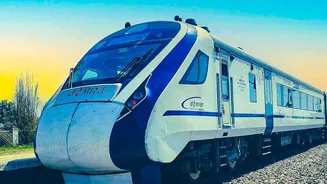
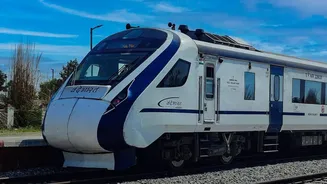
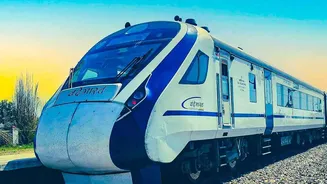
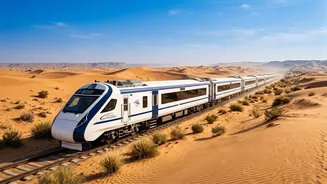
The Mumbai-Ahmedabad corridor is being built using Japan's renowned Shinkansen technology, known for its exceptional safety record over six decades. The trains are designed to operate at speeds of up to 320 km/h, drastically cutting travel time between the two financial hubs from about eight hours to just over two hours. While Japanese-made trains are part of the long-term plan, the initial runs may use indigenously developed trainsets. An Indian-made high-speed train, the B-28, is being developed to run at 280 km/h and is expected to be used for the first trials. The project also incorporates advanced features like a specialised 2x25 kV overhead electrification system to ensure a stable power supply for the high-speed operations.
More Than Just a Fast Train
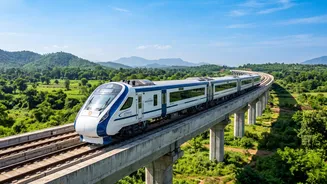
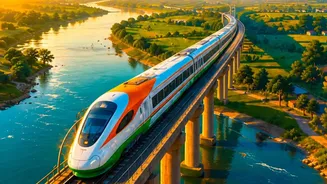
The impact of the bullet train corridor extends far beyond just reducing travel time. It's envisioned as a catalyst for economic growth, creating a single economic zone connecting major commercial centres like Mumbai, Surat, Vadodara, and Ahmedabad. The project is expected to boost industrial development, create jobs, and enhance connectivity for both business and leisure travellers. By building most of the 508-km line on an elevated viaduct, the project minimises land disruption, allowing agricultural and other activities to continue underneath. The construction itself has involved remarkable engineering feats, including the erection of massive steel bridges and the excavation of mountain tunnels, showcasing India's growing infrastructure capabilities.