





Start With Your Outerwear
Your most important item for a rainy trip is also your bulkiest: a waterproof jacket. The secret is to not pack it at all. Wear your rain jacket and your heaviest pair of shoes, like waterproof boots, on the plane. This single move frees up a significant
amount of space in your bag. Look for a jacket that is not just water-resistant but fully waterproof and ideally 'packable'—meaning it can be compressed into a small pouch if you get warm. Many modern rain jackets, like the Patagonia Torrentshell 3L or options from REI, offer excellent protection without being overly heavy, making them ideal for travel.
Choose Fabrics That Work For You
When rain is in the forecast, fabric choice is everything. Leave the cotton at home; it absorbs moisture and takes a long time to dry. Instead, focus on quick-drying, moisture-wicking materials. Merino wool is an excellent choice for base layers and socks because it insulates even when damp and resists odours, allowing for multiple wears. Synthetic fabrics like nylon and polyester are also great for travel tops and trousers because they are lightweight, wrinkle-resistant, and dry quickly. Packing clothes made from these materials means that if you do get caught in a downpour, your items will be ready to wear again much sooner.
Embrace the Art of Layering
Instead of packing thick, heavy sweaters, think in layers. A good layering system allows you to adapt to changing temperatures throughout the day, from a chilly morning to a warmer, humid afternoon. For a four-day trip, a good formula is to pack a base layer (like a long-sleeved tee), a mid-layer (like a fleece or a lightweight wool sweater), and your waterproof outer shell. This trio provides more versatility and warmth than a single bulky coat and takes up far less space. This method allows you to create multiple outfits from fewer items.
Master Rolling and Packing Cubes
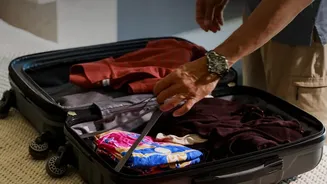
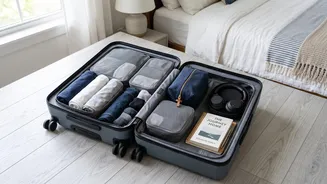
How you pack is just as important as what you pack. Rolling your clothes is a proven technique to maximize space and minimize wrinkles in casual wear. T-shirts, trousers, and knitwear can all be rolled into tight cylinders, which can then be packed snugly together. To take your organization to the next level, use packing cubes. These zippered pouches allow you to compartmentalize your clothing—one for tops, one for bottoms, one for underwear and socks. Compression cubes take this a step further by having an extra zipper that squeezes out excess air, which is perfect for compressing items like a fleece mid-layer. Using cubes also makes it easy to find what you need without rummaging through your entire bag.
A Sample 4-Day Rainy Trip Wardrobe
To make it concrete, here is a sample packing list based on the capsule wardrobe principle, where every item works with others. Tops: Four tops, including a mix of short-sleeve and long-sleeve options made from quick-dry fabrics. Bottoms: Two pairs of versatile trousers. Choose darker colours that won't show splashes. Layers: One lightweight mid-layer, such as a merino wool sweater or a fleece jacket. Outerwear: One waterproof jacket (wear it). Footwear: Two pairs. One pair of waterproof boots (wear them) and one pair of comfortable, lighter shoes like loafers or sneakers for indoors. Underwear and Socks: Five pairs of each. Pack an extra pair of socks in case a pair gets wet. * Extras: A small, sturdy travel umbrella, a reusable waterproof bag for any damp clothes, and a hat.