


Meet the Gatekeeper: What Is an ATS?
An Applicant Tracking System, or ATS, is software used by the vast majority of companies to manage job applications. Instead of manually reading hundreds of resumes, recruiters use an ATS to automatically scan, sort, and rank candidates. The system extracts
information like your skills, experience, and education, then compares it against the job description. If your resume isn't formatted in a way the software can understand, or if it lacks the right keywords, it might get filtered out, no matter how qualified you are. Understanding this is the first step to creating a resume that gets seen.
Formatting Rules to Beat the Bots
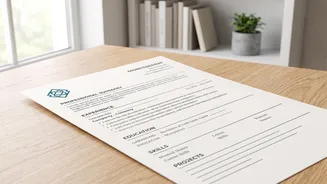
To ensure your resume is ATS-friendly, simplicity is key. Avoid fancy templates with columns, tables, text boxes, or graphics, as these can confuse the parsing software. A clean, single-column layout is the safest bet. Use standard, easy-to-read fonts like Calibri, Arial, or Georgia. Stick to conventional section headings like “Work Experience,” “Education,” and “Skills” instead of creative titles. Finally, while PDFs are common, some older ATS struggle with them; if the application allows, submitting a .docx file can be a safer option. Always place your contact information in the main body of the resume, not in the header or footer, as some systems may not read those areas.
How AI Resume Builders Can Help
This is where AI resume tools come in. These platforms are designed to help you create a resume that is both professionally written and technically compliant. A good AI builder starts with ATS-friendly templates, taking the guesswork out of formatting. They help you turn a blank page into a solid first draft in minutes, which is a huge help when writer's block strikes. However, their most powerful feature is keyword optimization. By pasting in a job description, these tools can analyze your resume and highlight which crucial keywords you're missing, dramatically increasing your chances of matching what the ATS is looking for. They provide a systematic way to ensure your resume speaks the language of the job you want.
No Experience? Focus on What Matters
For freshers with limited work history, the focus of the resume needs to shift. Your goal is to showcase potential and relevant skills. A one-page resume is ideal. Since you can't rely on a long list of previous jobs, dedicate prominent sections to your education, technical skills, academic projects, and any internships or volunteer work. For each project or internship, don't just list your responsibilities; describe what you built, the technologies you used, and what you accomplished. An AI tool can help you phrase these accomplishments using strong action verbs. The skills section is especially important; list programming languages, software, and tools you're familiar with, as these are often the keywords an ATS will be scanning for in technical roles.
Using AI as a Co-Pilot, Not a Ghostwriter
While AI tools are incredibly useful for drafting and optimization, they have their limits. Recruiters are becoming adept at spotting resumes that are entirely AI-generated and unedited. The bullet points created by AI can sound generic and lack the specific details that make you stand out. The best approach is to use AI as an assistant. Let it handle the formatting and initial keyword analysis, but always take the time to edit every line. Customize the descriptions to reflect your unique voice, experiences, and achievements. A resume that combines the technical precision of AI with your authentic human touch is the one that will ultimately win the interview.