




An Ambitious New Chapter
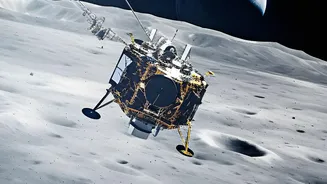
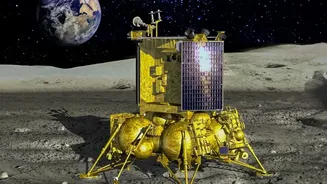
Following the historic success of Chandrayaan-3, the Indian Space Research Organisation (ISRO) is leveling up its ambitions significantly. The Chandrayaan-4 mission, planned for launch around 2028, is designed to be India’s first lunar sample-return mission.
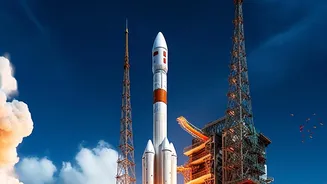
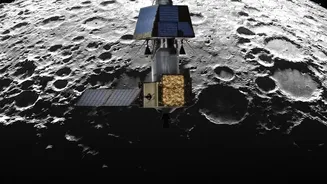
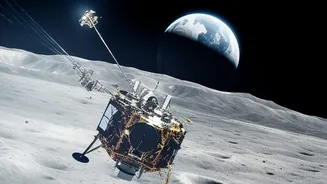
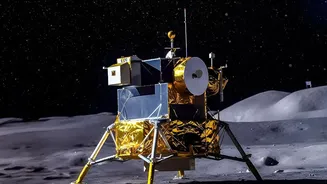
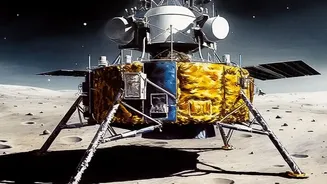
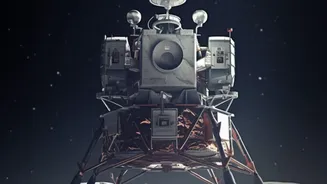
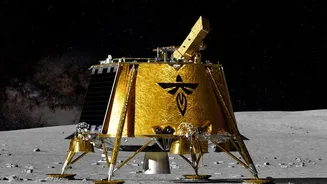
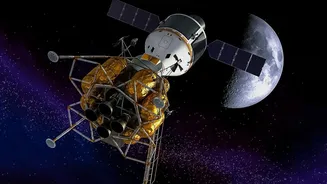
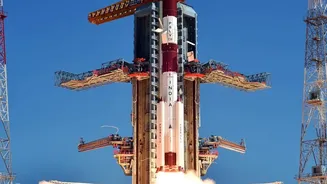
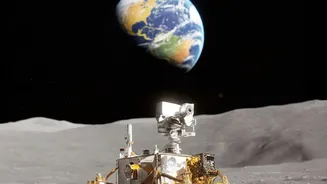
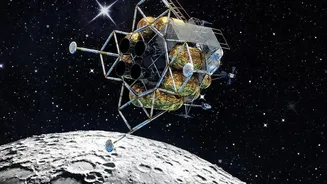
The primary goal is to land on the Moon’s southern polar region, collect rock and soil samples with a robotic arm, and bring them safely back to Earth for scientific study. But unlike previous missions, this isn't a single craft journey. Chandrayaan-4 is a complex, multi-module mission that will require two separate heavy-lift rocket launches to send all its components to space. The mission architecture involves five distinct modules: a descender, an ascender, a transfer module, a re-entry module, and a propulsion module. This complexity is necessary to achieve the ultimate goal of returning precious lunar material.
The High-Stakes Space Ballet
The most critical part of the entire mission profile is demonstrating lunar orbit rendezvous and docking. After the descender module lands and the ascender collects the samples, it must launch from the Moon’s surface back into orbit. There, it must autonomously find, approach, and physically connect with the transfer module, which will be circling the Moon. This maneuver is akin to threading a needle while both the needle and the thread are moving at thousands of kilometers per hour, hundreds of thousands of kilometers from home. A failure to dock would mean the mission cannot be completed. This precise, automated process is a technology that ISRO has been actively developing through its Space Docking Experiment (SPADEX) program, which tests the rendezvous and docking of two small satellites in Earth orbit as a precursor.
A Stepping Stone for Future Goals
Mastering lunar orbit docking is not just about the success of Chandrayaan-4; it’s about unlocking India's entire future in space. This capability is a fundamental building block for the nation’s most ambitious upcoming projects. The first and most prominent is the Bharatiya Antariksh Station (BAS), India's planned space station. Scheduled for its first module launch by 2028, the station will be built in a modular fashion, requiring multiple docking maneuvers to assemble it in orbit. Without proven, reliable docking technology, building a space station is impossible. The experience gained from Chandrayaan-4 will be directly applicable to the assembly and servicing of BAS.
Paving the Way for Indian Astronauts
The long-term vision extends even further, with the goal of sending an Indian astronaut to the Moon by 2040. A human lunar mission is exponentially more complex than a robotic one and follows a similar architectural logic to the Apollo missions. A crewed mission would require a lander to separate from an orbiting mothership, descend to the lunar surface, and then ascend to rendezvous and dock again for the return journey to Earth. The autonomous docking systems, sensors, and flight logic proven by Chandrayaan-4 will be the direct ancestors of the systems needed to ensure the safety of Indian astronauts on future lunar missions. Each successful automated dock is a step towards ensuring the viability of human-rated systems.
Beyond the Moon: Mars and Interplanetary Travel
The capabilities demonstrated by Chandrayaan-4 will also be critical for future interplanetary missions. Any mission that aims to return samples from Mars or another celestial body will likely rely on a similar two-part architecture: a surface ascender and an orbital craft. Proving this technology in the relatively close environment of the Moon is a logical and necessary step before attempting it millions of kilometers away at Mars, where communication delays are significant and the mission stakes are even higher. By mastering this intricate maneuver, ISRO is not just bringing back a piece of the Moon; it is building a foundational capability that will allow India to reach further into the solar system and solidify its position as a leading global space power.