






A Global Wake-Up Call on Soil
For decades, conversations about food security have focused on boosting yields through better seeds and more inputs. A groundbreaking study recently published in a Nature-family journal, however, argues we've been missing a critical piece of the puzzle:
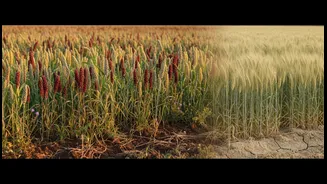
the health of the land itself. Researchers have now provided the first global empirical evidence directly linking land degradation to lower crop yields worldwide. The findings are stark: a 10% increase in land degradation is associated with a 2% increase in the gap between a farm's potential and actual yield. Globally, this translates to an annual loss of about 20 million tonnes of crops, enough calories to feed over 70 million people. The economic cost is equally staggering, with reduced agricultural revenues estimated at US$4 billion each year. This isn't just about a bad harvest; it's a slow-burning crisis undermining the very foundation of our food systems.
More Than Just Dirt
The concept of 'cropland quality' goes far beyond simple soil fertility. It encompasses a complex ecosystem that includes water retention, biodiversity, and resilience to climate shocks like drought and floods. Practices like deforestation, overgrazing, unbalanced fertiliser use, and intensive ploughing degrade this delicate balance. This leads to soil erosion, where nutrient-rich topsoil is washed or blown away, and salinisation, a build-up of salts from improper irrigation that harms plant growth. A significant portion of irrigated lands, particularly in arid regions, are affected. In parts of northern India, for instance, soil salinity is already known to impair wheat and rice yields. The new study reframes this degradation not as an unavoidable side effect of farming, but as a direct and quantifiable threat to long-term economic planning and stability.
The Indian Context
For India, these global findings carry immense weight. With over half of its population depending on agriculture for a livelihood, healthy land is a cornerstone of the national economy and social stability. India has made huge strides in food production since the Green Revolution, but now faces the long-term consequences of chemical-intensive farming, including widespread soil degradation. Land degradation already costs South Asia an estimated US$10 billion annually. This directly impacts smallholder farmers, who face shrinking harvests and are pushed further into debt. Recognizing this, India has committed to achieving Land Degradation Neutrality by 2030 and has launched initiatives like the National Mission for Sustainable Agriculture and the Soil Health Card scheme to promote more balanced and resilient farming practices.
From Reaction to Proactive Planning
The study's most crucial takeaway is its call for a fundamental policy shift. It argues that investing in sustainable land management is not merely an environmental necessity but a core investment in food security and economic resilience. For too long, land use has been planned in silos, with agriculture, conservation, and urban development often in conflict. The new research champions an integrated approach, where cropland is treated as a strategic national asset. This means moving beyond short-term yield targets and embedding soil health into long-term economic and developmental blueprints. Policies must incentivize practices like agroforestry, cover cropping, and reduced tillage that restore soil structure and fertility. As one of the study's authors, Professor Nima Shokri, stated, "Healthy soils are fundamental to resilient food systems." The evidence now clearly shows that preventing degradation delivers tangible returns, making it a priority for policymakers worldwide.