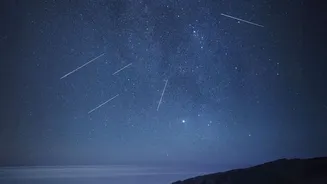



The Main Event: Perseid Meteor Shower
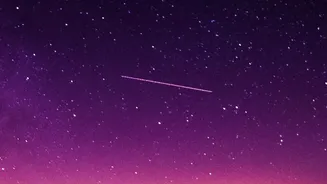
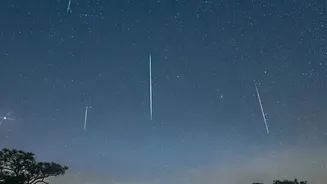
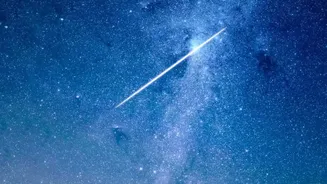
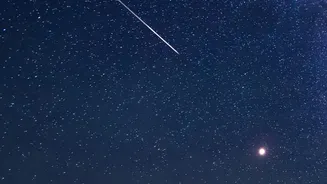
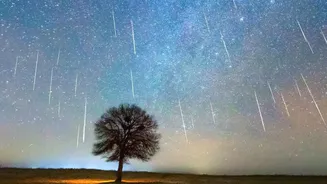
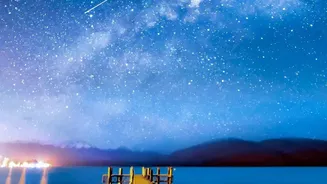
The annual Perseid meteor shower, one of the year's most beloved celestial events, reaches its peak on the nights of August 12 and 13. This year’s shower is particularly special because its peak coincides with the New Moon on August 12, ensuring perfectly
dark, moonless skies for optimal viewing. Caused by debris from the Comet Swift-Tuttle, the Perseids are known for producing fast, bright meteors, including stunning fireballs—larger explosions of light and colour that last longer than a typical meteor streak. Under ideal conditions, you could see between 50 and 100 meteors per hour. The best time to watch is from midnight until just before dawn, when the shower's radiant point in the constellation Perseus is highest in the sky.
Spotting the Ringed Planet: Saturn
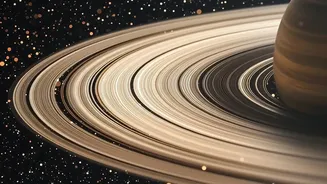
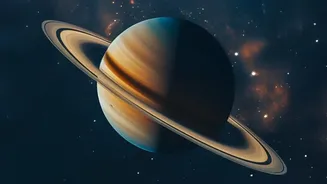
While Saturn officially reaches its opposition—its closest and brightest point for the year—on October 4, August is the month when it truly begins to command the night sky. Throughout the month, the ringed planet will rise earlier each night, becoming a brilliant object for observation. By mid-August, it will be visible from around 10 or 11 p.m. local time. Shining at a bright magnitude, it will be easily visible to the naked eye in the constellation Pisces. For those with a small telescope, the view will be even more rewarding. The planet's iconic rings are tilted favourably towards Earth, offering one of the clearest views of the distinct separation between the rings and the planet itself.
A Parade of Planets Before Dawn
On the mornings of August 12 and 13, just before sunrise, a delightful alignment of six planets will be spread across the sky. Mars, Saturn, Jupiter, Mercury, Uranus, and Neptune will all be visible in a single viewing session for dedicated observers. Mars and Saturn will be straightforward naked-eye objects. Jupiter and Mercury will be visible but challenging, as they will be very low on the eastern horizon in the growing twilight. While the brighter planets can be spotted without equipment, you’ll need binoculars to catch a glimpse of Uranus and a telescope for distant Neptune. The best time to try and spot this planetary parade is about 60 to 90 minutes before your local sunrise.
Your Viewing Toolkit and Strategy
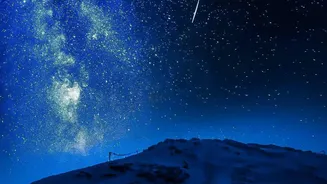
You don't need expensive equipment for most of August's celestial treats. The Perseid meteor shower is best viewed with the naked eye. Find a dark location away from city lights, give your eyes about 20-30 minutes to adjust to the darkness, lie back, and enjoy the show. However, the main challenge for viewing in India during August is the monsoon. Overcast skies could obscure the view for many. For the best chance at clear skies, consider heading to high-altitude, rain-shadow regions like Ladakh and Spiti Valley or the drier parts of Rajasthan. A good stargazing app on your phone can also help you locate constellations and planets, but be sure to use its red-light mode to preserve your night vision.
Moon and Planetary Conjunctions
The Moon also provides some beautiful photo opportunities this month as it appears close to other celestial objects. On August 7, a thin crescent moon will be near the Pleiades star cluster, also known as the Seven Sisters, in the early morning sky. Just two days later, on August 9, the waning crescent moon will have a close encounter with Mars, making the Red Planet easier for beginners to locate before dawn. Although a total solar eclipse and a partial lunar eclipse are also happening in August, neither will be visible from India.