







The New Deal-Breaker in the Job Hunt
As India's e-commerce and quick commerce sectors gear up for the festive season, they are expected to create hundreds of thousands of seasonal jobs. Projections for 2026 suggest a significant 15-20% growth in festive hiring, driven by companies preparing
for massive sales events and the need for faster-than-ever fulfilment. These roles, primarily in warehousing, packing, and last-mile delivery, are essential for keeping the wheels of online retail turning during peak demand. Yet, a new and powerful factor is shaping the decisions of job seekers: the daily commute. While salary remains important, many workers are now carefully calculating the hidden costs of travel, turning down offers that involve long or expensive journeys. This shift reveals that for a temporary job, a punishing commute can easily outweigh the benefits of the offered wage.
The Geographic Challenge of E-Commerce
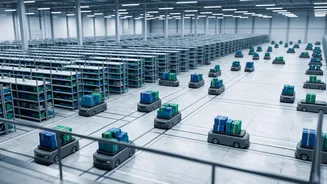
The very nature of e-commerce infrastructure is at the heart of the commute problem. Massive fulfilment centers—the sprawling warehouses where products are stored, sorted, and shipped—require huge tracts of land. As a result, they are often located on the outskirts of major metropolitan areas like Delhi, Mumbai, Bengaluru, and Hyderabad. While strategic for logistics, these locations are often poorly served by public transport, especially for employees working non-standard shifts. For a seasonal worker living within the city, reaching a warehouse in an area like Bhiwandi near Mumbai or the outskirts of Gurgaon can mean hours of travel each day. This makes the job less a matter of an eight-hour shift and more a twelve-hour commitment, a significant drain on time and energy for a short-term contract.
Calculating the True Cost of a Commute
For a seasonal employee, the maths is simple but stark. The daily expense of fuel or multiple forms of public transport can take a significant bite out of a temporary paycheck. Studies show that a long commute often acts as a 'hidden pay cut'. For instance, a two-hour round-trip commute not only adds to daily costs but also results in lost personal time that could be spent with family or on other pursuits. This trade-off is becoming less acceptable. Research indicates that employee satisfaction drops sharply as travel time increases, with commutes longer than 30-45 minutes linked to higher stress, fatigue, and lower job satisfaction. When the job is only for a few months, many workers conclude that the financial and personal costs of a difficult journey simply aren't worth the temporary income. For many, no amount of money can compensate for the lost time and added stress.
The Post-Pandemic Mindset Shift
The pandemic fundamentally changed how many people view work and life balance. The widespread adoption of remote and hybrid work models, even if not applicable to frontline warehouse roles, has altered expectations. Workers have grown accustomed to having more control over their time and less tolerance for the daily grind of a long commute. This mindset has trickled down to all segments of the labour force. There is now a greater appreciation for work-life balance, and a physically and mentally draining commute is increasingly seen as a major disruption. As a result, employers in the online retail space are facing a talent crunch, particularly in major metro areas where competition for reliable workers is fierce. Many potential hires are opting for opportunities closer to home, even if they pay slightly less.
How Companies Are Trying to Adapt
Smart companies are beginning to recognize that commute time is a critical factor in attracting and retaining seasonal staff. Some businesses have found that retention is directly tied to an employee's distance from the workplace and their access to public transport. In response, some are offering incentives like transport stipends or dedicated shuttle bus services from central urban locations to their peripheral warehouses. Others are focusing recruitment efforts on talent pools in Tier-II and Tier-III cities, where consumption and, consequently, logistics networks are growing. This strategy allows them to tap into a workforce that lives closer to the newly established regional fulfilment centers. As the battle for reliable seasonal workers intensifies, accounting for the commute is no longer a courtesy but a strategic necessity for businesses to ensure their operations run smoothly during the most critical time of the year.