






The Great Urban Wash-Off
Our cities are coated in a fine, almost invisible layer of plastic. Every time a car brakes, tiny particles of tire wear are released. Plastic bags snagged on fences and packaging discarded on streets slowly degrade under the sun, breaking into smaller
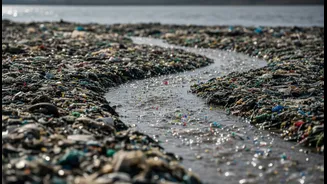
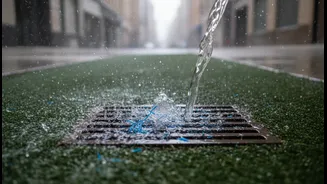
pieces. Synthetic fibres shed from our clothes during washing find their way into the environment. During dry periods, these fragments accumulate on roads, rooftops, and pavements. When a heavy rainstorm finally arrives, it acts like a giant scrubbing brush. The initial, intense flow of water, often called the 'first flush', is particularly potent, washing this build-up of plastic debris into stormwater drains. These drains, in many cases, lead directly to our rivers and the reservoirs that supply our drinking water.
A Torrent of Contamination
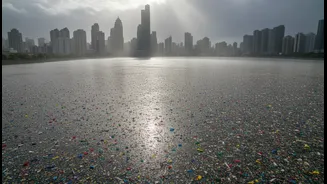
The effect is not subtle. Studies have shown that microplastic concentrations in urban waterways can skyrocket after heavy rainfall. Some research has documented increases of up to 50 times the normal level in urban creeks following a storm. The problem is especially acute in countries with monsoon seasons, like India. Research on Indian lakes has confirmed a significant spike in microplastic counts after the monsoon rains begin. One study in Jaipur found that microplastic levels in a lake jumped by 64% from pre-monsoon to post-monsoon. This isn't just about a few extra particles; it's a massive, sudden influx that transforms the water's composition. Intense weather events, which are becoming more frequent due to climate change, are expected to worsen this cycle of contamination.
An Invisible Plastic Soup
The microplastics swept into reservoirs are a diverse mix. They include fibres from textiles, fragments from degraded waste, and a large proportion of black, rubbery particles from tire wear. While larger pieces might be visible, the majority are smaller than 5 millimetres, and many are microscopic. The smallest of these, known as nanoplastics, are particularly concerning because their size makes them incredibly difficult to manage and allows them to behave differently in the environment and potentially in the human body. These particles don't just transport themselves; they can also act like magnets for other harmful pollutants, absorbing heavy metals or toxic chemicals and carrying them along for the ride.
The Treatment Plant Challenge
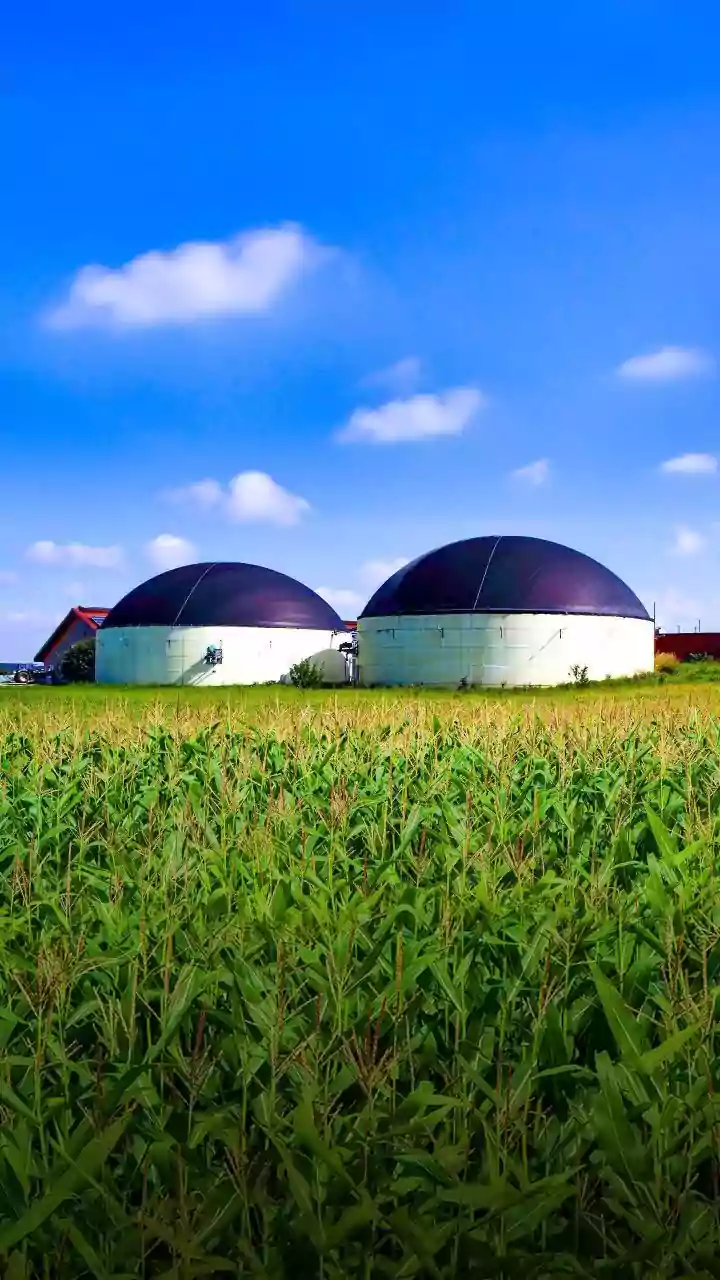
The final line of defence between a contaminated reservoir and our taps is the drinking water treatment plant. Modern facilities are remarkably effective and can remove a high percentage of microplastics, with some studies showing removal rates of over 90%. Processes like coagulation, sedimentation, and filtration are designed to remove particulates from the water. However, no system is perfect. The sheer volume of the incoming surge after a storm can challenge a plant's capacity. Furthermore, the very smallest nanoplastics are the most likely to slip through these filtration systems. While a plant might remove the vast majority of particles, a small percentage can still pass through into the treated water supply, meaning we may be exposed through simple actions like drinking water.
The Unsettling Health Questions
The long-term health impact of ingesting microplastics is a field of active and urgent research. Scientists agree that exposure is widespread; these particles have been found in human blood, lungs, and even the placenta of unborn babies. Laboratory studies and early research suggest potential risks, including inflammation, oxidative stress, and metabolic disruption. Nanoplastics are a key concern due to their ability to cross biological barriers and accumulate in organs. While regulatory bodies like the World Health Organization currently state that more research is needed to fully understand the risk at current exposure levels, the evidence points towards a problem that cannot be ignored. The presence of these particles in our drinking water underscores the connection between environmental pollution and public health.