
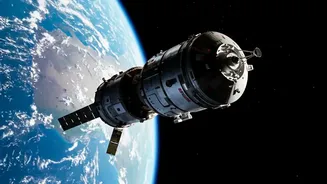
Moving Beyond a 20th-Century Marvel
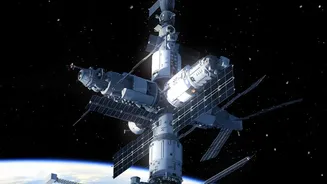
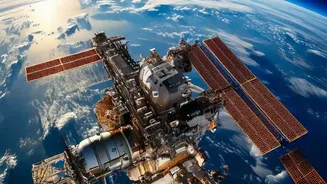
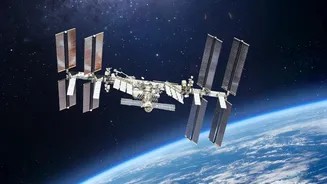
For over two decades, the International Space Station has been a testament to human ingenuity and international collaboration. However, it is an aging piece of infrastructure designed with the technology of the 1990s. Operating and maintaining it is complex
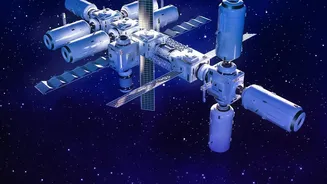
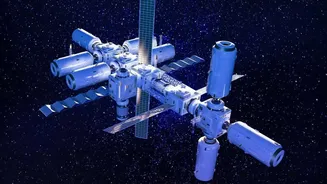
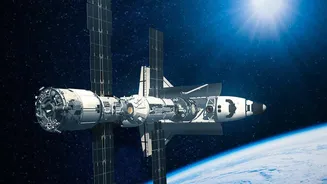
and costly, with persistent issues like minor air leaks raising long-term safety questions. The next wave of orbital outposts, being developed by companies including Vast, Axiom Space, and the Blue Origin-Sierra Space partnership, are not just replacing the ISS; they are fundamentally rethinking what it means to live and work safely in Low Earth Orbit (LEO). This shift is driven by commercial imperatives and access to decades of learnings from the ISS.
Inflatable Habitats and Advanced Materials
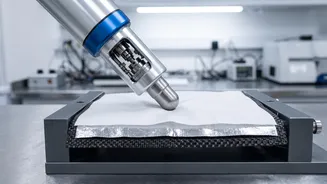
One of the most visible innovations is the use of expandable or inflatable habitats, such as Sierra Space's LIFE module, which will be part of the Orbital Reef station. These aren't flimsy balloons; they are constructed from multiple layers of high-strength fabrics and webbings like Vectran, a material that gets stronger in the cold of space. These soft-goods structures are designed to be compactly stowed in a rocket fairing and inflated in orbit, allowing for far larger volumes than traditional rigid modules. Rigorous testing, conducted in partnership with NASA, has shown these modules can withstand pressures well beyond the required safety factors. Other companies are advancing traditional rigid structures. Axiom Space, for instance, is working with Thales Alenia Space to manufacture modules with advanced micrometeoroid and debris protection systems. Vast's Haven-1 station will feature a domed window with its own specialized shielding.
Redundancy and Smarter Life Support
The ISS employs triple-redundant systems for critical functions like life support, a principle modern habitats are building upon. Private companies are developing their own robust Environmental Control and Life Support Systems (ECLSS). Vast, for example, is testing its in-house systems to ensure astronauts can breathe safely, while also developing advanced trace contaminant filters to scrub hazardous chemicals from the air. Blue Origin's Orbital Reef is also undergoing extensive testing on systems to clean, reclaim, and store air and water. These new stations are designed for easier maintenance, with many systems intended to be repaired from inside the station, reducing the need for risky spacewalks (EVAs). This internal maintainability, combined with multiple independent systems, creates a more resilient and safer environment for the crew.
Designed for Humans, by Humans
A key philosophical shift is the focus on human-centric design, thinking not just about professional astronauts but a wider range of commercial visitors. Companies are using a practice called "human-in-the-loop" testing, where former astronauts and test subjects walk through operations in full-scale mockups. This provides crucial feedback on everything from the layout of private crew quarters to the usability of control panels. Vast's Haven-1, for instance, will feature soft, padded interior surfaces as an added safety measure and private crew quarters that are slightly larger than those on the ISS. These may seem like small comforts, but they are integral to crew well-being, which is directly linked to safety and productivity on long-duration missions.
The Role of Automation and AI
Modern stations are also integrating a higher degree of automation and advanced software. Axiom Station, for example, plans to host an orbital data center, enabling powerful onboard computing, AI, and machine learning. This allows the station to monitor its own health, run diagnostics, and manage systems with less direct human intervention. For instance, the lab on Vast's Haven-1 can be remotely commanded and monitored from the ground. Automated systems can respond to emergencies faster than humans, while onboard flight computers like Vast's Control Unit are rigorously tested to prevent electromagnetic interference with other critical systems. This digital layer of safety complements the physical protections built into the hardware, creating a smarter, more responsive habitat.