


Start With the Design, Not the Flowers
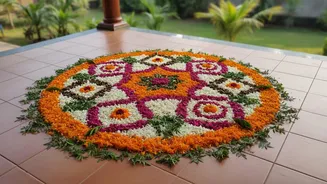
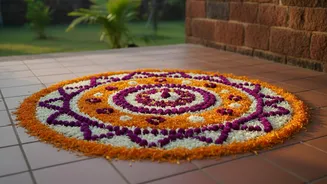
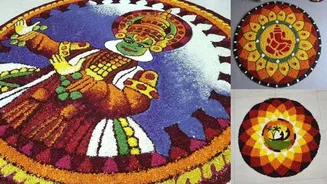
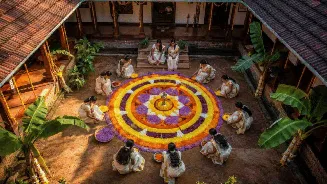
The single biggest factor determining how many flowers you need is the size and complexity of your pookkalam. Before you even think about buying flowers, sketch out your design. Decide on the diameter—for an apartment or small entrance, a one to two-foot
diameter pookkalam is often perfect. How many rings or layers will it have? A simple three-ring design will require far fewer petals than an intricate seven-layer pattern. Use a piece of chalk to draw the outline on the floor where you plan to make it. This visual guide is your best tool for estimation. It's better to create three or four well-defined rings that look attractive than a complicated design squeezed into a small space.
A Simple Rule for Estimation
There's no magic formula, but a good starting point is to think in terms of volume. As a general rule, a packed 250ml cup of separated petals can comfortably fill a small, dense section of your pookkalam. The most crucial step is to identify your main colours. Which colour will cover the largest area, like an outer ring? That's where you'll need the highest quantity. For smaller accent rings or central details, you'll need significantly less. For a basic 1.5-foot pookkalam, you might need about 500g of your primary flower (like marigolds for an outer ring), 250g of a secondary colour, and 100g each for smaller, inner rings or accent flowers. One user planning a one-meter radius pookkalam estimated needing around 6.5 kg of flowers in total, which shows how quickly quantities can increase with size.
Choose Your Flowers Strategically
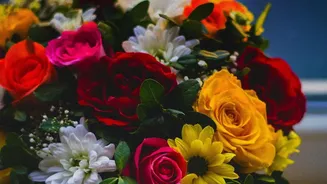
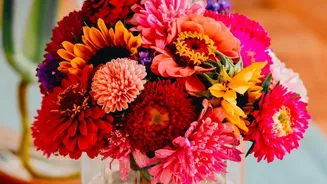
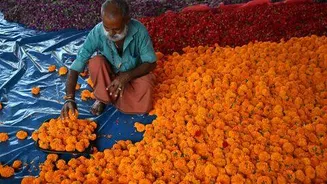
While traditional Onam flowers like Thumba, Chethi, and Shankupushpam are beautiful, they are not always easy to source in large quantities. For a home pookkalam, a mix of traditional and widely available flowers is both practical and beautiful. Marigolds (Jamanthi), available in vibrant oranges and yellows, are perfect for filling large areas as their petals are dense and they are sold by weight in most markets. Chrysanthemums (also sometimes called Jamanthi) are another great choice, available in white, yellow, and purple. For smaller details and a touch of fragrance, consider jasmine or globe amaranth (Vadamalli). Rose petals can add a soft texture and rich colour. Don’t be afraid to mix and match based on what is fresh and affordable at your local market.
Think in Layers and Bulk
The outermost rings of your pookkalam will consume the most petals. It’s a smart strategy to use your most budget-friendly, high-volume flowers for these larger sections. Bright yellow and orange marigolds are ideal for this. Their strong colour creates a vibrant base for your entire design. Reserve more delicate or expensive flowers for the inner rings and the centre, where they will be more visible and appreciated. For instance, a small handful of fragrant white Thumba or vibrant blue Butterfly Pea (Shankupushpam) flowers can create a stunning focal point without breaking the bank. Some people also use green leaves, like mint, curry leaves, or even finely chopped All Spice leaves, to create aromatic borders and add contrast.
Smart Sourcing and Preparation
To get the best value, visit local flower markets early in the day when the stock is fresh. Buying loose flowers by weight (in grams or kilograms) is almost always more economical than buying pre-made garlands or bouquets. When you get your flowers home, proper preparation is key to maximizing what you have. Separate the petals from the stems and store them in a cool place. You can lightly spray them with water to keep them from wilting. Involve the whole family in this process—it's a cherished part of the tradition. Remember to only separate the petals you need for the day, especially if you plan on adding a new layer each day of Onam, as this helps retain freshness.