

Imagine discovering a new planet, only for it to disappear a decade later. This isn't science fiction; it's the real-life cosmic mystery of Fomalhaut b, an object that baffled astronomers and challenged our understanding of planetary systems.
A Landmark Discovery
In 2008,
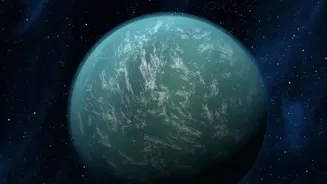
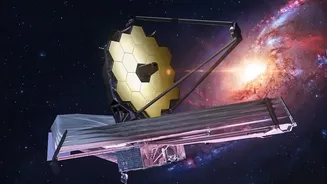
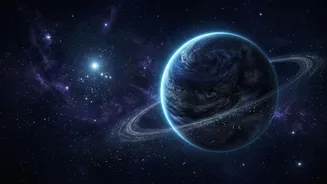
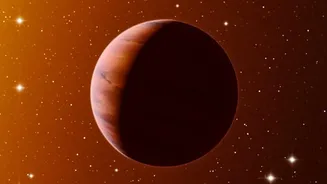
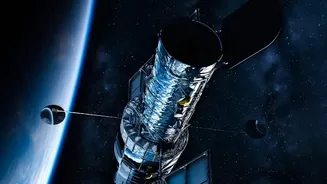
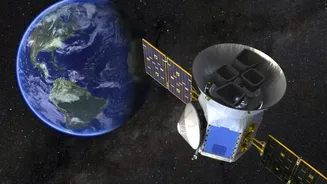
the world of astronomy was buzzing with excitement. Using data from the Hubble Space Telescope, scientists announced one of the first-ever direct images of an exoplanet — a planet orbiting a star other than our sun. Located 25 light-years away, the star Fomalhaut was host to this new world, dubbed Fomalhaut b. Initial observations suggested it was a massive gas giant, perhaps up to three times the mass of Jupiter. For years, it was celebrated as a milestone, offering a rare glimpse of a distant world. Astronomers tracked its movement through images captured in 2004 and 2006, piecing together the story of a planet orbiting its star every 872 years.
The Puzzling Disappearance
The excitement surrounding Fomalhaut b soon gave way to confusion. The object had strange characteristics that didn't quite fit the profile of a planet. For one, it was surprisingly bright in visible light but had no detectable heat signature in the infrared spectrum, which is highly unusual for a large planet. Then came the biggest twist: when astronomers at the University of Arizona reviewed Hubble images from 2014, they found that Fomalhaut b had vanished completely. Follow-up analysis of earlier images showed it had been gradually fading and expanding over time. As one researcher put it, Fomalhaut b was clearly doing things a 'bona fide planet should not be doing'.
Ghost Planet or Cosmic Smash-up?
The vanishing act led astronomers to a startling and even more exciting conclusion: Fomalhaut b was likely never a planet at all. The leading explanation, published in the journal 'Proceedings of the National Academy of Sciences', is that what Hubble saw was the immediate aftermath of a colossal collision between two massive, icy bodies. Researchers believe that sometime shortly before 2004, two planetesimals—large celestial bodies like asteroids or comets, each about 200 kilometres wide—smashed into each other. The bright 'planet' was actually a dense, expanding cloud of extremely fine dust and ice particles resulting from this cosmic impact.
Solving the Celestial Case
This 'collision cloud' theory neatly explains all of Fomalhaut b's bizarre behaviours. The object appeared bright because the fine dust was scattering starlight, much like how a sunbeam illuminates dust particles in the air. It lacked an infrared signature because, unlike a massive planet, the tiny dust cloud wasn't warm enough to emit significant heat. Its apparent 'orbit' was actually the trajectory of the debris cloud moving away from the collision site. Over the decade of observation, the cloud expanded and became more diffuse. By 2014, the particles had spread out so much—creating a cloud larger than the Earth's orbit around the sun—that it became too thin for Hubble to detect. Essentially, the ghost planet had dissipated into space.
A Rare Glimpse into Planetary Birth
While the loss of a landmark exoplanet might seem like a disappointment, scientists see it as an even more profound discovery. Such massive collisions are believed to be a fundamental part of how planetary systems form and evolve, but they are incredibly rare to witness. Events of this magnitude in the Fomalhaut system are estimated to occur only once every 200,000 years. In this case, astronomers believe they were in the right place at the right time, capturing a fleeting moment in cosmic history. Observing the aftermath of such a smash-up provides a 'blueprint of how planets destroy each other' and, in doing so, offers unprecedented insight into the chaotic and violent processes that ultimately create stable solar systems.