


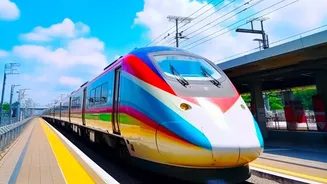
India’s high-speed rail dream is fast approaching reality. Railway Minister Ashwini Vaishnaw has set a 2027 target for the first bullet train service, focusing on the Surat to Vapi section as a landmark starting point for the larger project.
The Race to 2027
The final
quarter of 2027 is the new target for the launch of India's first bullet train service. The initial focus is on an operationally viable section within Gujarat, connecting the bustling hubs of Surat and Vapi. This phased approach allows Indian Railways to introduce the service on a completed segment while work continues on the rest of the ambitious 508-kilometre Mumbai-Ahmedabad High-Speed Rail (MAHSR) corridor. The plan involves beginning trial runs on a smaller 50-km stretch between Surat and Bilimora as early as May 2027, paving the way for commercial operations on the extended Surat-Vapi line later that year.
A Look at the Concrete Progress
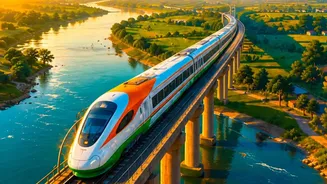
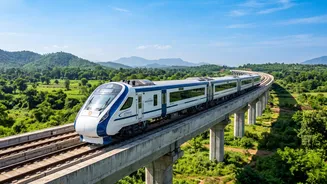
This target isn't just an ambition; it's backed by significant construction milestones. As of late 2026, work on the Gujarat side of the project has been advancing rapidly. Recent reports confirm that the 50-km Surat-Bilimora section is now fully electrified, a critical step before any trial runs can commence. This involves energising the advanced 2x25 kV overhead traction system. Beyond electrification, hundreds of kilometres of viaducts—the elevated structures upon which tracks are laid—have been completed. Construction of bridges over four rivers on this stretch is also finished, along with the installation of noise barriers to minimise disturbance. Civil work for the stations at Surat, Bilimora, and Vapi is also well underway.
More Than Just Speed: The Technology
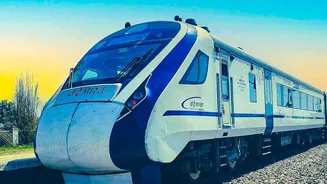
The MAHSR project is being developed using Japan’s renowned Shinkansen technology, famous for its exceptional safety and punctuality record. But a significant part of the story is the push for domestic manufacturing. An indigenous high-speed trainset, designated B28, is being developed specifically for the project by BEML. Designed to run at speeds of 280 kmph, the first body frame is already complete and undergoing rigorous testing. This 'Made in India' train is expected to be ready for track trials by mid-2027, just in time for the planned tests on the Surat-Bilimora section. The entire system, from the powerful transformers to the overhead equipment, is seeing a growing share of indigenised components.
Challenges and the Full Corridor
While progress in Gujarat is swift, the entire 508-km corridor has faced its share of challenges. The project experienced initial delays due to slower land acquisition processes in Maharashtra and the impact of the COVID-19 pandemic. However, construction is now in full swing across all sections. One of the most complex engineering feats is the 21-km tunnel in Maharashtra, which includes a 7-km undersea portion beneath Thane Creek—India’s first. Massive tunnel boring machines are already at work. Because of these complexities, the full Mumbai-to-Ahmedabad line is expected to open in phases, with the entire corridor likely to be operational by 2029.
The Impact of the First Run
Launching the Surat-Vapi section is more than a symbolic victory. It will be the first tangible experience of high-speed rail for the Indian public, transforming travel between these key industrial and commercial towns in Gujarat. Once the full corridor is complete, the journey between Mumbai and Ahmedabad is expected to take just under two hours, a drastic reduction from the current seven to eight hours by road. This connectivity is expected to spur economic development, boost business, and create a new paradigm for intercity travel in India, setting the stage for a future network of high-speed lines across the country.