







Elon Musk has revived a bold idea: moving the immense energy and data demands of artificial intelligence off-planet. By suggesting a future where AI infrastructure lives in orbit, SpaceX is floating a radical solution to Earth's growing constraints.
The Vision: Data Centres in the Stars
The
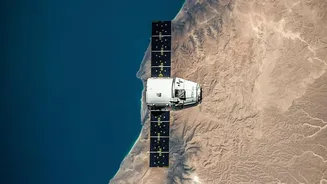
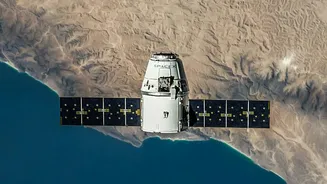
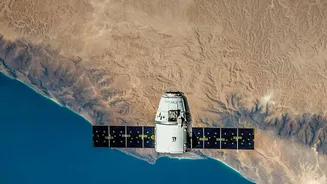
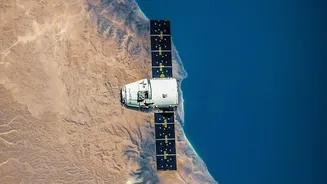
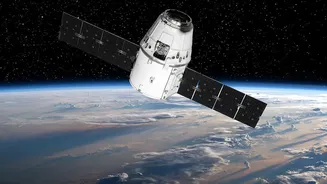
concept, which SpaceX is reportedly exploring under the name 'Starmind', involves launching satellites that are not just for communication, but for computation. These would essentially be data centres in low Earth orbit, equipped with powerful processors like those from NVIDIA and Google, designed to handle the massive workloads of training and running AI models. The idea stems from a growing crisis on the ground: the world’s insatiable demand for AI is straining electrical grids and creating land-use conflicts. Musk argues that space offers a compelling alternative, with near-constant solar power and no need for the land or water that terrestrial data centres consume. During a recent conference, he noted that some test satellites with NVIDIA and Google AI chips are already in orbit and working well.
Why Process Data in Orbit?
The primary driver for this ambition is energy. In space, solar panels can be constantly exposed to the sun without atmospheric interference, capturing about 30% more energy than on Earth. This bypasses the multi-year queues for grid connections that now plague data centre construction. Another key advantage is reducing data latency. Earth observation satellites generate terabytes of data daily, but beaming it all back to Earth for processing is slow and inefficient. Performing AI analysis directly in orbit—a form of edge computing—means that only valuable insights, not raw data, need to be sent down. This could revolutionise fields like disaster response, climate monitoring, and logistics by enabling real-time analysis. The European Space Agency has already demonstrated this with its PhiSat-1 satellite, which uses onboard AI to filter out cloudy images.
SpaceX's Unique Position
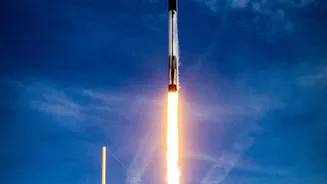
While other companies and agencies are exploring orbital computing, SpaceX holds a unique strategic advantage. The company’s grand vision relies on the synergy between its key projects. First, the Starlink satellite constellation already provides a global, high-speed mesh network using inter-satellite laser links, which could form the data backbone for an orbital cloud. Second, the development of the fully reusable Starship rocket is critical. Musk has stated that lowering the cost of launching mass to orbit, potentially by a factor of 100, is what makes the economics of space-based data centres feasible in the long run. Without a dramatic reduction in launch costs, deploying and maintaining the necessary hardware would be prohibitively expensive.
Hurdles Beyond the Atmosphere
Despite the ambitious vision, the technical and financial challenges are immense, which is why there is no confirmed deployment timeline. Operating complex electronics in the vacuum of space is notoriously difficult. One of the biggest obstacles is cooling. On Earth, data centres use air and water to dissipate heat, but in a vacuum, heat can only be shed through radiation, which requires massive radiator panels. Furthermore, space is filled with radiation that can degrade hardware and cause data errors, requiring expensive, specially 'hardened' components. Maintenance is another major issue; unlike a terrestrial data centre, you cannot simply send a technician to replace a failed server rack in orbit. This makes hardware obsolescence a huge risk, as AI chips advance much faster than the typical 5-7 year lifespan of a satellite.
An Ambitious but Distant Future
While Musk has projected that the first 'Starmind' test satellites could launch as early as the third quarter of 2027, he also cautions that this is a guess. He envisions a slow start, ramping to significant volume in 2028 and very large volumes in 2029. However, many experts and even other AI leaders like OpenAI's Sam Altman remain skeptical of the nearterm feasibility, citing the astronomical costs and unsolved engineering problems. For now, the prospect of orbital data centres is less of an imminent product and more of a strategic direction. It signals how companies like SpaceX are thinking about the longterm physical limits of AI growth on Earth and positioning themselves for a future where the solution might just be looking up.