




The Danger and Cost of Real-World Labs
For generations, the path to understanding physics involved real-world labs. While essential, these spaces come with significant barriers. Advanced experiments, especially in fields like particle physics, quantum mechanics, or electromagnetism, often
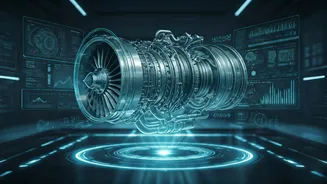
involve hazardous materials, high voltages, or radioactive sources. Safety protocols are stringent for a reason, but accidents can and do happen. Beyond the physical risks, there's the staggering cost. Building and maintaining a particle accelerator or a cleanroom for quantum computing research can cost millions, if not billions, of rupees. This financial barrier means only a handful of premier institutions can offer students hands-on experience with cutting-edge concepts, leaving the vast majority to rely on theory and textbooks alone. This creates a significant gap between theoretical knowledge and practical application, a hurdle that can stifle curiosity and innovation.
Enter the Virtual Laboratory
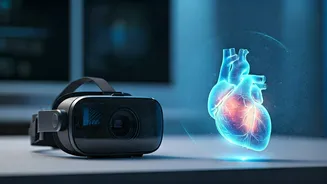
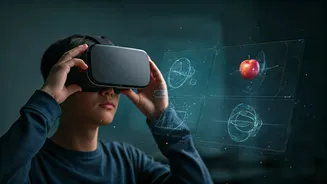
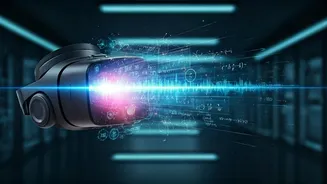
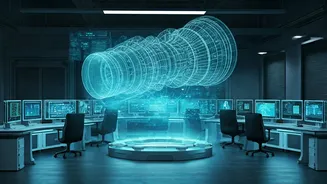
This is where Virtual Reality (VR) steps in, not as a replacement for real labs, but as a powerful, democratic supplement. A VR physics lab is a simulated environment experienced through a headset, allowing a user to see, hear, and interact with a fully three-dimensional world. In this world, the laws of physics are the same, but the rules of reality are different. Students can put on a headset and find themselves standing inside a virtual representation of a top-tier research facility. Using handheld controllers, they can manipulate equipment, conduct experiments, and see the results in real-time. The key is immersion; the brain is tricked into believing it’s truly there, making the learning experience far more engaging and memorable than watching a video or reading a book. It’s the difference between reading about how an engine works and actually getting to assemble one, piece by piece.
Making the Impossible Possible and Safe
The most profound impact of VR is its ability to make the dangerous and the impossible completely safe. Imagine a student tasked with studying nuclear chain reactions. In the real world, this is an unfathomably complex and dangerous undertaking. In VR, they can safely handle virtual uranium isotopes, observe fission up close, and even trigger a controlled meltdown to understand the consequences—all with zero risk. Want to understand Einstein's theory of relativity? A VR simulation can allow a student to travel near the speed of light and witness time dilation and length contraction firsthand, concepts that are purely abstract in a classroom. Students can explore the inside of a star, manipulate magnetic fields with their bare hands, or align lasers to study quantum entanglement. These are experiences that were previously confined to thought experiments, but VR makes them interactive and intuitive.
Beyond Just Safety and Access
The benefits extend far beyond just safety. VR labs offer infinite repeatability. If an experiment goes wrong, a student can simply reset the simulation and try again, learning from their mistakes without wasting expensive materials or risking equipment damage. This encourages a trial-and-error approach that is crucial for scientific discovery. Furthermore, VR excels at data visualization. It can render abstract data—like electron orbitals or gravitational waves—as tangible, visible objects that can be walked around and inspected. This helps build a deeper, more intuitive understanding of complex phenomena. It also allows for self-paced learning, where students can spend as much time as they need on a difficult concept without the pressure of a crowded physical lab session. This personalization of education is a significant advantage, catering to different learning speeds and styles.
The Future of STEM Education in India
For a country like India, with its immense focus on STEM (Science, Technology, Engineering, and Mathematics) education and its vast, geographically diverse student population, this technology holds transformative potential. VR can bridge the resource gap between urban and rural institutions, giving every student access to world-class lab facilities. Initiatives by institutions like the IITs to explore virtual and augmented reality in education are a promising start. Of course, challenges remain, primarily the cost of VR hardware and the need to develop high-quality, curriculum-aligned content. However, as hardware becomes more affordable and platforms for creating educational VR expand, the dream of a virtual physics lab in every school and college moves closer to reality.