





Understanding Karat: The Basics of Gold Purity
Before comparing 22K and 24K, it's crucial to understand what 'Karat' signifies. Karat (K) is the unit used to measure the purity of gold. The scale runs from 0 to 24. Therefore, 24K gold represents the purest form of the metal you can get. It's a simple
system: the higher the karat number, the greater the amount of pure gold in your item. This purity measurement is distinct from 'carat' (ct), which is a unit of weight for gemstones like diamonds.
What is 24K Gold? The Purest Form
24K gold is considered pure gold, containing 99.9% gold content with virtually no other metals mixed in. Because of its purity, it has a distinct, rich, and bright yellow colour that is unmatched. However, this purity comes at the cost of durability. 24K gold is extremely soft and malleable, making it prone to scratching, bending, and deforming under pressure. For this reason, it is rarely used for traditional jewellery meant for daily wear. Instead, its primary use in India is for investment purposes, such as in the form of gold bars, coins, and bullion.
What is 22K Gold? The Jewellery Standard
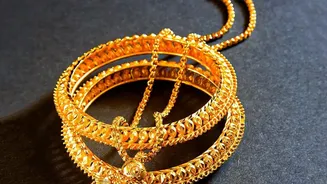
22K gold, also known as '916 gold', is composed of 22 parts pure gold and 2 parts other metals, making it 91.67% pure gold. The remaining 8.33% consists of alloys like copper, silver, or zinc. These added metals are not impurities; they are intentionally mixed to enhance the gold's strength and hardness. This increased durability makes 22K gold the preferred choice for crafting most forms of gold jewellery in India, from bangles and chains to intricate necklaces. It offers an excellent balance, retaining a rich golden hue while being sturdy enough to withstand daily wear and securely hold designs.
Durability vs. Purity: The Core Difference
The central dilemma between 22K and 24K gold boils down to a trade-off between purity and practicality. While 24K offers the highest intrinsic value due to its near-100% gold content, its softness makes it impractical for jewellery that is worn regularly. An ornament made from 24K gold would easily lose its shape. 22K gold, with its alloy mixture, provides the necessary resilience to prevent scratches and dents, ensuring that intricate designs remain intact and gemstones (if any) are held securely. Therefore, for anything other than pure investment, 22K gold is overwhelmingly the more functional and popular choice for jewellery.
Investment or Adornment? Choosing Your Gold
Your purpose for buying gold should be the deciding factor. If your primary goal is purely financial investment and wealth preservation, 24K gold coins and bars are the superior option. They have the highest purity, carry a greater intrinsic value, and are easier to trade on global markets without deductions for making charges. If you are buying gold for personal use, such as jewellery for weddings, festivals, or daily wear, 22K gold is the ideal choice. It provides the perfect blend of high gold content and the durability needed for long-lasting adornment.
How to Verify Purity: The BIS Hallmark and HUID
To protect consumers, the Government of India has made hallmarking mandatory for gold jewellery. A genuine hallmarked piece sold in India must have three marks: the Bureau of Indian Standards (BIS) logo, the purity grade (e.g., 22K916), and a six-character alphanumeric Hallmark Unique Identification (HUID) number. The HUID is crucial as it makes each piece traceable. You can instantly verify the authenticity of your purchase by entering the HUID code into the 'Verify HUID' section of the official BIS CARE mobile app. This confirms the jeweller's details, the hallmarking centre, and the declared purity, ensuring you get exactly what you paid for.