







The New Rules of the Game
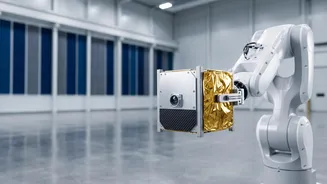
The centerpiece of this policy shift is a new, tiered approach to foreign investment, replacing the old system where all space-related FDI required government approval. Now, the sector is unbundled into three distinct categories. For manufacturing components
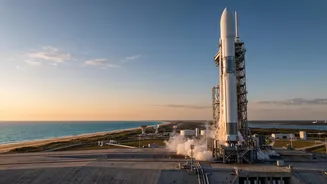
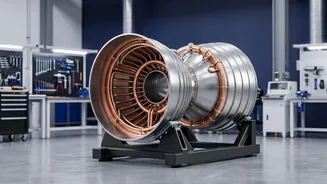
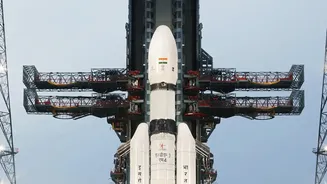
and sub-systems for satellites and ground infrastructure, 100% FDI is now permitted through the 'automatic route,' meaning no prior government clearance is needed. For more comprehensive activities like satellite manufacturing, operations, and data products, the automatic route is open for up to 74% FDI. In the most strategically sensitive area — launch vehicles and spaceports — up to 49% FDI is allowed automatically. Investments beyond the 49% and 74% caps will require government approval, but the change provides a clear and predictable pathway for the majority of potential investments.
Why This Change Was Needed
For decades, India's space program was a celebrated government monopoly under the Indian Space Research Organisation (ISRO). While ISRO achieved incredible milestones, this structure limited private capital and commercial scalability. The global space economy, projected to be worth trillions in the coming decades, is increasingly driven by private enterprise. India's previous, more restrictive FDI policy was a barrier to attracting the large-scale capital and cutting-edge technology needed to compete globally. The new policy, first signaled in the Indian Space Policy 2023, aims to transform the ecosystem. The goal is to grow India's share of the global space economy from its current 2% to over 10% by 2030, attracting investment, encouraging 'Make in India,' and integrating domestic firms into global supply chains.
Impact on ISRO and Private Startups
This policy shift redefines ISRO's role. The organization is now expected to transition from being an operator of routine missions to focusing on advanced research and development, deep space exploration, and national security projects. Meanwhile, the door opens wide for India's burgeoning private space sector. With over 400 space startups already in the ecosystem, the influx of foreign capital is expected to be a massive catalyst. It will provide them with the funds needed to scale operations, upgrade technology, and compete for international contracts. The creation of IN-SPACe (Indian National Space Promotion and Authorisation Centre) as a single-window clearance agency is also crucial, simplifying the regulatory process for these private players and their foreign partners.
What It Means for Global Investors
For foreign companies, India now represents a compelling opportunity. The country has a deep pool of engineering talent, a proven history of cost-effective space missions, and a large domestic market for space-based applications like satellite communication and Earth observation. The 100% automatic route for components and sub-systems is particularly attractive, allowing global manufacturers to set up production hubs in India with full ownership and operational freedom. This liberalisation allows foreign firms to form joint ventures and bring in advanced technology, particularly in capital-intensive areas like launch vehicle development. By lowering entry barriers, the policy positions India as a key destination for global space investment.
Challenges and the Road Ahead
While the policy is a landmark step, its success is not guaranteed. Key challenges remain, including establishing a robust legal framework for liability in case of private launch failures, an issue governed by international treaties. Protecting dual-use technologies from misuse and ensuring fair competition between heavily-funded foreign entities and domestic startups will also be critical. The government and regulatory bodies like IN-SPACe must now focus on smooth implementation, ensuring that the promised 'ease of doing business' becomes a reality. The world will be watching to see how this infusion of capital and technology translates into tangible projects, from new satellite constellations to privately-built rockets lifting off from Indian soil.