








The Gateway's Growing Pains
Lokpriya Gopinath Bordoloi International (LGBI) Airport has long been the primary aviation gateway to India's eight Northeastern states. However, for years, its infrastructure struggled to keep pace with the region's growing aspirations and rising passenger
numbers. The previous terminal, despite expansions, frequently faced overcrowding and operational pressures, especially during peak seasons. Handling over 6.5 million passengers annually by the 2024-25 fiscal year, it was clear that a major overhaul was not just a luxury but a necessity to prevent the gateway from becoming a barrier to progress. The risk of inaction was significant: stifling tourism, hindering trade, and limiting the economic potential of a region central to India's 'Act East' policy.
A Project of Ambition and Challenge
The decision to build a new, world-class integrated terminal was an ambitious undertaking. Large-scale infrastructure projects in India are often fraught with risks, from securing massive investment to navigating complex regulatory hurdles and construction timelines. The Guwahati terminal project was no different. The initial foundation stone was laid years ago, and the journey to completion saw several revised deadlines. These delays stemmed from various factors, including design upgrades requested mid-construction to incorporate more advanced passenger facilities and the sheer complexity of executing such a large-scale vision. The challenge was not just to build bigger, but to build better, creating a facility that was both future-proof and a landmark in its own right, a process that required patience and persistence.
From Utility to Architectural Marvel
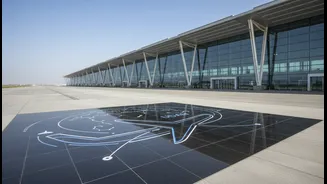
The final product, which commenced commercial operations on February 22, 2026, is a testament to that vision. Built at a cost of approximately ₹4,000 crore, the terminal is a striking architectural statement. Named 'The Bamboo Orchids', its design is deeply rooted in local identity, drawing inspiration from Assam's state flower, the foxtail orchid ('kopou phool'), and utilizing around 140 metric tonnes of locally sourced bamboo. The terminal is spread over nearly 1.4 lakh square metres and designed to handle over 13 million passengers annually. Inside, features like a 'Sky Forest' with nearly one lakh indigenous plants offer arriving passengers an immersive, forest-like experience. This blend of nature-inspired design and modern engineering has created a facility that transcends mere utility.
The Bigger Story: Connecting the Northeast
The new terminal's true significance lies in its role as an economic engine and a strategic asset for the Northeast. With its vastly increased capacity, the airport can now handle more flights and larger aircraft, strengthening connectivity not just with the rest of India but also with Southeast Asia. This is crucial for India’s Act East policy, positioning Guwahati as a vital hub for trade and tourism. The improved infrastructure is expected to provide a major boost to local industries, from tea and horticulture exports to the burgeoning tech and medical tourism sectors. By easing the movement of people, goods, and capital, the airport is set to accelerate development across the entire region, turning psychological distance into economic opportunity.
A Seamless Experience for Travellers
For the millions of passengers who will pass through its gates, the transformation is immediate and tangible. The new terminal addresses the congestion of the past with 64 check-in counters, 10 aerobridges, and advanced security systems. It is equipped with modern digital features like DigiYatra-enabled contactless processing and AI-driven operations to ensure a smoother, more efficient journey. Expanded retail and dining facilities offer a world-class passenger experience. Once all operations shift, the old terminal is planned to be converted into a dedicated cargo hub, further enhancing the airport's logistics capabilities and ensuring that the benefits of this massive investment are felt across all sectors.