






The Regular (Type P) Passport: A Sea of Blue
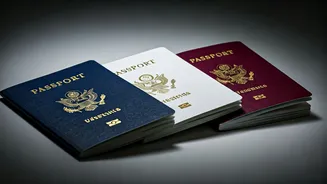
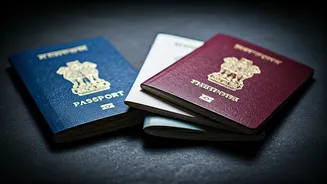
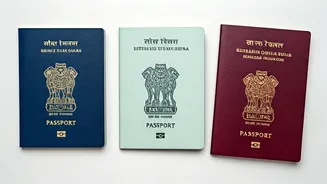
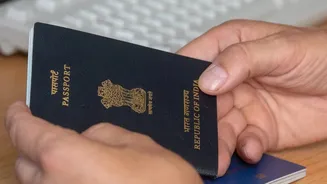
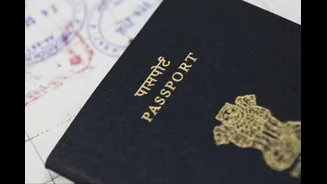
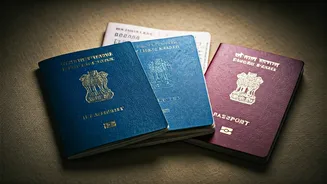
The most common passport, officially called the 'Ordinary Passport', is navy blue. This is the travel document issued to the vast majority of Indian citizens for personal, educational, tourism, or business travel. Known as a Type P (for Personal) passport, its
primary function is to serve as a proof of Indian citizenship and identity abroad. The blue colour helps immigration officials in other countries easily distinguish a regular citizen from a government official or diplomat. Any Indian citizen can apply for this passport, which now comes with an embedded microchip, making it an e-passport that enhances security and speeds up immigration processes.
The Official (Type S) Passport: The White Passport
The white passport, also known as an 'Official Passport' or Type S (for Service), is issued to government officials travelling abroad for official duties. This includes individuals from the Indian Administrative Service (IAS), Indian Police Service (IPS), and other civil servants representing the Government of India on official business. It is not for personal travel. The white cover signals to immigration authorities that the holder is on official duty, which can facilitate smoother clearance. The application for this passport is more stringent, requiring departmental certificates and, in some cases, clearance from the Prime Minister's Office.
The Diplomatic (Type D) Passport: The Maroon Cover
The maroon-coloured passport, known as a 'Diplomatic Passport' or Type D, is the most exclusive of the lot. It is issued to high-ranking government officials and diplomats, such as officers of the Indian Foreign Service (IFS), Members of Parliament, and Union Council of Ministers. Dependents of diplomatic officials may also be eligible under certain conditions. This passport signifies the holder's diplomatic status and grants them significant privileges, including easier visa processing and, in many cases, visa-free travel. At airports, holders of a maroon passport often receive expedited immigration clearance and diplomatic immunity.
The Orange Passport That Wasn't
In 2018, the Indian government proposed introducing an orange-coloured passport for citizens who require an emigration check (ECR status), typically those who have not completed Class 10 education and are travelling for work. The idea was to help protect vulnerable migrant workers from exploitation. However, the proposal was met with significant criticism, with arguments that it would create a class-based system and lead to discrimination. Following backlash and a legal challenge, the Ministry of External Affairs withdrew the decision. As a result, the orange passport is not in circulation, and all ordinary citizens, regardless of their ECR status, continue to be issued the standard blue passport.