







The Pavlovian Raindrop
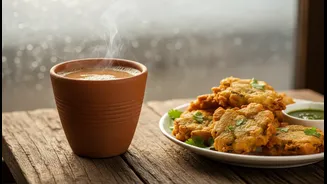
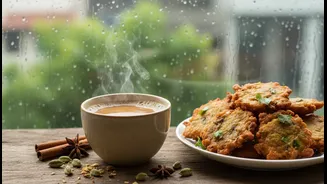
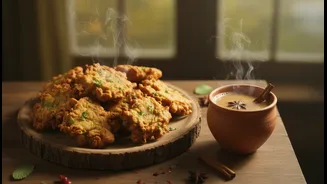
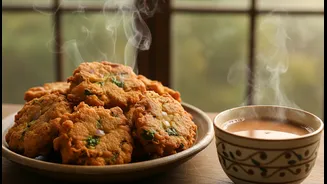
The moment it starts to rain, the thought of tea and fried snacks feels less like a choice and more like a biological necessity. Psychologists refer to this as associative learning. For many in India, rainy days throughout childhood meant staying indoors,
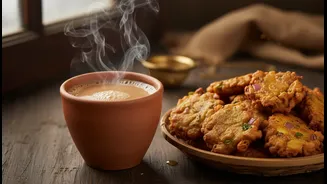
where the comfort of family was often paired with freshly made pakoras and steaming cups of chai. Over years of repetition, the brain forges a powerful link: rain becomes a trigger for the comforting ritual that follows. Just the sound of rain or the smell of wet earth can activate the brain's reward system, making you anticipate the pleasure of the food before you even take a bite. It's a classic conditioned response, where the monsoon itself becomes the bell that makes us crave our favourite snacks.
A Craving for Nostalgia
Comfort food is rarely just about the food itself; it's about the memories attached to it. The craving for chai and pakoras is deeply woven into the fabric of nostalgia. These foods evoke feelings of security and togetherness, reminding us of simpler times—of grandparents insisting on one more pakora, of power cuts during a storm, or of huddling with siblings while watching the downpour. This emotional connection is a powerful driver. When you find yourself longing for that specific combination, you might be craving not just the taste and texture, but the feeling of being cared for and the warmth of shared family moments that these foods represent.
The Science of Feeling Good
There's also a clear physiological reason why we turn to these foods. A drop in temperature and sunlight on a rainy day can lead to a dip in serotonin, the brain's 'happiness hormone'. To counteract this, our bodies instinctively crave carbohydrates, which can temporarily boost serotonin levels and improve our mood. Pakoras, made from gram flour and often starchy vegetables, are rich in carbohydrates. When you eat these highly palatable foods, your brain releases dopamine, a neurotransmitter associated with pleasure and reward. This chemical response provides a fleeting sense of satisfaction and calm, making the snack a form of self-medication against the gloominess of the weather.
A Sensory Experience
The appeal of chai and pakoras in the rain is also a full-bodied sensory experience. Cooler, damp weather makes us instinctively seek warmth, and a hot cup of tea alongside freshly fried snacks helps regulate our body temperature, making us feel cosier. The crunchy texture of a pakora provides a satisfying contrast to the soft, damp atmosphere of a rainy day. Furthermore, humid air helps aroma molecules travel better, meaning the smells of ginger, cardamom, and frying batter are more pronounced and inviting. This heightened sensory input makes the entire experience more intense and memorable. The pairing of spiced tea with a savoury, fried snack is a perfect balance of flavours that cuts through the richness and refreshes the palate.
A Shared Cultural Ritual
While the core components are often chai and pakoras, the tradition varies across India. In Maharashtra, it might be kanda bhaji and batata vada, while in the south, medu vada with filter coffee might be preferred. In Kolkata, khichuri and telebhaja become the go-to comfort meal. This shared practice turns a personal craving into a collective cultural ritual. The act of preparing and sharing these snacks reinforces social bonds and a sense of community. The question, “Should I make some chai?” as the rain begins is an invitation to connect. It’s this combination of personal memory, brain chemistry, and shared culture that makes the chai-pakora pairing the undisputed king of monsoon comfort eating in India.