





1. Gaganyaan: Joining the Human Spaceflight Club
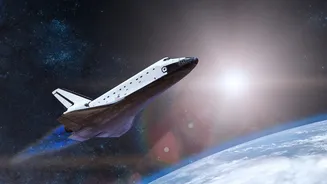
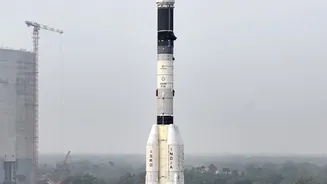
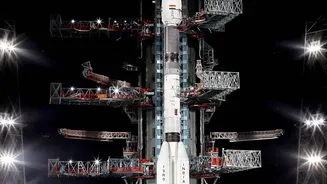
The Gaganyaan mission is arguably ISRO's most ambitious project yet: sending Indian astronauts, or 'Vyomanauts', into Low Earth Orbit. The programme aims to launch a crew of three into an orbit of 400 kilometres for a three-day mission before safely returning
them to Earth. Successfully launching its own crewed mission will make India only the fourth country in the world to achieve this feat, after the US, Russia, and China. This isn't just about prestige; it’s a massive technological leap. Developing life support systems, human-rated launch vehicles (HLVM3), and crew escape protocols builds invaluable expertise for future deep-space exploration and establishing a sustained human presence in space.
2. Chandrayaan-4: The Lunar Sample Return
Building on the success of its predecessors, Chandrayaan-4 is a complex lunar sample return mission. The goal is to land on the Moon, collect soil and rock samples, and bring them back to Earth for detailed analysis. This elevates India into an elite group of nations capable of such a round-trip mission. The mission is complex, requiring two separate launches and five different modules to perform automated docking in lunar orbit, robotic sample collection, and a high-speed re-entry to Earth. The scientific payoff is immense, providing new insights into the Moon's origin, but the strategic gain is even greater, mastering technologies critical for future lunar landings, including crewed missions.
3. Shukrayaan-1: Exploring Earth's Twin
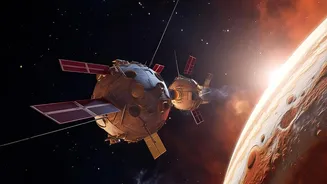
India is setting its sights on Venus with Shukrayaan-1, its first orbiter mission to the planet. Often called Earth's 'twin' due to its similar size, Venus is a world of extreme heat and crushing pressure, offering a natural laboratory for studying the greenhouse effect. The mission will study Venus's dense atmosphere, its mysterious super-rotating winds, and its volcanic activity to understand why it became so inhospitable. By venturing to Venus, ISRO demonstrates its growing interplanetary capabilities and contributes vital data to global climate science, solidifying its role as a serious player in planetary exploration.
4. NISAR: A Landmark Collaboration with NASA
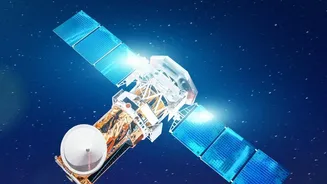
The NASA-ISRO Synthetic Aperture Radar (NISAR) is a joint Earth-observation satellite that showcases India's importance as an international partner. It is one of the most expensive Earth-imaging satellites ever built. NISAR will use advanced dual-frequency radar to monitor changes in Earth's land and ice surfaces with unprecedented detail, tracking everything from glacier melt and deforestation to volcanic activity and groundwater changes. For India, this mission is a two-way street: it provides access to cutting-edge technology and global data while positioning ISRO as a world-class collaborator capable of contributing critical hardware (the S-band radar) to a major international project.
5. SPADEX: Mastering In-Orbit Docking
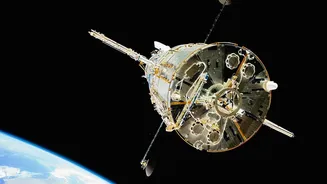
The Space Docking Experiment (SPADEX) is a crucial technology-demonstrator mission. It involves launching two small satellites and having them autonomously rendezvous and dock in orbit. This capability is a fundamental building block for more complex operations. Mastering docking is essential for building a space station, conducting satellite servicing and refueling, and assembling larger spacecraft in orbit for interplanetary journeys. By proving this technology, ISRO unlocks the potential for longer-duration missions and a sustainable, modular presence in space, paving the way for the planned Bharatiya Antariksha Station.
6. NGLV: The Reusable Rocket Revolution
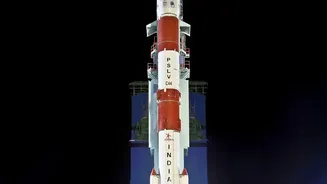
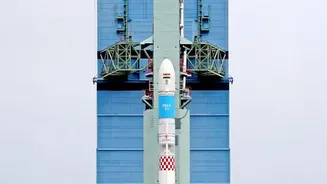
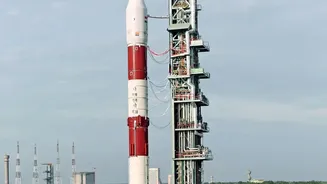
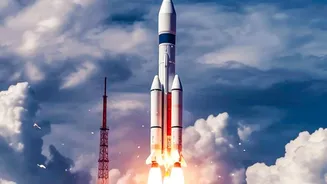
The Next Generation Launch Vehicle (NGLV) is India's answer to the global demand for cheaper and more reliable access to space. This powerful, three-stage rocket is being designed with a reusable first stage, similar to SpaceX's Falcon rockets. The NGLV will be able to carry significantly heavier payloads than ISRO's current workhorse rockets and is intended to eventually replace them. Developing a reusable rocket will drastically lower launch costs, making India a highly competitive player in the lucrative global launch market. This vehicle is critical to ambitions like building the space station and launching crewed missions to the Moon.
7. Mangalyaan-2: A Return to the Red Planet
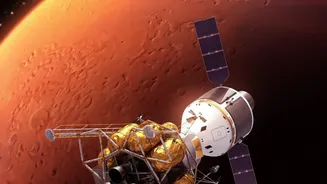
Following the historic success of the Mars Orbiter Mission (MOM), ISRO is planning a follow-up, Mangalyaan-2. While details are still emerging, this mission is expected to carry a more advanced suite of scientific instruments, potentially including a lander or rover. A key objective would be to build on MOM's findings, performing a more detailed study of Mars' atmosphere, surface, and geology. A potential Mars Lander Mission would further demonstrate India's capability for complex interplanetary operations, including supersonic parachute deployment and soft-landing technologies. It signifies a move from initial reconnaissance to in-depth scientific investigation of Mars.