







Beyond Literal Translation
For years, the gold standard for multilingual AI was simple translation. The goal was to convert text from a source language to a target language with grammatical accuracy. While modern tools like Google Translate and DeepL have achieved remarkable fluency,
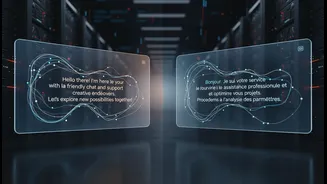
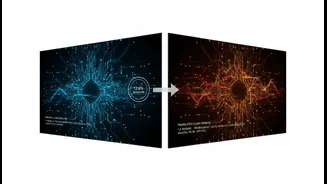
this word-for-word approach often misses a critical layer of communication: tone. Language is more than a collection of words; it's a vehicle for culture, emotion, and intent. A phrase that is polite in one language might sound abrupt in another, and a marketing slogan that is clever in English could become nonsensical when translated literally. Recent studies show that even advanced Large Language Models (LLMs) struggle to effectively localize content that relies on humour, cultural idioms, or specific emotional resonance. This gap between technically correct translation and true localization is where the next wave of AI development is focused.
The Intricate Challenge of Tone
Capturing tone is difficult because it is deeply tied to cultural context. Formality, directness, and even how emotions are expressed vary significantly across the globe. For example, a customer service chatbot using a casual, friendly tone might be well-received in the United States but could be seen as unprofessional in a market that prefers more formal interactions. These nuances are a major hurdle for AI systems, which have historically been trained on datasets dominated by English-language content. This can lead to AI that defaults to a standardized, formal, or even 'cold' style of communication that lacks personality and authenticity. This failure to adapt can result in messages that feel robotic or, worse, are misinterpreted, eroding user trust and engagement.
When AI Develops a 'Personality'
An interesting phenomenon is emerging as models become more sophisticated. Research has shown that the same AI model can exhibit different 'personalities' depending on the language it's prompted in. For instance, a recent analysis by AI company Anthropic confirmed that its Claude chatbot tends to be warmer and more encouraging in languages like Hindi and Arabic, while it adopts a more rigorous and skeptical tone in English and Russian. These variations aren't necessarily intentional design choices but are a byproduct of the vast and diverse linguistic data the models are trained on. The patterns, idioms, and conversational styles present in the training data for each language shape how the AI learns to respond, creating subtle but consistent tonal shifts.
Turning a Bug Into a Feature
Initially, such inconsistencies might seem like a flaw or a form of bias that needs to be corrected. However, a growing perspective is to view these tonal differences not as a bug, but as a feature. If an AI can learn to reflect the communication style of a specific language, it's one step closer to genuine cultural adaptation. The goal is to move from a one-size-fits-all approach to one where AI can dynamically adjust its tone, formality, and phrasing to match regional expectations. This is the difference between an AI that simply translates and one that truly communicates. By understanding and harnessing these tonal variations, developers can build models that don't just speak a language, but do so in a way that feels natural and appropriate to native speakers.
Unlocking Critical, High-Stakes Applications
Mastering tone is essential for deploying AI in 'critical' or mission-sensitive roles. In global customer service, an AI that understands when to be empathetic versus when to be direct can dramatically improve user satisfaction. In healthcare, it could mean delivering vital information to patients in a manner that is clear, reassuring, and culturally sensitive. For international business, it opens the door to hyper-localized marketing campaigns that resonate on an emotional level. These high-stakes applications demand more than just accuracy; they require trust, which is built on effective and nuanced communication. As AI becomes more integrated into global operations—from finance to government services—the ability to navigate cross-cultural conversations will become a key measure of its effectiveness and reliability.