






1. Satellite Data Analyst
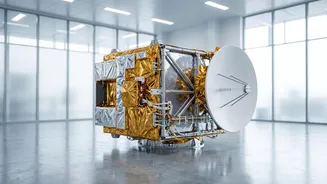
Every satellite India launches adds to a massive stream of data beaming back to Earth. This isn't just space-dust; it's valuable information about our weather, crops, city planning, and climate. A Satellite Data Analyst is a detective, sifting through
this data to find actionable insights. Companies like SatSure and Pixxel are hiring data scientists and geospatial analysts to help sectors from agriculture to insurance make better decisions. If you have skills in remote sensing, Geographic Information Systems (GIS), and data modeling, you can play a vital role in using space technology to solve real-world problems. Expertise in Python or MATLAB is also becoming crucial.
2. Space Lawyer
As private companies like Skyroot Aerospace and Agnikul Cosmos begin launching their own rockets, a new legal frontier is opening up. Who is liable if a satellite crashes? How are launch contracts negotiated? What are the rules for space tourism? These are the questions space lawyers answer. With the government establishing IN-SPACe to regulate private space activities, the demand for legal experts who understand complex international treaties, intellectual property rights, and contract law has skyrocketed. A law degree followed by a specialisation in this emerging field can lead to a career advising startups, government agencies, and international bodies.
3. Aerospace Technician
Rockets and satellites are incredibly complex machines, and they aren't built or maintained by scientists alone. Aerospace Technicians are the skilled hands-on professionals who build, test, and maintain spacecraft and their components. As India aims to increase its share of the global launch market, the need for a strong manufacturing and maintenance ecosystem is critical. This creates thousands of jobs for people with technical skills in mechanics, electronics, and production management. A diploma or vocational training in fields like avionics or aircraft maintenance can be a direct path to joining the supply chain that supports ISRO and the growing number of private space firms.
4. Space Policy Analyst
Behind every major space mission and policy shift are analysts who guide the nation's strategy. The decision to open the space sector to private players in 2020 was a major policy move that is now creating jobs. A Space Policy Analyst works for government bodies, think tanks, or private companies to research and shape the rules and goals of the space program. They analyze the geopolitical and economic implications of space activities. This role is perfect for those with a background in public policy, international relations, or economics who are passionate about India's future in space. A master's degree in one of these fields can be a strong entry point.
5. Business Development Manager
With over 400 private space startups now registered in India, the sector is no longer just about science; it's also about business. These companies need to find customers, secure funding, and market their services globally. A Business Development Manager in a space-tech firm is responsible for this commercial strategy. They identify new markets for satellite services, build relationships with investors, and promote their company's technology. This has opened doors for graduates with degrees in business, finance, and marketing to enter the space industry without a deep engineering background. Companies like Dhruva Space actively hire for roles in the 'Business of Space.'"