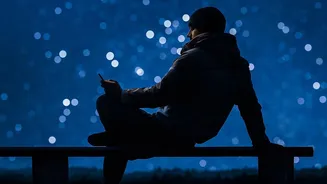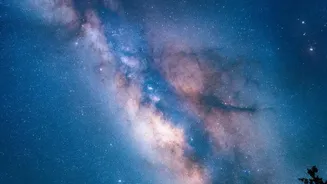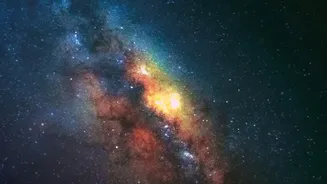



The Challenge of Shooting in the Dark
Photographing the night sky is incredibly difficult for any camera, let alone a smartphone. The main obstacles are the lack of light and the physical limitations of a small device. Professional cameras use large sensors and wide lenses to gather as much
faint starlight as possible. Phones, with their tiny sensors, can't compete on a hardware level. In low light, small sensors produce a lot of digital “noise,” which looks like ugly graininess and random coloured spots that ruin an image. Furthermore, because astrophotography requires long exposures to collect light, any movement—from an unsteady hand to the rotation of the Earth itself—can result in blurry, streaky photos.
It All Starts with Multiple Shots
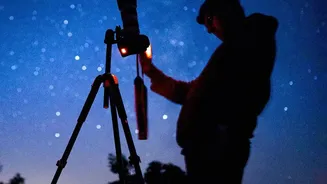
Instead of taking one long exposure like a traditional camera, a smartphone’s astrophotography mode captures a series of shorter exposures over a period of time. For example, Google's Pixel phones, when mounted on a tripod and pointed at the dark sky, will automatically enter Astrophotography mode. Over several minutes, the phone may capture up to 16 frames, each with an exposure time of around 15 or 16 seconds. This multi-frame approach is the foundation upon which all the subsequent software magic is built. The phone must remain perfectly still during this process, which is why a tripod is essential for the feature to even activate.
The Magic of Image Stacking
Once the phone has its burst of images, the computational engine gets to work on a process called image stacking. The software meticulously aligns each photo, accounting for the slight rotation of the Earth that causes stars to move across the frame. It then digitally merges, or 'stacks', these images. The core principle is simple but effective: since the stars and celestial objects are consistent across all the frames, they become brighter and more detailed when combined. Meanwhile, the random digital noise in each individual photo gets averaged out and effectively cancelled, resulting in a much cleaner and clearer final image.
AI as the Ultimate Photo Editor
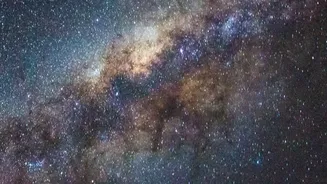
This is where the real intelligence comes in, driven by the phone’s Neural Processing Unit (NPU), a specialised chip designed for AI tasks. The software uses artificial intelligence, trained on thousands of professionally shot astrophotographs, to analyse and enhance the stacked image. AI algorithms perform 'semantic segmentation,' which means they can identify different parts of the photo, like the sky, stars, clouds, and foreground. It then applies targeted adjustments. For example, it might increase the contrast in the sky to make the Milky Way pop, selectively remove any remaining noise without softening the stars, and correct hot pixels—unwanted coloured spots caused by a sensor working hard in the dark.
Bringing It All Together
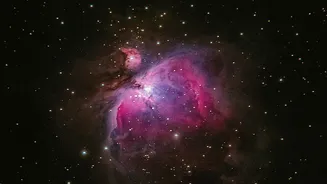
The final step involves polishing the image with automated adjustments to colour balance, brightness, and sharpness to create a visually pleasing result. In some cases, the software is smart enough to separate the foreground from the sky, process them independently, and then blend them back together for a perfectly exposed final shot where both the landscape and the stars look their best. The entire process, from capturing dozens of frames to complex AI-driven editing, happens automatically in just a few minutes after you press the shutter button. This powerful, invisible workflow is what turns a noisy collection of dark photos into a single, breathtaking astrophoto.