






India's Contribution to a Celestial Quest
A space-tech startup with deep Indian roots, HEX20, has been selected by the United Arab Emirates (UAE) Space Agency to contribute critical systems for an ambitious interplanetary probe. This marks a historic achievement, as it is the first time an Indian private
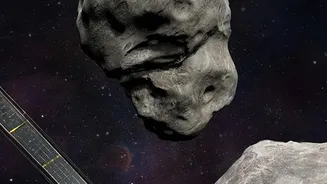
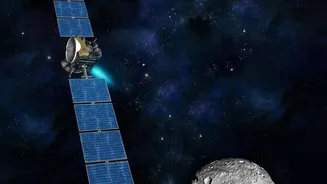
company has been tasked with developing technology for a deep-space mission by the Gulf nation. The probe is part of the Emirates Mission to the Asteroid Belt (EMA), a bold initiative scheduled for launch in March 2028. The mission's objective is to explore seven different asteroids, culminating in a close-up study of the final target, the asteroid 269 Justitia. HEX20, which operates from Technopark in Thiruvananthapuram, Kerala, was chosen to develop the spacecraft bus—the core structure that houses and supports all the probe's scientific instruments and operational systems—as well as the sophisticated software needed to navigate the harsh environment of deep space.
The Technology Behind the Mission
The contribution from HEX20 is far from minor; it forms the very backbone of the asteroid probe. The company was responsible for designing and building the probe's onboard computer and its power distribution systems. These components must be incredibly resilient to withstand the extreme temperatures, radiation, and vacuum of space during a multi-year journey. The spacecraft bus developed by HEX20 acts as the probe’s chassis, providing structural support, thermal control, and power to the sensitive scientific payloads it carries. The firm's engineers completed the complex development work in just 15 months, a testament to their focused engineering and close collaboration with international partners, including the UAE's Technology Innovation Institute (TII). This achievement showcases the advanced capabilities of India's burgeoning private space ecosystem, proving it can deliver high-quality, mission-critical hardware for demanding international projects.
Why We Study Asteroids
Asteroid missions are about much more than just visiting distant rocks. Scientists see asteroids as pristine time capsules from the birth of our solar system, roughly 4.6 billion years ago. Unlike planets, which have been geologically altered by volcanism and erosion, many asteroids remain largely unchanged. Studying their composition helps us understand the raw materials that formed Earth and other planets. Missions like NASA's OSIRIS-REx, which returned samples from the asteroid Bennu, have found evidence of water and carbon-based molecules—the fundamental building blocks of life. This suggests that asteroids may have delivered these vital ingredients to an early Earth. Furthermore, understanding the structure and composition of asteroids is crucial for planetary defense. Knowing whether an approaching object is a solid metallic body or a loose collection of rubble would be critical in any attempt to deflect it.
A New Chapter for India's Private Space Sector
HEX20's success is a powerful symbol of the rapid growth and maturation of India's private space industry. Founded just a few years ago, the company has already launched its own satellites and is now a trusted partner for international agencies. This project places HEX20, and by extension India, in an elite group of players capable of contributing to deep-space exploration. The Indian government's space policy reforms have been instrumental in this shift, encouraging private firms to take on ambitious projects and collaborate with ISRO and global partners. ISRO's chairman has also publicly stated India's desire to be a key player in global missions, particularly in asteroid research and planetary defense, leveraging the nation's proven expertise in complex spacecraft navigation. As companies like HEX20 continue to secure high-profile international contracts, they are not only building a robust space economy but are also cementing India's reputation as a high-tech powerhouse on the world stage.