

First Clues: The Visual Inspection
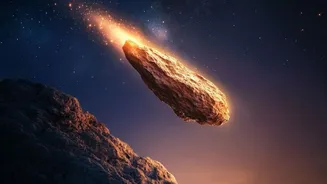
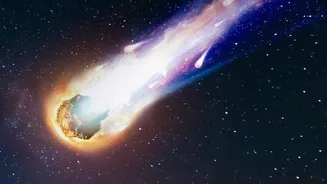
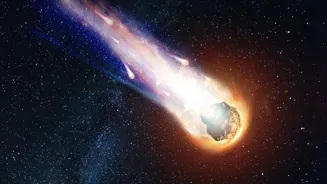
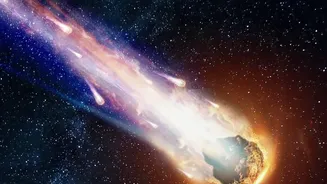
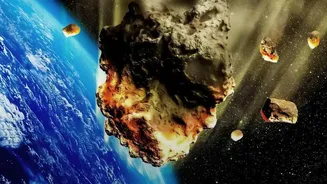
Before a rock even reaches a high-tech lab, there are tell-tale signs of its fiery journey through our atmosphere. Scientists first look for a fusion crust, a thin, dark, and often glassy coating that forms when the rock's exterior melts during its high-speed
descent. This crust is a strong indicator of an extraterrestrial origin. Another visual clue is the presence of regmaglypts, which are thumbprint-like indentations on the surface created as hot air erodes the rock during its flight. Most meteorites are also denser than Earth rocks and will attract a magnet, as they almost always contain metallic iron-nickel, a rarity in terrestrial rocks.
The Decisive Test: A Chemical Fingerprint
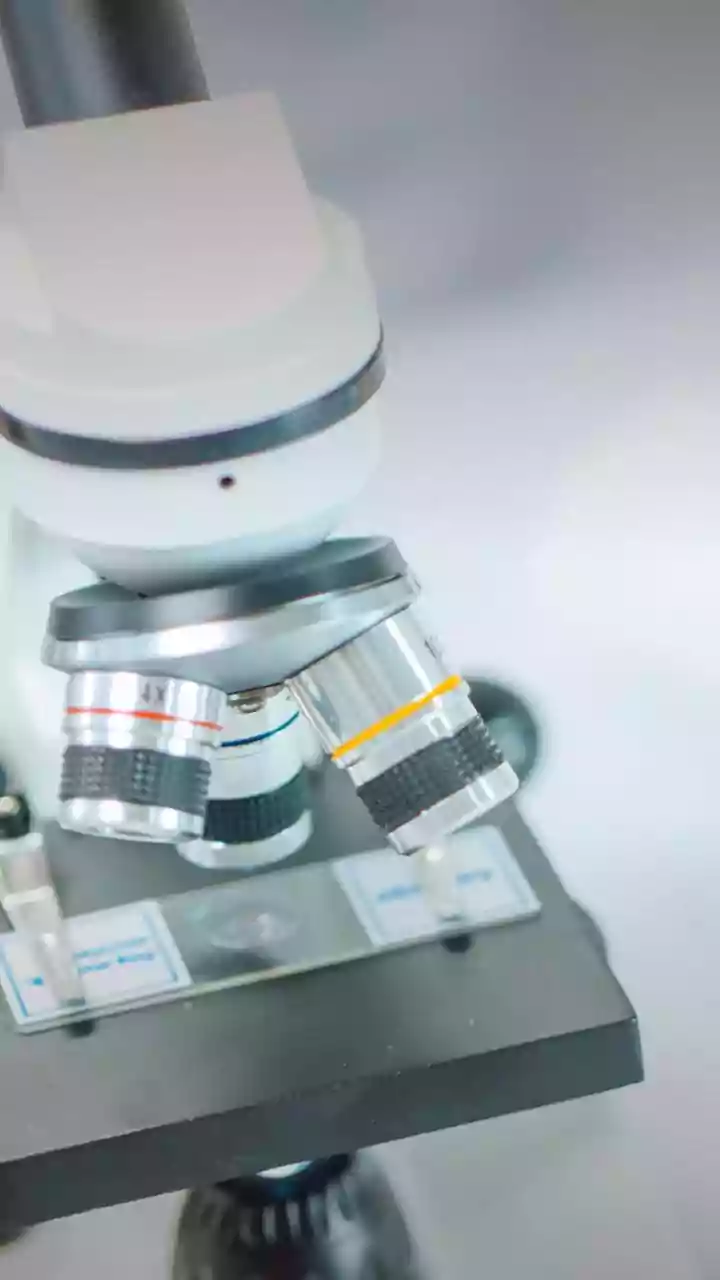
The real proof of a meteorite's origin lies in its unique chemical composition, which acts like a fingerprint or DNA signature. The most crucial test involves analyzing oxygen isotopes. An element can have different variants, or isotopes, based on the number of neutrons it contains. It turns out that rocks from different planetary bodies—like Earth, Mars, the Moon, and various asteroids—have distinct and characteristic ratios of oxygen isotopes. By measuring these ratios in a lab, scientists can definitively rule out an Earthly origin and start to pinpoint where in the solar system the rock came from. This isotopic fingerprinting is one of the most powerful tools in the cosmic detective's kit.
Confirming a Martian Origin: Trapped Gases
Identifying a rock from Mars requires an extra-special piece of evidence. Some meteorites contain tiny pockets of glass, formed when the rock was shocked by an impact back on its home planet. These glass pockets can trap small amounts of the atmosphere. The definitive breakthrough came when scientists analyzed gases trapped inside a meteorite found in Antarctica, known as EETA 79001. They discovered that the composition of these gases was an exact match for the Martian atmosphere, as measured directly by NASA's Viking landers in 1976. This was the smoking gun, providing undeniable proof that we had pieces of Mars right here on Earth.
Identifying Moon Rocks: A Comparison Game
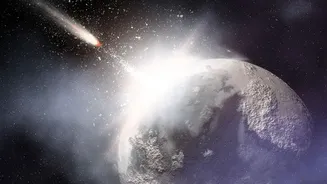
For lunar meteorites, the process is one of direct comparison. Thanks to the Apollo missions, which brought back hundreds of kilograms of lunar samples, scientists have a comprehensive library of what Moon rocks look like. When a suspected lunar meteorite is found, its mineralogy, chemical makeup, and isotopic signatures are meticulously compared to these known lunar samples. If the characteristics match, from the specific types of minerals present to the ratios of certain elements, researchers can confidently declare it a piece of our nearest celestial neighbour, blasted off the lunar surface by a separate asteroid or comet impact long ago.
What About the Random Rocks?
The vast majority of meteorites—over 85%—are not from the Moon or Mars. They are called chondrites and originate from the asteroid belt between Mars and Jupiter. These are some of the oldest objects in the solar system, dating back about 4.56 billion years. They are identified by the presence of small, round grains called chondrules. While fascinating in their own right, these 'random' space rocks lack the specific chemical and atmospheric fingerprints of a lunar or Martian meteorite. Their older age and different isotopic signatures clearly place them in a separate category, representing the primordial building blocks of our solar system rather than pieces of a developed planet.