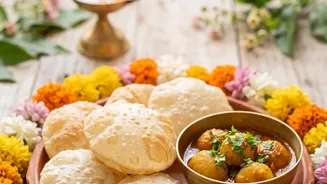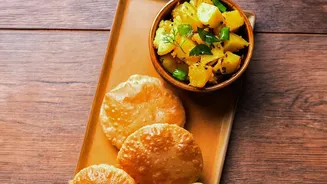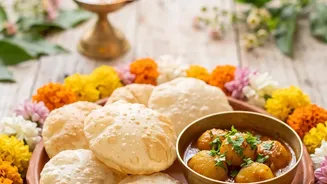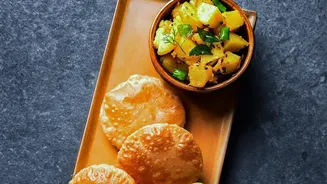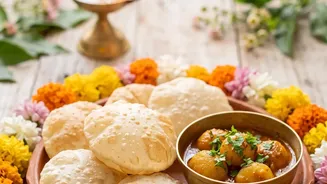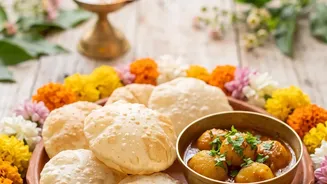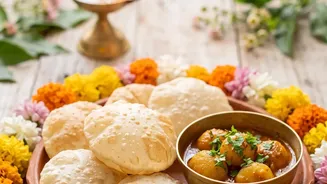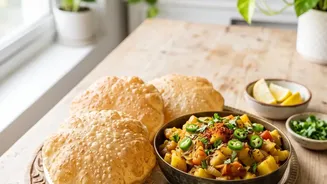

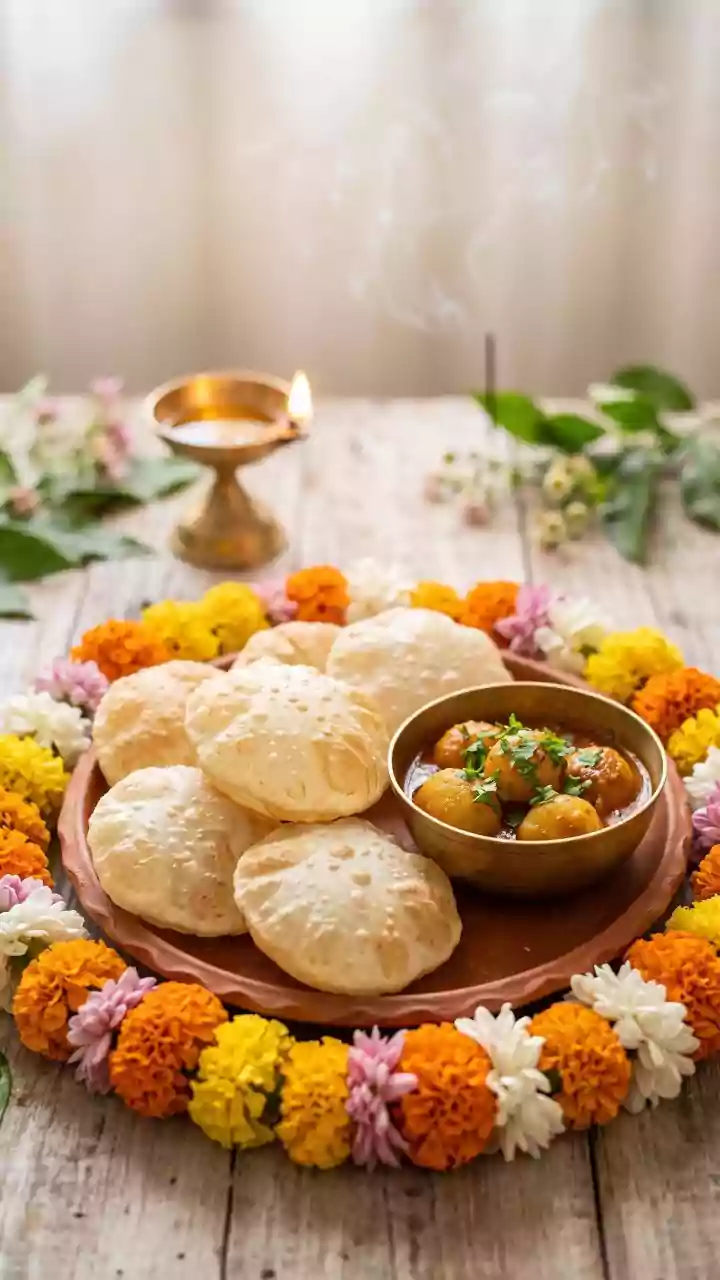
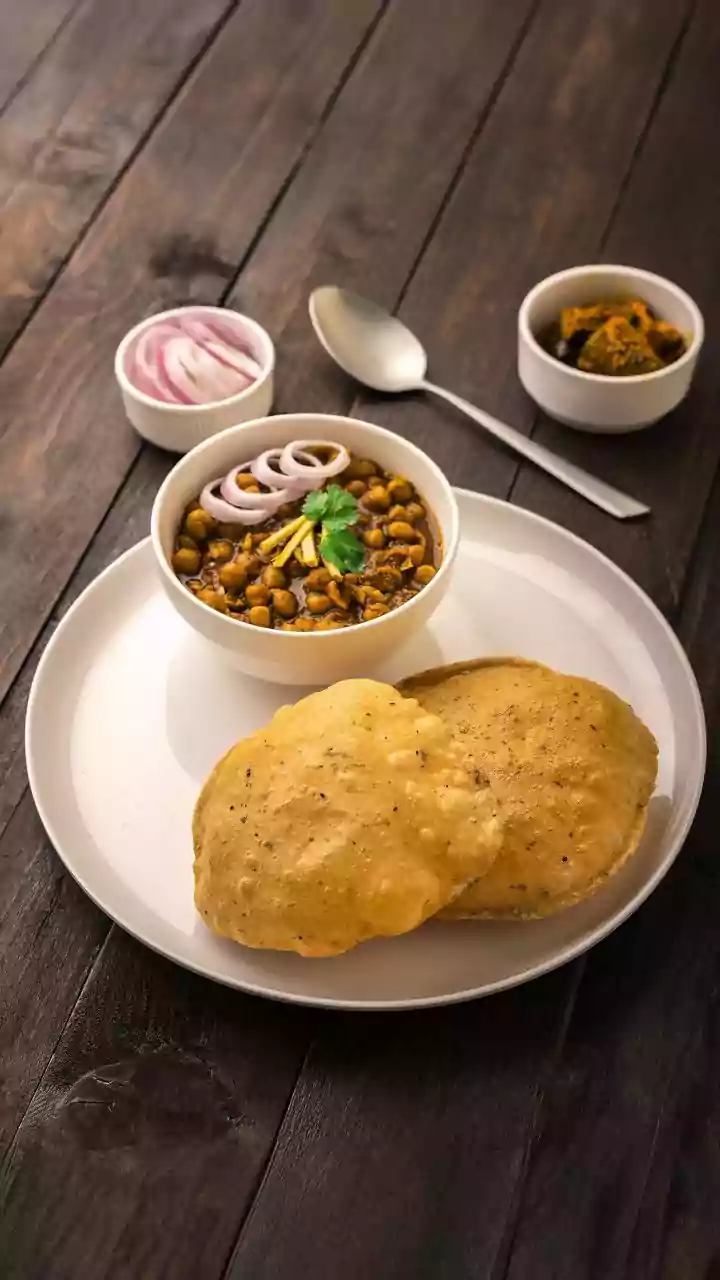
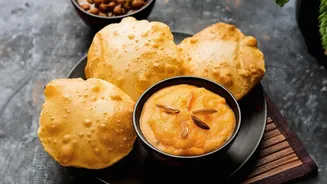
In the landscape of breakfast foods, few things evoke the same sense of comfort and satisfaction as a plate of hot, puffy puris served alongside a fragrant potato curry. This is Puri Sabzi, a dish that proves you don't need fancy, expensive ingredients
to create a truly memorable and fulfilling meal.
More Than Just Breakfast
Puri Sabzi, also known as Puri Bhaji, is a classic North Indian breakfast but its appeal stretches across the country and beyond. It's a staple not just in homes but also at bustling street-side stalls, railway platforms, and as a part of festive and ceremonial meals. The dish consists of two core components: puri, an unleavened bread made from whole wheat flour that puffs up magically when deep-fried, and sabzi, a spiced potato curry. Its status as a beloved comfort food comes from this perfect pairing — the soft, airy texture of the puri used to scoop up the savoury, aromatic curry. It represents a culinary tradition passed down through generations, a simple pleasure that connects people to shared memories of family gatherings and Sunday mornings.
The Magic of Simple Ingredients
The beauty of Puri Sabzi lies in its simplicity. The dough for the puri requires little more than whole wheat flour (atta), water, and perhaps a pinch of salt and a little oil. The sabzi, most commonly made with potatoes (aloo), is a masterclass in creating complex flavour from basic pantry staples. Boiled potatoes are gently mashed and simmered in a gravy flavoured with everyday spices like cumin seeds, turmeric, coriander powder, and chilli powder. While some variations exist, the foundational recipe is proudly devoid of complicated techniques or hard-to-find components. It’s a testament to the idea that thoughtful cooking can elevate the humble potato and wheat flour into something truly special.
A Symphony of Textures and Flavours
The experience of eating Puri Sabzi is a delightful contrast of textures. You have the crisp-yet-chewy puri, which tears open to reveal a pocket of steam, perfect for dipping. Then there's the aloo sabzi, which is often cooked until the potatoes are tender enough to melt in your mouth, thickening the gravy to a perfect consistency. The spices in the sabzi are key. A pinch of asafoetida (hing) can add a unique savoury depth, while a sprinkle of amchur (dry mango powder) lends a subtle tang that cuts through the richness. Eaten together, it’s a harmonious blend of savoury, spicy, and tangy flavours that is both hearty and incredibly satisfying.
The Art of the Perfect Puri
While the ingredients are simple, making the perfect, puffed-up puri is a skill. The secret starts with the dough, which should be kneaded to a firm, stiff consistency; a dough that is too soft will absorb excess oil and won't puff up correctly. Another key is the temperature of the oil. It needs to be hot enough so that when the rolled-out disc of dough is slipped in, it sizzles and quickly puffs into a golden sphere. A gentle press with a slotted spoon encourages the puri to inflate evenly. Though it may take a bit of practice, the reward is a stack of light, airy breads that are worlds away from their dense, store-bought counterparts.
Endless Regional Variations
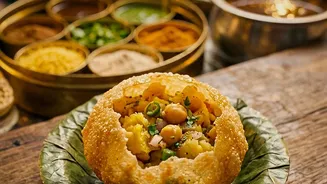
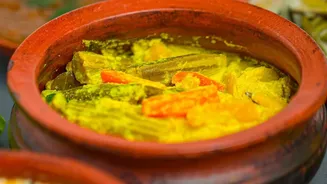
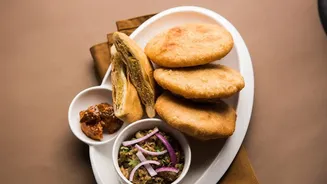
While the classic aloo puri is the most well-known version, countless regional variations highlight India's diverse culinary landscape. In Bengal, you might find 'Luchi', a delicate puri made with all-purpose flour (maida), served with a different style of potato curry. In Uttar Pradesh and Delhi, 'Bedmi Puri' is a heartier version stuffed with a spiced lentil paste. Some cooks add spinach puree to the dough for a vibrant green 'Palak Puri', while others might incorporate beetroot or spices like carom seeds (ajwain). Each version tells a story about local ingredients and tastes, but the spirit of a simple, satisfying meal remains the same.