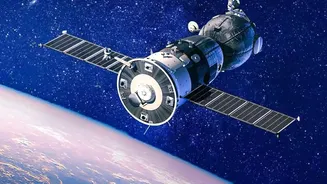







A New Orbital Ecosystem
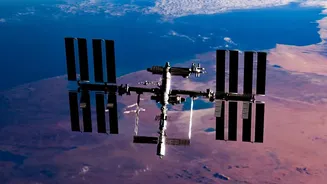
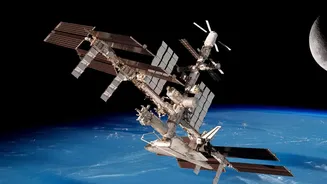
For over two decades, the International Space Station has been the sole destination for sustained microgravity research. But with its operational life scheduled to end around 2030, NASA is actively fostering a transition to commercially owned and operated
platforms in low-Earth orbit (LEO). This shift is creating a new ecosystem, with companies like Axiom Space, and the Blue Origin and Sierra Space partnership for the Orbital Reef station, developing next-generation habitats. These aren't just outposts; they are envisioned as mixed-use business parks in space, catering to government agencies, private companies, and academic institutions. The goal is to prevent a gap in American space presence and catalyze a robust LEO economy driven by research, manufacturing, and tourism.
Designed for Discovery
Unlike the ISS, which was built for an earlier era, these new commercial modules are being designed with modern research as a core function. Axiom Station's planned Research and Manufacturing Module, for instance, promises state-of-the-art facilities dedicated to innovation. These modules are being built with enhanced power systems, high-throughput data connections, and modular research racks that can be easily customized for different experiments. Companies are also rethinking the internal environment. Sierra Space's Large Integrated Flexible Environment (LIFE) habitat is an inflatable module that launches in a compact form and expands in orbit to the size of a three-story building, offering unprecedented volume for living quarters and labs. Features like large Earth-viewing windows and layouts designed for crew comfort and efficiency are standard, aiming to improve the productivity of astronauts conducting long-duration experiments.
Lowering the Barrier to Entry
Perhaps the most significant change is the business model. The ISS was primarily accessible to national space agencies with massive budgets. The new commercial stations are built to serve a wider array of customers. By offering turnkey services—including launch, logistics, and experiment integration—companies can significantly reduce the cost and complexity for universities, biotech firms, and even individuals to conduct research in space. This 'research-as-a-service' model opens the door for organizations that could never have afforded a spot on the ISS. This democratization of space access is expected to fuel a boom in microgravity research, from pharmaceutical development and materials science to studies in human biology.
The Future: In-Space Manufacturing
These research capabilities are a crucial stepping stone toward a larger goal: in-space manufacturing. The unique microgravity environment allows for the creation of materials and products impossible to make on Earth. This includes growing purer protein crystals for drug development, manufacturing flawless fiber optics, and 3D-printing human organs. Axiom Station plans to have dedicated manufacturing capabilities, while platforms like Orbital Reef and Starlab are also being designed to support industrial activities. By proving out these processes in their research labs, commercial stations will pave the way for orbital factories that could revolutionize industries back on Earth. The research conducted today is building the foundation for the industrialization of space tomorrow.