


Your Smartphone, The Urban Astronomer's Secret Weapon
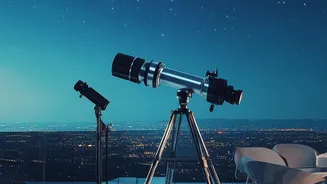
The idea of stargazing from a balcony in a bustling metro seems impossible. For generations, urban light pollution has washed out all but the brightest stars, leaving city dwellers to believe astronomy is a hobby reserved for those with access to remote,
dark skies. However, the powerful sensors packed into your smartphone have changed the game. Using your phone's GPS, compass, and gyroscope, modern astronomy apps can create a real-time map of the sky, showing you exactly what you're looking at. This augmented reality (AR) overlay acts like a digital guide, labelling stars, constellations, and, most importantly for city observers, the bright planets that can pierce through the urban glow.
Choosing Your Digital Guide
Dozens of stargazing apps are available, but for beginners, the best ones are intuitive and visually engaging. Apps like Star Walk 2 and SkyView are excellent starting points, praised for their user-friendly interfaces and smooth augmented reality modes that let you simply point your phone at the sky to identify objects. Many offer free versions (often called 'Lite') that are perfectly capable for finding planets. Stellarium Mobile is another fantastic option, offering a highly realistic sky map for free. These apps require no prior knowledge; you just install them, grant location access, and you're ready to explore the sky from your own window or rooftop.
What to Look For: September's Brightest Wanderers
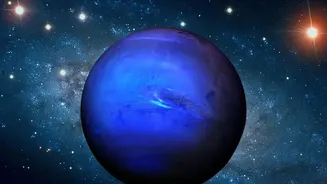
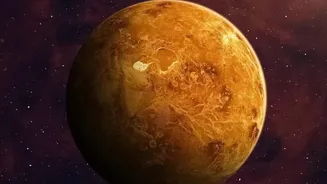
Unlike faint, distant stars, planets are bright enough to be seen from most cities. In September 2026, several planets are putting on a show. Venus is exceptionally bright in the evening sky right after sunset. Yellowish Saturn rises in the east not long after sunset and is visible for most of the night. For early risers, the pre-dawn sky is dominated by the brilliant white light of Jupiter, with reddish Mars also making an appearance. These planets are the perfect targets for your first urban astronomy session. An app will not only help you find them but will also distinguish them from bright stars or airplanes.
Beating the City Glow: Simple and Practical Tips
While an app can point you in the right direction, a few simple tricks can significantly improve your viewing experience. First, try to observe later at night, ideally after 11 p.m., when many commercial lights are turned off, reducing the overall skyglow. Second, find a spot that is shielded from direct light sources like streetlamps or your neighbour's security light; even setting up in the shadow of a building can help. Finally, be patient. It takes about 15-20 minutes for your eyes to become properly dark-adapted, which will help you see fainter objects. Avoid looking at your bright phone screen during this time; many apps have a red-light mode to preserve your night vision.
Your First Observation: A Step-by-Step Guide
Ready to find a planet? Open your chosen astronomy app. It will likely ask to calibrate its sensors, which usually involves moving your phone in a figure-eight pattern. Once done, point your phone towards the sky. You will see a map of stars and constellations that mirrors the real sky above you. Look for the bright dots labelled with planetary names like 'Venus', 'Jupiter', or 'Saturn'. Now, lower your phone and look in that same direction with your own eyes. You should be able to spot the planet as a steady, bright point of light that, unlike stars, does not twinkle as much. Congratulations, you've just located another world.
Beyond Just Looking: A Snapshot of Another World
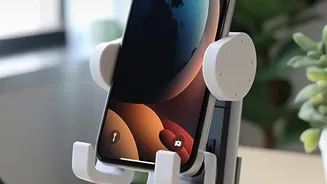
Once you've found a planet, you might be tempted to photograph it. While a smartphone won't capture the detailed images seen from dedicated telescopes, you can still get a rewarding shot. The key is stability; use a small tripod or prop your phone up securely to avoid blurry images. Many phones have a 'Night Mode' that automatically uses longer exposures to gather more light. For bright objects like Jupiter or Venus, you might need to tap the screen and manually lower the exposure to prevent the planet from looking like a bright, overexposed blob. You won't see Saturn's rings, but you will have a personal memento of your cosmic discovery.