





For All-Purpose Cleaning: The Vinegar Solution
Forget mystery ingredients. The star of your new all-purpose cleaner is likely already in your pantry: distilled white vinegar. Thanks to its acetic acid content, vinegar is a natural disinfectant capable of breaking down bacteria and viruses. It's particularly
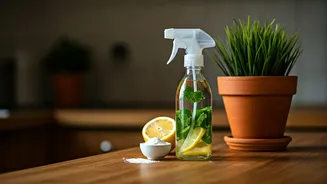
effective at cutting through grease and grime on a variety of surfaces. Many commercial cleaners contain chemicals like volatile organic compounds (VOCs), which can irritate the respiratory system and contribute to indoor air pollution. A simple vinegar spray cleans effectively without these harsh additives. **To make:** Combine equal parts distilled white vinegar and water in a spray bottle. For a more pleasant aroma, you can add about 15-20 drops of an essential oil like lemon or lavender, or even infuse the vinegar beforehand with citrus peels. **How to use:** Spray it on countertops, sinks, and stainless-steel appliances, then wipe with a microfiber cloth. It's a versatile solution for most kitchen and bathroom cleaning. However, due to its acidity, you should avoid using vinegar on natural stone surfaces like marble or granite, as it can cause damage.
For Garden Pests: The Neem Oil Defender
Protecting your plants from pests doesn't require blanketing them in synthetic pesticides. Neem oil, derived from the seeds of the Azadirachta indica tree, is a powerful organic alternative. It works by disrupting the life cycle of many common garden pests, inhibiting their ability to feed, grow, and reproduce, rather than killing them on contact. Another simple yet effective option is a basic soap spray, which is particularly good for soft-bodied insects like aphids. The soap helps break down the pest's outer layer. **To make a neem oil spray:** In a garden sprayer, combine one gallon of warm water with 1-2 teaspoons of high-quality, cold-pressed neem oil and about half a teaspoon of mild liquid dish soap. The soap acts as an emulsifier, helping the oil and water mix properly. **How to use:** Shake the mixture well and spray all plant surfaces, including the undersides of leaves where pests often hide. It's best to apply in the early morning or late evening to prevent leaf burn from direct sun on the oil-coated leaves. Reapply every 7-14 days as a preventative measure.
For Stubborn Weeds: The Salt and Vinegar Killer
For weeds that pop up in the cracks of your driveway, patio, or footpaths, a potent homemade spray can save you time and effort. A mixture of vinegar, salt, and dish soap acts as a powerful, non-selective herbicide. The acetic acid in the vinegar and the salt both work to dehydrate and kill the plant, while the dish soap acts as a surfactant, helping the solution stick to the weed's leaves. **To make:** In a large bucket or garden sprayer, mix one gallon of white vinegar with one cup of salt and one tablespoon of liquid dish soap. Stir until the salt is fully dissolved. **How to use:** This solution is most effective when applied on a dry, sunny day. Spray it directly onto the weeds you want to eliminate, ensuring you saturate the leaves. Be extremely careful during application, as this spray is non-selective and will harm or kill any plant it touches, including your lawn or flowers. It's best used for isolated weeds on hardscapes.
For Fresh Air: The Essential Oil Mist
Many commercial air fresheners simply mask odours with synthetic fragrances, which can contain undisclosed chemicals like phthalates that have been linked to health concerns. A natural room spray made with essential oils offers a healthier way to freshen your home, allowing you to customize the scent to your preference. **To make:** In a small spray bottle, combine about a cup of distilled water with two tablespoons of witch hazel or vodka. The alcohol or witch hazel acts as an emulsifier, helping the oils and water to combine. Then, add 20-30 drops of your favorite essential oils. Good combinations include lavender and chamomile for calm, or lemon and peppermint for an energizing, clean scent. **How to use:** Shake the bottle well before each use, as the oil and water will naturally separate over time. Lightly mist it into the air, on linens, or in the bathroom to refresh the space. Be mindful when using essential oils around pets, as some can be toxic to them.